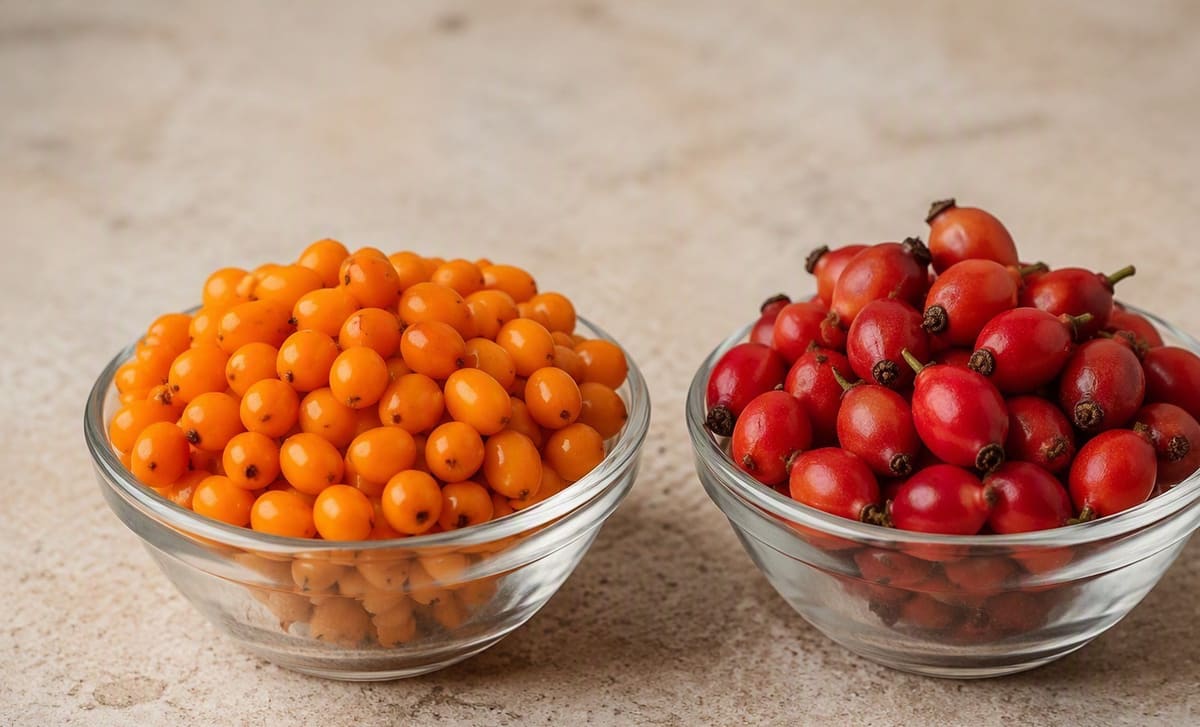
Sea buckthorn is set against 22 other oils, berries and supplements below, from fish oil to marula. Each comparison runs under one method: identical criteria for both sides, a declared winner for a declared situation where the sources allow one, and the trade-offs stated in plain words. The anchor comparison is seed oil versus berry oil, and it sits with the nutrition pages.
Most “versus” pages on the internet are ads wearing a referee shirt. Ours follow a fixed format so you always know where the judgment lives.
The method
- Same yardsticks. Both contenders get scored on identical criteria.
- A winner per situation, where the sources allow one. “It depends” is a starting point, never a conclusion. Each page ends with who should pick which.
- Trade-offs in the open. If the winner costs more, stains, or tastes worse, you will read it next to the verdict.
How to read these pages
Evidence tiers matter more than verdicts. Each page states which claims rest on randomized trials, which on traditional use, and which on plain chemistry, so weigh the winner’s lane rather than the winner’s name. The “choose if” blocks at the end are the real conclusion: the right product is the one matched to your situation, with the trade-offs sitting next to the verdict where they belong.
Where the practical verdicts live
More comparisons join as they clear our evidence bar. Until then, the buying guides carry the practical verdicts: the capsules guide already prices capsules against liquid oil per gram.