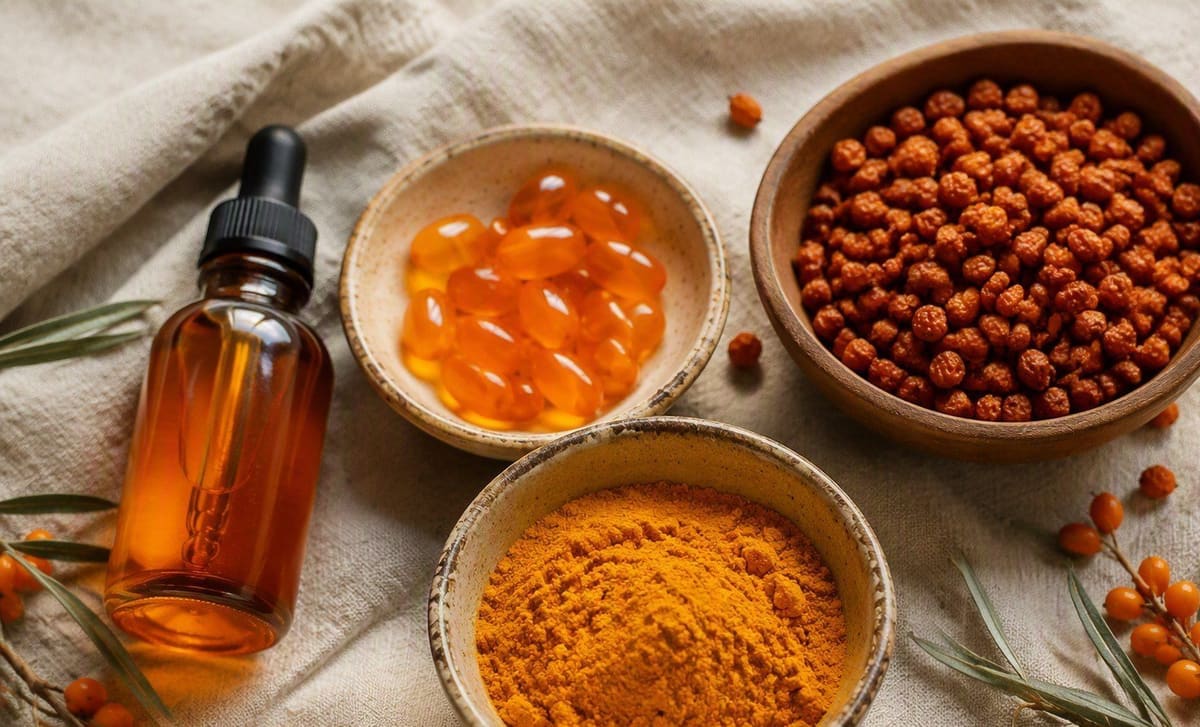
Sea buckthorn comes as berry oil, seed oil, softgels, juice, powder, tea, jam, and skincare. The human studies used oil, so oil is the default for health goals. Juice and powder are foods with their own charms. Skincare is a separate decision entirely. Pick the form that matches your goal, then pick the product.
The product aisle for this plant is confusing because the same words describe different things. “Sea buckthorn oil” might be berry, seed, or a mystery blend. This hub sorts the forms first. Our buying guides sort the specific bottles.
The forms, one by one
Berry oil (liquid). The omega-7 carrier and the form closest to the trial evidence. Earthy taste, stains orange, cheapest per gram. The oil explainer walks the two types and the label lines that separate them, and the oil guide scores the actual bottles.
Seed oil (liquid). Pale, lighter, rich in omega-3 and 6. Better for acne-prone skin, wrong choice if omega-7 is your goal. The seed vs berry breakdown settles the chemistry, and berry oil vs seed oil settles which bottle you should actually reach for.
Softgels and capsules. The same oils in convenient form, at a 25 to 50 percent markup per gram. Watch the dose math: one 500 mg softgel is a quarter of the lowest studied daily dose. The capsules explainer does that math in full, and the capsules guide scores the brands.
Juice and puree. A food, not a supplement. Intensely acidic, genuinely rich in vitamin C when handled well, and best diluted. Dental enamel and sensitive stomachs should read the safety notes first. The juice explainer covers the three forms and the acidity rules.
Powder and tea. Dried berry products trade most of the vitamin C for shelf life and convenience. Fine as pantry items, not a route to study-level doses. The powder explainer shows what drying keeps and loses, and the tea explainer sorts leaf tea from berry tea.
Skincare. Creams, serums, and face oils for topical use. A different evidence base and a different rubric, covered in the skincare guide. The serum explainer teaches the INCI-list check, the face oil explainer covers the straight-oil bottle most people start with, and the cream and lotion page explains the emulsion side.
Form deep dives
Sixteen longer reads for the label-literate:
- Sea buckthorn powder: what freeze-drying keeps, what storage loses, and why it is a food, not the trial oil.
- Sea buckthorn juice: pure, blend, or concentrate, plus the dilute-1:3 acidity rules.
- Sea buckthorn tea: leaf tea versus berry tea, and why no omega-7 reaches the cup.
- Sea buckthorn extract: standardization, carrier oils, and why plain oil is usually the clearer buy.
- Sea buckthorn serum: reading the INCI list so you pay for a dose, not a sprinkle.
- Sea buckthorn cream and lotion: emulsion basics, Weleda’s classic line, and cream versus straight oil.
- Sea buckthorn dried berries: the crunchy, sour whole-berry snack, and what drying keeps and loses.
- Sea buckthorn frozen berries: the closest thing to fresh outside the harvest season.
- Sea buckthorn jam and jelly: the traditional preserve, with a realistic view of what survives the sugar.
- Sea buckthorn syrup: a spoonful of sunshine or expensive sugar, depending on the bottle.
- Sea buckthorn honey: infusion, blend, or marketing, and how to tell which jar you are holding.
- Sea buckthorn tincture: what alcohol extracts well, what it misses, and how to dose drops honestly.
- Sea buckthorn gummies: the candy-adjacent format, judged on dose per gummy.
- Sea buckthorn soap: what a wash-off product can and cannot do for your skin.
- Sea buckthorn shampoo: bar versus liquid, and how much berry survives the rinse.
- Sea buckthorn lip balm: the one topical sea buckthorn product that makes complete sense.
How to choose in sixty seconds
- Name your goal: dry eyes, skin, general use, or cooking.
- Match the form: oil for studied benefits, food forms for the kitchen, topical for skin routines.
- Check the label for plant part, species, and extraction method.
- Price it per day, not per bottle.
Step 2 is where most people stall, so we built the arithmetic out: every form compared on cost and ease lines them up on price per day, dose per serving, and how much daily hassle each one costs you.
The label-reading habit
Whatever form you land on, four lines on the label carry the truth:
- Plant part. Berry and seed are different products. A label that will not say which one is inside is telling you something.
- Species. Hippophae rhamnoides is the studied one. Other Hippophae species exist, and they are not the same berry.
- Origin. Himalayan, Siberian, European, Canadian. The regions hub explains why origin shifts both chemistry and price.
- Extraction method. CO2 or cold-pressed versus solvent for oils, freeze-dried versus heat-dried for powders.
A product that answers all four is already ahead of most of the shelf.
What “studied” means on this site
When we say a form was studied, we mean human trials, and nearly all of them dosed oil: 1 to 3 grams daily, for weeks to months. The clinical trials page lists the studies, and the study dosages page lists the amounts. Juice, powder, tea, and skincare were never dosed that way in trials, which is why we describe them as foods and cosmetics rather than protocols.
Storage basics, form by form
- Oils and softgels: dark glass, cool shelf, fridge after opening for liquids. Rancid oil smells waxy or paint-like.
- Juice: refrigerate after opening and finish within about a week.
- Powder and dried berries: airtight, dark, dry, with the freezer for long storage.
- Skincare: pumps over jars, away from heat and sun, and respect the open-jar month symbol on the pack.
Frequently asked questions
What is the best form of sea buckthorn to take?
For the studied benefits, oil is the form used in trials: liquid or softgels at 1 to 3 grams daily. Juice and powder work as food but do not match study doses of oil. Skincare is a separate lane for topical use.
Are more expensive sea buckthorn products better?
Sometimes, and only for checkable reasons: gentle extraction, named origin, real percentages on the label. Price per day of the actual ingredient is the honest comparison, not price per bottle. A cheap product that names everything beats an expensive one that hides behind the word premium.