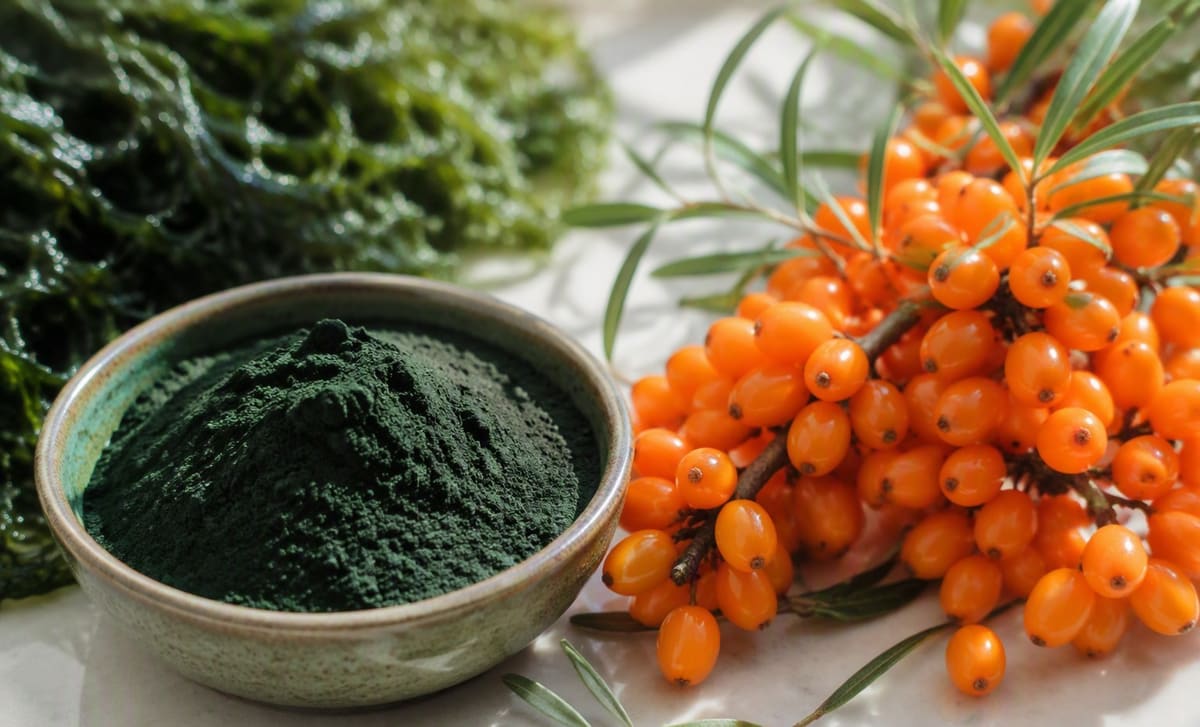
Spirulina is a food: a protein-dense algae powder for shakes, with iron and B vitamins, sold by the tub. Sea buckthorn is a targeted supplement: an oil with human trials for dry eyes, skin, vaginal dryness, and lipids, sold by the softgel. They share a shelf in stores and almost nothing else, which makes this the easiest verdict in the series.
The comparison
| Sea buckthorn | Spirulina | |
|---|---|---|
| What it is | Berry oils and sour berries | Dried cyanobacteria (algae) powder |
| Headline nutrition | Omega-7 oil, vitamin C, carotenoids | About 60% protein by dry weight, iron |
| The B12 honesty | Not a B12 source | Mostly pseudo-B12, an unusable analog |
| Human evidence | RCTs: dry eyes, skin, vaginal dryness, lipids | Nutrition studies; small metabolic pilots |
| How people use it | Softgels, liquid oil, diluted juice | Powder in smoothies, tablets |
| Quality watch | Oil freshness, plant part on label | Contaminant testing (heavy metals, microcystins) |
| Role | Targeted supplement | Food-like protein boost |
Spirulina’s real strengths and one famous myth
As dried algae go, spirulina earns its reputation: roughly 60 percent protein by dry weight, useful iron, and a micronutrient spread that makes a smoothie meaningfully more nutritious. It also grows fast in warm alkaline ponds with a fraction of the land conventional protein crops need, which is the factual core of its sustainability reputation. Quality matters more than brand, because algae concentrate whatever is in their water, so third-party contaminant testing is the label check that counts.
Taste and habit decide whether it earns its keep. The powder is pond-green and savory, pleasant in a fruit smoothie and hard to love in water, so the people who benefit are the ones who find a recipe they repeat daily. A tub you enjoy beats a tub you avoid.
The famous myth is vitamin B12. Spirulina’s B12 is mostly an analog, pseudovitamin B12, that the human body cannot use and that can muddy B12 blood tests. Vegans relying on spirulina for B12 are relying on a measurement error. Fortified foods or a real supplement are the answer, and sea buckthorn offers nothing on this front either.
What “60 percent protein” actually means at the table
The protein statistic is real and routinely misread. Sixty percent by dry weight sounds like a steak replacement until you look at servings: a heaped tablespoon of spirulina powder weighs about 7 grams and delivers roughly 4 grams of protein. That is a nice bump for a smoothie, not a meal’s worth. You would need an unpalatable mound of green powder to match a chicken breast, and nobody eats that way. The iron deserves the same arithmetic: real per gram, but the grams are small, so it tops up rather than treats. Spirulina’s honest role is a micronutrient-dense garnish on an already decent diet, with the protein as a bonus rather than the headline.
Sea buckthorn’s actual job
Sea buckthorn is not a protein, not a meal, and not a multivitamin. The oil is a targeted supplement whose randomized trials cover dry eyes, skin hydration, vaginal dryness, and blood lipids in people with abnormal levels, all catalogued in the clinical trials catalog. The dry-eye trial alone ran 2 grams of oil daily through three winter months in 100 people, and the vaginal trial found roughly triple the odds of epithelial improvement at 3 grams daily. The berry adds vitamin C at 200 to 600 mg per 100 g fresh, per the vitamin C page, so a diluted juice or smoothie delivers in food form something a spirulina shake does not meaningfully provide.
Comparing that to spirulina is comparing a screwdriver to a loaf of bread: both useful, barely comparable.
The lipid story is the most pooled of the sea buckthorn set: a 2022 meta-analysis of 15 randomized trials, corroborated by an 11-trial analysis from 2017, found improved cholesterol markers concentrated in people whose levels started abnormal. Nothing in spirulina’s file is pooled at that scale, which is the real evidence contrast of this page: not algae versus berry, but early pilot studies versus small randomized trials that have been combined and checked twice.
The quality control divide
Both products live or die on sourcing, but for different reasons. Algae are sponges: they concentrate whatever is in the water they grew in, including heavy metals and, in poorly managed ponds, microcystin toxins from other cyanobacteria. Reputable spirulina brands publish third-party contaminant panels, and that publication is the label check that matters most. Sea buckthorn’s risks are duller: oil that has gone rancid, seed oil sold as berry oil, and berry oil diluted with cheap carriers. The oil buying guide lists the label checks for that side. Price per month lands in similar territory for both, so cost rarely breaks the tie.
The format honesty
Spirulina asks you to change breakfast: the powder is savory, pond-green, and only as consistent as the recipe you actually repeat. Sea buckthorn oil asks you to swallow a softgel, the lowest-friction supplement format there is. Adherence decides supplement outcomes more often than molecules do, so pick the format you will still be using in three months, because the trials on the sea buckthorn side ran exactly that long.
One practical note: spirulina tablets exist for people who want the nutrition without the pond taste, though the dose per tablet is small and the price per gram climbs. Sea buckthorn has no equivalent taste problem, since the softgel hides everything. Whichever format you pick, read the boring parts of the label first: contaminant panels on the algae, plant part and carrier list on the oil. The marketing front panel has never once been the deciding factor.
Choose spirulina if
- You want a protein-dense powder for shakes, especially on a plant-based diet.
- You will pick a brand with published contaminant testing.
- You get your B12 from actual B12 sources, not from algae.
- You enjoy the ritual of a daily smoothie and want it to carry more nutrition.
Choose sea buckthorn if
- Dry eyes, skin, vaginal dryness, or abnormal lipids are the goal, at the studied doses on the study dosages page.
- The omega-7 oil or the vitamin C berry fits a specific plan, per the nutrition hub.
- You want a supplement with named human trials, not a general food powder.
- You prefer swallowing a softgel over changing what breakfast tastes like.
More matchups live on the comparisons hub.
Frequently asked questions
Is spirulina or sea buckthorn better?
They do not compete. Spirulina is a protein-dense algae powder: about 60 percent protein by dry weight with iron and B vitamins, a food supplement for shakes. Sea buckthorn is an oil and berry supplement with randomized trials for dry eyes, skin, vaginal dryness, and blood lipids in abnormal ranges. Pick spirulina for protein-adjacent nutrition, sea buckthorn for the trial-backed oil benefits.
Is spirulina a good source of vitamin B12?
No, and this is the honesty point vegans must hear. Spirulina contains mostly pseudovitamin B12, an analog the human body cannot use, which can even interfere with true B12 measurement. Vegans need actual B12 from fortified foods or supplements. Sea buckthorn, for the record, is not a B12 source either.
Can I take spirulina and sea buckthorn together?
Yes, and they stack sensibly: spirulina as the protein-and-micronutrient food powder in a smoothie, sea buckthorn oil as the targeted supplement in a softgel. Their jobs do not overlap, so there is no redundancy to manage. The only shared advice is quality control: pick spirulina with published contaminant testing and sea buckthorn oil with the plant part and freshness stated on the label.