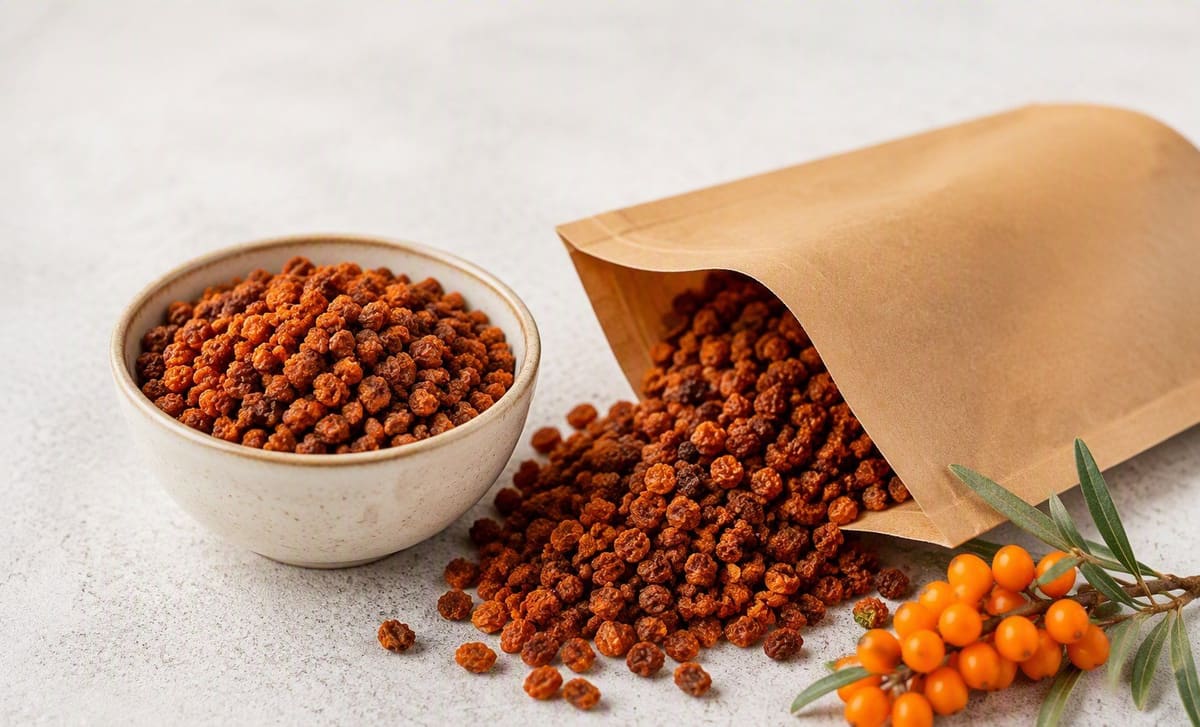
Dried sea buckthorn berries are the shelf-stable whole fruit: water out, fiber and flavor concentrated, vitamin C partly lost to heat and time. They shine in trail mix, oatmeal, and tea, used by the tablespoon rather than the handful. Treat them as a sour dried fruit with attitude, not as a supplement in disguise.
Dried berries sit at the pantry end of this plant. The supplement end is a different shelf entirely, and how the whole category sorts out shows where the line falls.
What drying does, both ways
Removing water concentrates everything that stays behind: the natural sugars, the fiber, the tart malic and quinic acids. Gram for gram, dried berries are denser in sugar than fresh ones, simply because the water is gone. That is arithmetic, not a warning, but it does mean a handful of dried berries is a bigger serving than it looks.
The cost side of the ledger is vitamin C. It degrades with heat during drying and keeps fading with oxygen, light, and months in the cupboard, so the fresh-berry numbers you see quoted do not survive into the bag. The fresh vs dried vs powder comparison puts the forms side by side.
How people actually use them
- Trail mix and granola: a tablespoon adds sour-orange sparks that play well against nuts and sweetness.
- Oatmeal and yogurt: stirred in, where the fat and blandness soften the punch.
- Tea: a few crushed berries steeped gently, per the make tea guide.
- Baking: chopped into muffins and breads like sour raisins.
Portion instinct from other dried fruit misleads here. The sourness concentrates with everything else, so start small.
The label checks
- One ingredient. Berries, full stop. Added sugar on an already concentrated fruit is common and unnecessary.
- Sulfur-free if it matters to you. Some dried fruit is treated with sulfites to hold color. Sea buckthorn usually is not, but sensitive buyers should see “no sulfites” or nothing about them on the label.
- Origin and species, same as every form: Hippophae rhamnoides from a named region.
Where they fit in the big picture
Dried berries are a pantry food, and a good one. The studied oil benefits live elsewhere, in the oil itself at gram doses, which the forms comparison maps form by form. If cooking with them is the plan, the recipes hub has ideas, and the powder explainer covers the milled version of the same trade-offs.
Freeze-dried versus air-dried
Two drying methods reach the same shelf by different roads. Freeze-drying freezes the berry and lets the ice turn straight to vapor, no heat involved, which keeps the shape, a crisp texture, and more of the heat-sensitive vitamins. Hot-air drying is cheaper and gives the familiar chewy, darker berry, but heat is exactly what vitamin C hates. Honest labels name the method, and “freeze-dried” is one claim genuinely worth paying for when nutrition is the point.
The vitamin C question, quantified
Fresh berries carry roughly 200 to 600 mg of vitamin C per 100 g, varying by species and harvest. Drying spends a real share of that, and the cupboard keeps spending it: oxygen, light, and time tax what is left. No honest dried-berry label can promise fresh-berry numbers, and any that does is quoting the farm, not the bag. The vitamin C page shows how the forms compare.
Dose realism
The one human trial of whole berries dosed 28 g a day for three months: colds were unaffected, while an inflammation marker came down. That was fresh berries, and it is the outer anchor for what a daily food amount looks like. Dried berries are concentrated, so a small daily sprinkle is a sane food-level habit. What they are not is a supplement in disguise, and nobody should eat them by the bagful chasing a trial result. The study dosages page has the trial numbers, and the dried berries how-to has the kitchen playbook.
The rehydration trick
Dried berries come back to life in warm water, tea, or juice: fifteen minutes plumps them into something close to their fresh texture, and the soaking liquid carries flavor and water-soluble compounds worth keeping. Add both berries and liquid to oatmeal, baking batter, or a pan sauce. It is the simplest way to make a winter pantry behave like a harvest freezer. Overnight soaking in cold water works as well, and a jar plumping in the fridge needs no planning beyond remembering it exists. Whatever you soak, keep the liquid for the dish, never the drain.
Reading a dried-berry label
One ingredient is the gold standard: berries. Watch for added sugar, glazing oils, and sulfites (rare here, but sensitive buyers check). A named species and origin, Hippophae rhamnoides from a named region, separates a farm product from a commodity blend. Whole berries rather than fragments tell you the handling was gentle. Finding a bag at all is the harder half, and our where to buy guide covers which channels carry dried fruit rather than only oil.
Storage and shelf life
Airtight, dark, and cool is the whole formula. Moisture turns dried berries clumpy and invites mold, oxygen and light keep taxing the vitamins, and a clip-top bag on a sunny shelf ages them in weeks. Once opened, plan on months, not a year. If the bag smells off or the berries weigh sticky-damp, they are done.
Who they suit, and who should skip
They suit cooks and bakers, trail-mix people, tea brewers, and anyone who genuinely enjoys a sour chew. Skip them if you count sugar, because drying concentrates the fruit’s own sugars gram for gram. Skip them, or at least portion them, if your stomach protests acid, because the sour concentrates too. And skip them if the goal is the studied oil benefits, which live in a different aisle entirely, as the oil page explains.
Frequently asked questions
Are dried sea buckthorn berries healthy?
As a food, yes: they keep the fiber, the tart acids, and much of the berry's character in shelf-stable form. What drying costs is vitamin C, which degrades with heat, oxygen, and time. Think of them as a sour, chewy dried fruit, in the same family as sour cherries, not as a supplement.
How do you eat dried sea buckthorn berries?
Small amounts, paired. A tablespoon in trail mix or oatmeal, a few berries steeped as tea, or chopped into baking. Straight from the bag they are intensely sour and chewy, and the drying concentrates both the sourness and the sugar.
Do dried sea buckthorn berries have added sugar?
They should not. The honest product is one ingredient: berries. Some brands add sugar or glazing oil, which the ingredient list must show. Remember that drying concentrates the fruit's own sugars, so even the one-ingredient bag is denser in sugar per handful than fresh.