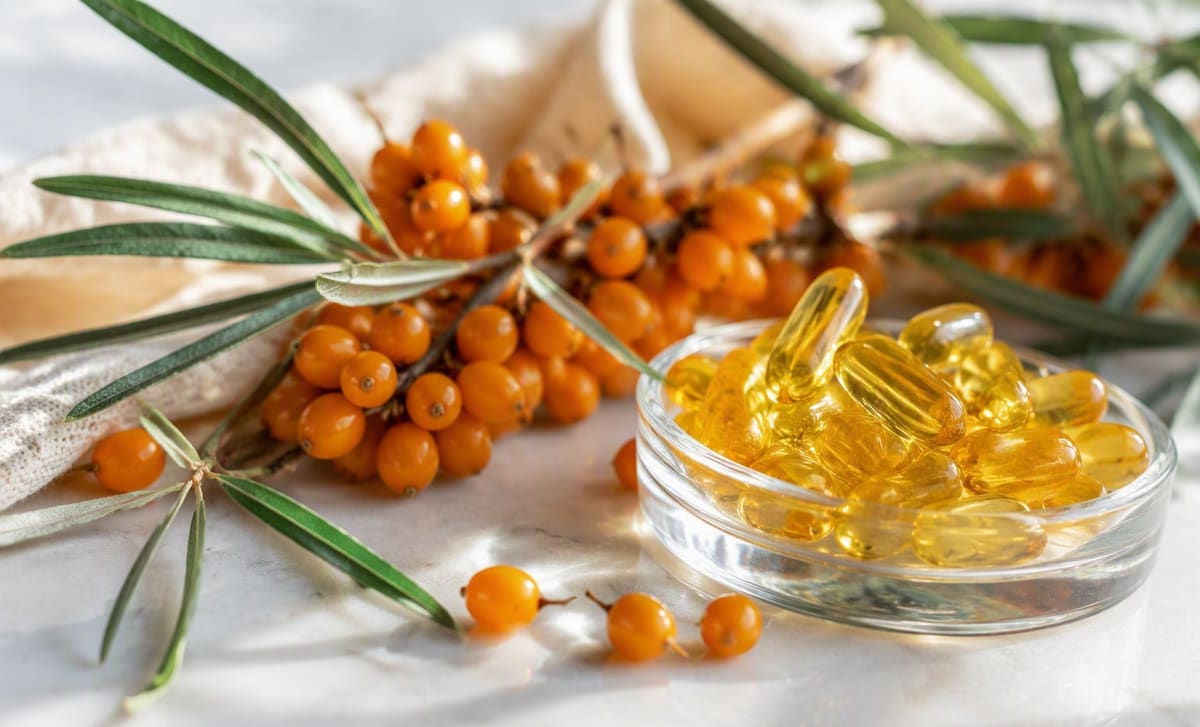
Fish oil wins the triglyceride argument, and it is not close. Marine EPA and DHA carry the deepest cardiovascular evidence base of any supplement, including prescription-grade use for very high triglycerides. Sea buckthorn’s human signal is different: LDL and triglyceride improvements in people with abnormal lipids, plus dry-eye and skin benefits fish oil does not target. Different tools, and many people reasonably use both.
The comparison
| Sea buckthorn oil | Fish oil | |
|---|---|---|
| Source | Berry flesh or seeds of a shrub | Marine fish |
| Signature fats | Omega-7 and 9 (berry oil); plant omega-3 and 6 (seed oil) | Omega-3 EPA and DHA |
| Best-evidenced use | LDL and triglycerides in abnormal ranges; dry eyes; skin | High triglycerides, up to prescription dosing |
| Evidence depth | Meta-analyses of 15 and 11 small RCTs | Decades of trials plus approved prescription forms |
| Vegan fit | Yes, fully plant | No (algae oil is the vegan EPA/DHA route) |
| Oxidation watch | Fairly stable base; carotenoids still fade in light | Fragile. Buy fresh, third-party tested, small bottles |
| Studied dose | 1-3 g/day in human trials | Varies by goal; prescription forms run higher |
What fish oil actually is
Fish oil delivers EPA and DHA, the long-chain marine omega-3s. For very high triglycerides, concentrated EPA/DHA exists as prescription medicine, which tells you how deep that evidence runs. Drugstore fish oil at standard doses is the milder, over-the-counter version of the same idea.
The evidence tiers are worth separating. At the top sit outcomes trials of prescription-strength EPA in high-risk patients, the strongest design a supplement ingredient ever gets. Below that, a large literature on triglyceride lowering at a few grams a day. At the bottom, the prevention question for healthy people with normal triglycerides, where the big trials have been far less impressive than the early hype. Fish oil is a strong tool for a specific job, not a general heart shield.
Sourcing is the other real conversation. Most fish oil comes from small oily fish like anchovies and sardines, and the better brands publish purity testing for heavy metals and oxidation values, the two quality numbers that matter in a marine oil. Dose honesty applies here too: a standard drugstore capsule carries a few hundred milligrams of combined EPA and DHA, while triglyceride trials typically use two to four grams a day, so the label’s “one daily” suggestion and the studied doses are often different conversations. Reading the EPA and DHA lines on the back panel, not the “fish oil 1000 mg” on the front, is the skill that separates a real dose from a marketing one. Sustainability certifications exist for the fisheries side and are worth the thirty seconds they take to check.
What sea buckthorn brings instead
No EPA or DHA, full stop. The berry oil is built on omega-7 (palmitoleic acid) and omega-9, while the seed oil carries plant omega-3 (ALA) plus omega-6. ALA converts to EPA and DHA poorly, so sea buckthorn is not a gram-for-gram fish oil substitute.
Its human signal lives elsewhere. A 2022 meta-analysis of 15 randomized trials found sea buckthorn significantly lowered triglycerides, total cholesterol, and LDL in people whose lipids started abnormal, and an 11-trial analysis from 2017 reached the same conclusion. A separate 100-person trial found 2 grams daily eased dry-eye measures over three months. Those lanes, covered on our cholesterol page and dry-eye page, are ones fish oil does not claim. The studied doses run 1 to 3 grams of oil daily, realistic softgel territory, and both bottles ask for months of consistency before any lab result moves.
Two different shopping lists
It helps to see why people confuse these bottles. Both are oils in softgels sold side by side, both mention omegas on the label, and both get recommended for “heart health” in content that never defines the term. The omega numbers are the tell: fish oil is omega-3, sea buckthorn is omega-7 plus a plant omega-3 that barely converts. If a page claims sea buckthorn replaces fish oil, it is counting on you not reading the fatty acid panel. Our omega-7 glossary entry explains what the 7 actually does.
The vegan fork
Fish oil is fish, so plant-based readers need a fork in the road. Algae oil delivers actual EPA and DHA grown in tanks, the only vegan route to the marine fats themselves. Sea buckthorn is the vegan option for the other lanes: lipid support in abnormal ranges, dry eyes, and skin, with the omega-7 fish oil never had. Many vegans reasonably run algae oil for EPA and DHA alongside sea buckthorn for the rest, since the two barely overlap.
Quality matters on both sides
Fish oil’s weak point is oxidation. EPA and DHA are fragile fats, and a turned bottle smells and tastes exactly like what happened to it. Buy brands with third-party oxidation testing, keep the bottle cool and dark, and use it within a few months of opening.
Sea buckthorn berry oil, built on a more saturated fatty acid base, keeps somewhat better, though its carotenoids still fade in light. Dark glass and small bottles win there too, and our storage guide has the specifics. Either way, one fresh small bottle beats one big cheap one.
Choose fish oil if
- Your triglycerides run high and your doctor agrees omega-3s are worth a place in the plan, over-the-counter or prescription.
- You want the single deepest evidence base in the supplement aisle.
- You eat little oily fish and want the marine fats directly.
- Your doctor mentioned EPA, DHA, or your omega-3 index specifically, the fats sea buckthorn does not contain.
Choose sea buckthorn if
- Your labs show abnormal LDL alongside triglycerides and you want a plant oil with that exact trial signal behind it.
- Dry eyes or skin hydration are on your list. The studied products are in our oil guide.
- You are vegan. Sea buckthorn is fully plant, though note that algae oil, not sea buckthorn, is the vegan route to actual EPA and DHA.
- Fish burps have ended your previous omega-3 attempts and you want an oil you will actually keep taking.
One shared caution: high doses of either oil mildly reduce platelet aggregation, so the blood-thinner conversation applies to both if you take anticoagulants.
More matchups live on the comparisons hub, including sea buckthorn vs rosehip oil for the topical side of the family.
Frequently asked questions
Is sea buckthorn oil a good substitute for fish oil?
Not if your goal is EPA and DHA. Sea buckthorn contains no marine omega-3s. Its seed oil carries plant omega-3 (ALA), which the body converts to EPA and DHA poorly. Fish oil keeps the far deeper evidence for high triglycerides. Sea buckthorn's human trial signal is LDL and triglycerides in people with abnormal lipids, plus dry-eye and skin benefits fish oil does not target.
Can you take sea buckthorn and fish oil together?
At standard doses there is no known conflict, and their fatty acid profiles complement rather than duplicate each other. One caution applies to both: high doses of either oil can mildly reduce platelet aggregation, so if you take anticoagulants or have surgery planned, tell your doctor about everything you take.
Which is better for cholesterol, fish oil or sea buckthorn?
Different lipid problems get different winners. Fish oil, at prescription-strength EPA and DHA doses, is the established option for very high triglycerides, backed by decades of trials. Sea buckthorn's pooled trial signal covers LDL cholesterol and triglycerides in people with abnormal levels, a smaller and younger evidence base. Neither replaces statins or medical care, and a lab result that worries you is a doctor conversation first.