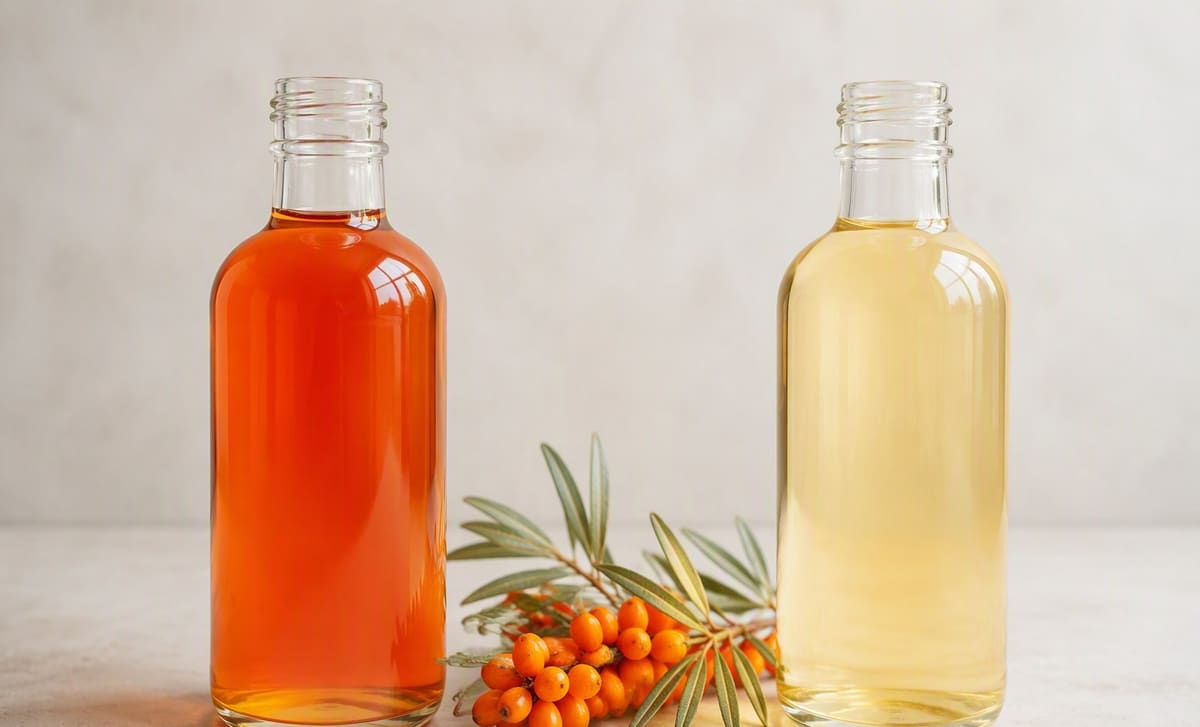
Most fake sea buckthorn oil is not counterfeit, it is diluted, mislabeled, or old. The tells: a label that hides the plant part or the extraction, berry oil that is not deep orange, a seller that cannot produce a certificate of analysis, and a premium product priced like a basic carrier oil. Every check below takes under a minute, and none requires a lab.
The three fraud patterns
Dilution. Real sea buckthorn oil cut with cheaper oils, usually sunflower or soybean. The label reads “sea buckthorn oil blend” or buries sea buckthorn behind the carrier in the ingredient list. You pay berry prices for salad oil.
Seed sold as berry. Seed oil is legitimately good and legitimately cheaper, with almost no omega-7. Sold honestly as seed oil, no problem. Sold as plain “sea buckthorn oil” at berry-oil prices, it is a mislabel that costs you the compound you came for. The seed vs berry breakdown explains the difference.
Old or oxidized stock. Real oil that sat too long in a hot warehouse. The fragile fatty acids and carotenoids degrade, and you get a diminished product at full price. This is a channel problem more than a counterfeiting one, and the where to buy guide ranks the safe channels.
The color and smell tells
Berry oil is thick and so deep orange it stains skin, counters, and fabric. That color is carotenoids, and a “berry oil” that runs pale yellow either is seed oil or has been cut. Seed oil itself is pale by nature, which is fine when the label says seed.
Smell tells you about age. Fresh oil smells earthy and fruity. Oil that smells like old crayons or putty has oxidized, and no discount makes rancid oil a deal.
These are screening tells, not proof. The label and the paperwork are where proof lives.
The label lines that end most evaluations
- Plant part. Berry, pulp, fruit, seed, or blend, stated outright. Silence here is the oldest trick in this market.
- Species. Hippophae rhamnoides. That is the species the composition research and the human trials used.
- Extraction. Supercritical CO2 or cold pressed. A missing extraction line usually means solvent extraction, which is legal, cheap, and a point deduction.
- Numbers. The strongest labels print actual content, like milligrams of berry oil and a palmitoleic acid percentage. A printed number can be checked. A printed adjective cannot.
The COA move
Email the brand and ask for the certificate of analysis for your lot. A real COA shows the fatty acid profile (the palmitoleic percentage tells you whether the berry oil claim holds), oxidation markers like peroxide value, and contaminant screening. Serious brands answer this email. Brands that ignore it, or send a marketing PDF instead of lab data, have told you what you needed to know.
The too-good price check
Verified fair pricing runs about $0.60 to $1.50 per studied day depending on form, per our price guide. A premium-labeled oil at a third of that is almost never a generous brand. It is diluted, old, diverted, or mislabeled. On marketplaces, also check the “Sold by” line: the brand itself or a retailer you recognize, or walk away.
Three more patterns from the wild
The missing Latin name. No Hippophae rhamnoides anywhere on the label or listing. Legitimate brands print the species because it costs nothing and proves the plant. Its absence means a lazy relabeler or a product that is not what the front says.
The omega-7 shell game. A label shouting omega-7 for a blend that is mostly seed oil with a splash of berry. The percentage quoted is of the berry share, not the bottle. Ask for milligrams of berry oil per serving, the number the benchmark label prints, and watch how many brands go quiet. The palmitoleic acid entry explains why that number is the one that matters.
The suspicious price floor. Production costs set a floor: berries, organic certification, CO2 extraction, and handling. A premium-labeled oil priced below the fair band means something was skipped, and it was not the marketing.
The review farm. A niche oil with thousands of generic five-star reviews, posted in bursts, praising shipping and packaging rather than the oil itself. Reviews measure the listing, not the bottle, and niche products do not accumulate mainstream review volumes honestly. Weight the one-star reviews for mentions of rancidity and pale color. Those buyers ran your tests for you.
The printable label checklist
Screenshot this for the store:
- Plant part named: berry, seed, or blend with the split.
- Species: Hippophae rhamnoides.
- Extraction: supercritical CO2 or cold pressed.
- Numbers printed: milligrams per serving, palmitoleic acid percentage for berry oil.
- Certification with a named certifier.
- Origin named.
- Production or best-by date and a lot number.
- Seller: the brand or an authorized retailer.
Eight lines, eight passes, or keep walking. The how to choose guide explains each line in full.
If the bottle is already in your kitchen
Run the smell test (earthy and fruity is fresh, crayon or putty is oxidized), check the color against the tells above, and email the brand for the lot COA. Marketplaces accept returns on misdescribed goods, and a brand that made an honest mistake will make it right. For the next bottle, the channel comparison ranks the sellers that keep stock fresh, and the storage page keeps your good bottle good.
The label benchmark
SeabuckWonders Omega-7 Complete, 120 softgels
The label benchmarkWhy it anchors this page. This is the transparency standard every faker fails to match: 800 mg certified-organic berry oil at a printed 32 to 38% palmitoleic acid plus 200 mg organic seed oil per 1,000 mg serving, with USDA organic and CO2 extraction behind it. When a label prints checkable numbers, you do not need trust.
What we do not love. Beef gelatin shell, so not vegan, and the 2-gram trial dose means four softgels a day. Neither affects the chemistry inside.
Use it as: the reference. Any product you are unsure about should survive a side-by-side with this supplement facts panel.
We may earn a commission at no cost to you.
If you take blood thinners, are pregnant or nursing, or have surgery planned, read our safety notes and talk to your doctor before dosing any oil, verified or not. Verified picks that pass every check on this page are ranked in the oil guide and the capsules guide.
Frequently asked questions
How can you tell if sea buckthorn oil is pure?
From the label and the seller, not from kitchen tests. A pure product names the plant part (berry, seed, or blend), the species Hippophae rhamnoides, and the extraction method, and the brand will send a certificate of analysis on request. Berry oil should be deep orange and stain; a pale oil sold as berry oil is a red flag.
Is cheap sea buckthorn oil fake?
Not automatically, but a premium-labeled oil at a fraction of the normal price is usually diluted, old, or mislabeled. Seed oil is legitimately cheaper than berry oil, which is why the plant part on the label matters more than the price tag. Check the seller identity on marketplaces before anything else.
What should I do if I think my sea buckthorn oil is fake?
Stop using it, photograph the label and lot number, and contact the seller for a refund, citing the specific problem (no plant part, no species, pale berry oil). Marketplaces have buyer protection for misdescribed goods. Then report the listing to the marketplace and, in the US, to the FDA's MedWatch program if it caused a reaction.