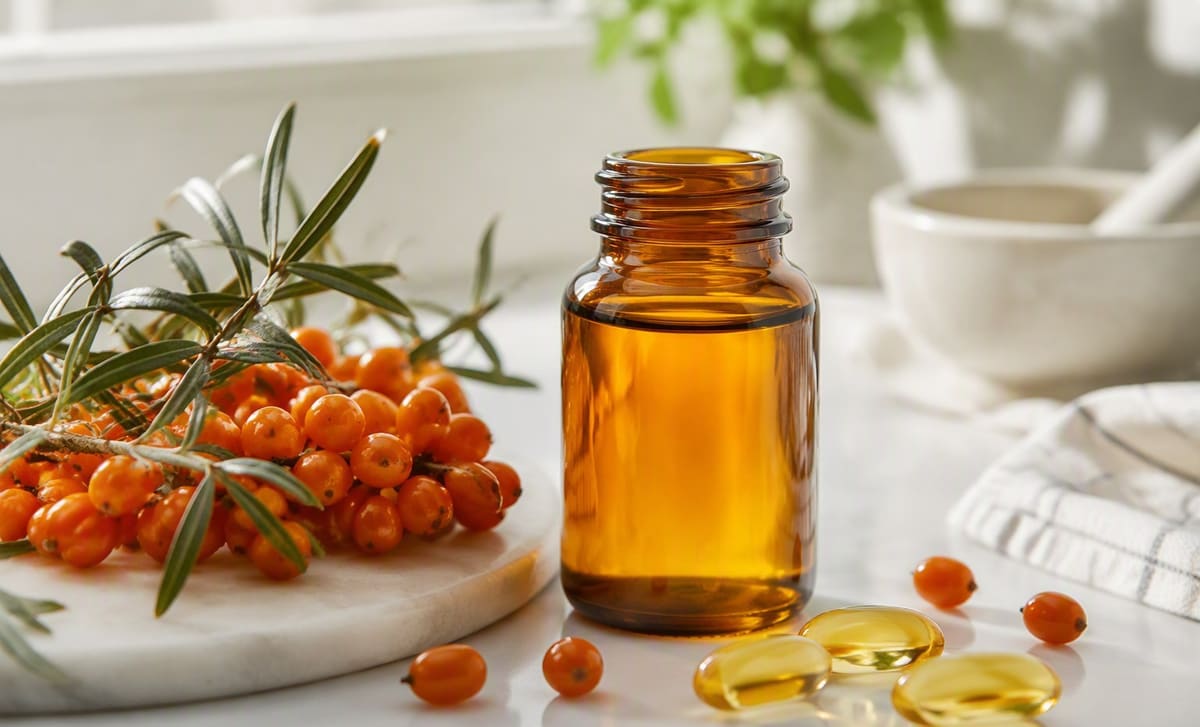
Cod liver oil is a vitamin supplement with omega-3s attached: preformed vitamin A, vitamin D, plus EPA and DHA, in one traditional spoonful. Sea buckthorn oil is a fatty acid supplement with carotenoids attached: omega-7, plant omegas, and pro-vitamin A compounds your body converts only as needed. The headline difference is the vitamin A ceiling, which only one of these bottles has.
The comparison
| Sea buckthorn oil | Cod liver oil | |
|---|---|---|
| Source | Berry flesh or seeds of a shrub | Cod livers |
| Delivers | Omega-7 and 9 (berry) or plant omega-3 and 6 (seed), carotenoids, vitamin E | EPA + DHA, preformed vitamin A (retinol), vitamin D |
| Vitamin A form | Carotenoids (pro-vitamin A, converted as needed) | Preformed retinol (ready to use) |
| Upper-limit risk | No vitamin A toxicity pathway from carotenoids | Real. Chronic excess retinol is toxic |
| Evidence focus | Blood lipids in abnormal ranges, dry eyes, skin | Vitamin A and D delivery, omega-3 intake |
| Pregnancy note | Supplements unstudied; ask your doctor | Retinol excess is a known pregnancy risk; dose with care |
| Vegan fit | Yes | No |
Cod liver oil’s deal, in one paragraph
It is the oldest supplement in this comparison and still a legitimate one. One spoonful delivers EPA and DHA plus meaningful vitamin D and preformed vitamin A, which is why it earned its reputation in sun-poor northern winters.
That vitamin A is also the catch. Preformed retinol has a tolerable upper intake level (about 3,000 mcg RAE per day for adults), and chronic overshoot is genuinely toxic: liver strain, bone problems, and birth-defect risk in pregnancy. Stack cod liver oil on top of a multivitamin and fortified foods and the ceiling is closer than most labels admit. It is the one oil in this comparison with a real overdose conversation.
Sea buckthorn’s different chemistry
Sea buckthorn berry oil is rich in carotenoids, the orange pigments behind its color. Beta-carotene is pro-vitamin A: your body converts it to retinol on demand and throttles conversion when stores are full. That self-limiting pathway is why carotenoids never cause classic vitamin A toxicity. Very high intake can tint skin orange, which is harmless and fades.
The omega-7 at the center of the berry oil is palmitoleic acid, a fatty acid rare in the plant world and the reason sea buckthorn gets studied for dryness lanes at all. Our omega-7 glossary entry explains the chemistry. Cod liver oil has no omega-7 to speak of.
What you do not get from sea buckthorn: EPA, DHA, or vitamin D. What you do get, per a 2022 meta-analysis of 15 randomized trials, is a lipid signal (lower triglycerides, total cholesterol, and LDL in people with abnormal levels), plus a dry-eye trial covered on our dry-eye page. Different bottle, different job description.
Practical notes before you pick. Cod liver oil tastes like fish (lemon versions exist), comes as liquid or softgels, and costs little. Sea buckthorn oil comes as softgels or liquid, leans tart and fruity, and costs more per gram. They sit in the same aisle because they answer different shopping lists.
The stacking problem, spelled out
The vitamin A ceiling becomes practical when you count everything. A daily spoon of cod liver oil can carry a large share of the 3,000 mcg RAE upper limit on its own, depending on the brand. Add a multivitamin, fortified cereal or milk, and an occasional liver dinner, and a careful person can drift past the line without any single product looking excessive. The fix is not fear, it is arithmetic: read the retinol micrograms on every label you take, sum them, and keep the total under the limit. Sea buckthorn users skip this entire exercise, since carotenoids carry no upper-limit conversation, a genuine convenience point in its favor.
Pregnancy tightens the rule further, because excess retinol is a known birth-defect risk. Cod liver oil in pregnancy is a doctor conversation about dose, not a default habit. Sea buckthorn’s pregnancy file is thinner in the other direction: the topical oil is food-grade, but concentrated supplements are simply unstudied there, so the same doctor conversation applies.
The winter logic
Cod liver oil’s northern reputation was earned on vitamin D. It is one of the few traditional foods that delivers a meaningful dose, and in sun-poor months that matters more than any supplement trend. Sea buckthorn brings nothing to the vitamin D lane. Its winter credential is different: the landmark dry-eye trial ran 2 grams of oil daily through the cold months in 100 people, the exact season when wind, indoor heating, and low humidity punish eyes and skin. One bottle addresses the missing sunshine, the other addresses the dryness the season creates. Many households reasonably run both.
The habit test
Both oils only work if you keep taking them, and they fail differently. Cod liver oil fails on taste: the fish burps are legendary, and lemon flavoring only helps some people. Sea buckthorn oil fails on price: a bottle costs several times more per month, and budget fatigue is real. Be honest about which failure mode you are prone to, because the trial doses on both sides ran for months, not days.
Choose cod liver oil if
- You want vitamins A and D plus omega-3s in one product, especially through a dark winter.
- Your diet is low in oily fish and dairy, and your doctor agrees the combination fits.
- You will actually track total vitamin A from all sources, multivitamin included.
- Budget matters, since it is the cheapest bottle in this comparison.
Choose sea buckthorn if
- You want the fatty acid and carotenoid profile without a vitamin A ceiling to track.
- Your targets are blood lipids (in an abnormal range), dry eyes, or skin, the lanes with human trial data. The cholesterol page has the lipid numbers, and our oil guide scores the products.
- You are vegan, since cod liver oil is fish, full stop.
- You already get vitamin D from another source and do not need it from your oil.
On blood thinners or pregnant? Either bottle earns a doctor conversation first, cod liver oil for its retinol, sea buckthorn for its unstudied pregnancy status and mild antiplatelet signal at high doses, covered on the blood-thinner page. More matchups live on the comparisons hub.
Frequently asked questions
Can you get too much vitamin A from sea buckthorn?
From its carotenoids, effectively no. Beta-carotene converts to vitamin A only as the body needs it, so the classic vitamin A toxicity pathway does not apply the way it does with cod liver oil's preformed retinol. Very high carotenoid intake can tint skin orange, which is harmless and reversible. Separate issue: concentrated sea buckthorn supplements are unstudied in pregnancy, so the ask-your-doctor rule still holds.
Which is better for omega-3s, sea buckthorn or cod liver oil?
Cod liver oil, clearly. It delivers EPA and DHA directly, the marine omega-3s with the deep cardiovascular literature. Sea buckthorn contains no EPA or DHA. Its seed oil carries plant omega-3 (ALA), which converts poorly to the marine forms. If omega-3s are your goal, cod liver oil or fish oil is the right shelf.
Which is better in winter, cod liver oil or sea buckthorn?
They solve different winter problems. Cod liver oil is one of the few food sources of vitamin D, the vitamin most people run short on when daylight disappears, which is how it earned its northern reputation. Sea buckthorn's winter credential is a dry-eye trial run through the cold months, plus skin hydration data for the season of indoor heating. Many northern households reasonably use cod liver oil for the vitamin D and sea buckthorn for the dryness.