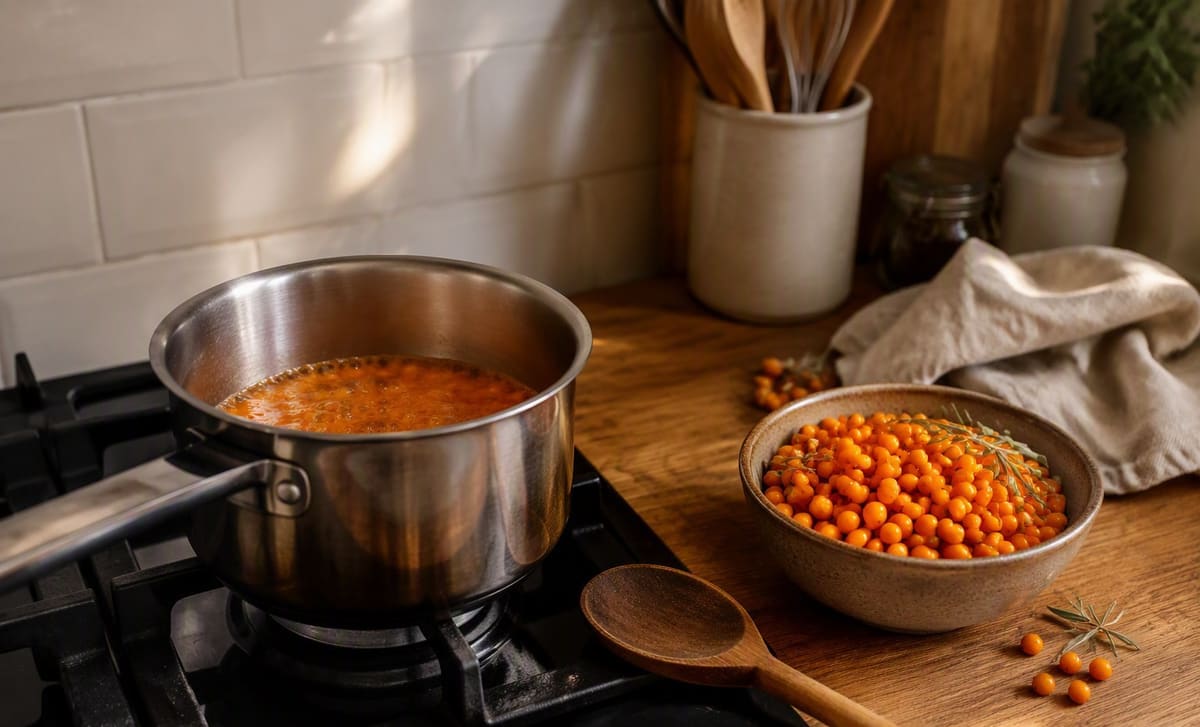
Sea buckthorn cooks well if you respect two facts: vitamin C hates heat, and acidity loves fat. Add the juice or berries late, off the heat when you can, and point that acidity at rich foods: salad dressings, sauces for oily fish and game, and desserts. The oil is a finishing oil, never a frying oil.
The heat rule
Vitamin C degrades with heat, time, and oxygen, and cooking supplies all three. If the vitamin is why you are cooking with sea buckthorn, add it at the end: juice stirred into a finished sauce, berries scattered over a dessert, syrup swirled into a cooled posset. The carotenoids and the acids are far hardier, so color and tang survive what the vitamin does not. The vitamin C page explains the numbers, and the how-to-use hub covers the no-heat routes for anyone who came here for the vitamin rather than the flavor.
Where the acidity shines
- Salad dressings. Juice or puree in place of lemon or vinegar, with oil and a touch of honey.
- Sauces for rich fish and game. Sea buckthorn’s acid cuts through fat the way a good wine sauce does. Salmon, duck, and venison all answer well. Nordic and Russian kitchens have cooked this way for generations.
- Desserts. Curds, possets, sorbets, and cheesecake toppings, where the sourness reads as sophistication. The desserts page has two tested starting points.
- Drinks and glazes. Reduced with sugar, the juice becomes a glaze for roasted vegetables or a base for spritzes.
The oil stays off the heat
Berry oil is a finishing oil. High heat wastes its carotenoids, risks off flavors, and turns your pan orange besides. Drizzle it over finished dishes if you want it in the kitchen at all. For cooking fat, use something boring and save the sea buckthorn for the plate. More ideas live on the recipes hub, and the oil explainer covers the bottle itself. Because a finishing oil is tasted rather than hidden, freshness decides whether it is worth using at all, and our tested oil picks start there.
How much to use, concretely
Sea buckthorn is a loud ingredient, and the quantities that work are smaller than beginners expect. In a salad dressing for two, 1 to 2 tablespoons of juice replaces the vinegar entirely. In a pan sauce for four portions of fish or duck, 2 to 3 tablespoons of juice or puree, added off the heat at the end. Over a dessert, a spoon of berries or a drizzle of syrup per bowl. If a dish tastes aggressively sour, the fix is fat or sweetness, not less cooking time.
The vitamin C sentence, and what it means in the kitchen
Heat, time, and oxygen degrade vitamin C, so the longer and hotter you cook the berries, the less of the vitamin survives. Practically: stir juice into sauces after the pan leaves the burner, add berries to porridge after cooking, and bake with sea buckthorn for flavor rather than nutrition credit. The color and the acids are heat-proof, so the dish keeps its point either way.
The sweetener guide
Sourness this strong wants a partner, and each sweetener behaves differently. Honey is the traditional match and rounds the tropical notes, about a teaspoon per small glass of diluted juice. Sugar dissolves cleanest in hot reductions and glazes. Maple syrup suits desserts and breakfast bowls. Start with less than instinct says, taste, then adjust, because you can add sweetness and you cannot remove it.
Mistakes that waste good berries
- Boiling the juice hard. Flavor flattens, vitamin C falls, and the kitchen smells like a candy accident. Gentle heat, short time.
- Frying in the oil. Smoke, waste, orange pan. Finishing only.
- Under-sweetening early. A sauce that makes guests pucker is not fixed at the table. Taste before it leaves the kitchen.
- Pairing with delicate flavors. Sea buckthorn steamrolls subtle fish and mild greens. Give it salmon, duck, venison, dark chocolate, or aged cheese: something that can push back.
A note on savory tradition
Nordic and Russian kitchens reached for sea buckthorn the way French ones reach for wine: acid for rich meat and fish, sweetness for desserts. That tradition is a decent recipe filter. Dishes that want brightness and can hold their own against it are candidates. Delicate dishes are not.
If you only try three things
A dressing: 2 tablespoons juice, 4 tablespoons oil, a teaspoon of honey, salt. A pan sauce: sear duck or salmon, remove, splash in juice and a knob of butter off the heat. A dessert: the desserts page posset, which exists because this acid was born to cut cream. The make juice page covers your own base, and the syrup explainer covers the ready-made shortcut.
Leftover berries, zero waste
Sauce and dressing trimmings, a handful of berries past their best, the last spoon of puree: all of it freezes in an ice cube tray and drops into the next pan sauce or smoothie. Nothing about this fruit is single-use except the apology for the countertop stains. Freeze first, apologize later is the whole philosophy.
Frequently asked questions
Can you cook with sea buckthorn oil?
You can, but you should not fry with it. High heat degrades the carotenoids and flavor that make it expensive. Use it as a finishing oil drizzled over finished dishes. For actual cooking acidity and color, the juice, puree, or syrup is the right tool.
Can I bake with sea buckthorn powder or berries?
Yes, both work well folded into muffins, scones, and granola bars, where the sourness reads as a feature. Bake for flavor and color rather than vitamin C credit, because oven heat and time degrade the vitamin. Pair with honey or white chocolate and the acidity behaves beautifully.