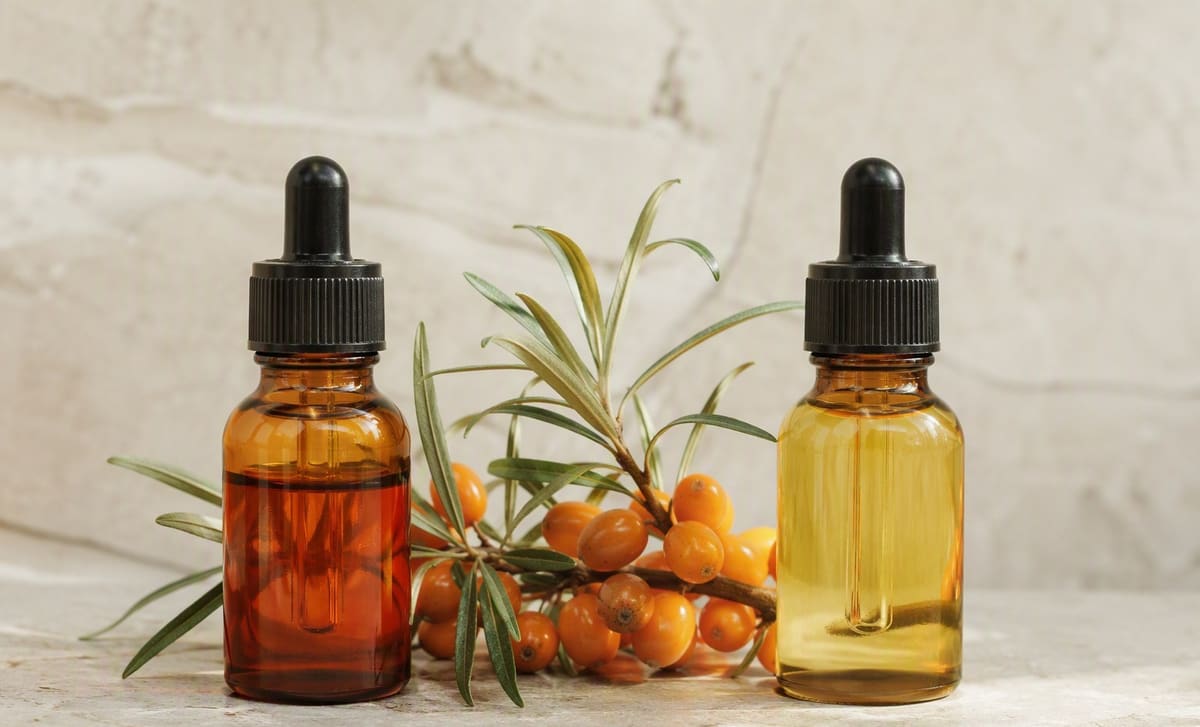
The best sea buckthorn oil for most people is an organic, CO2-extracted berry oil or seed-and-berry blend from a brand that names the plant part on the label. Our top pick is SIBU’s sea berry oil for sourcing and transparency. SeabuckWonders is the best value. Skip anything that does not tell you whether it came from the berry or the seed.
Prices below come from retailer listings we checked in July 2026. They move, so treat them as a guide and confirm at checkout. This is a research-based review: scores rely on verified label data, certifications, and published composition, not our own lab tests. Our editorial policy explains the rubric.
The picks at a glance
| Product | Best for | Form | Cost per day* | Our score |
|---|---|---|---|---|
| SIBU Sea Berry Oil (52 ml) | Best overall | Liquid berry oil | about $0.60 | 9.1 |
| SeabuckWonders Omega-7 Complete (120 ct) | Best value | Softgel blend | $0.75 | 8.8 |
| SIBU Organic Sea Berry Seed Oil (30 ml) | Best seed oil | Liquid seed oil | about $0.83 | 8.2 |
| The Ordinary Sea Buckthorn Fruit Oil | Budget topical use | Liquid fruit oil | lowest entry price | 7.6 |
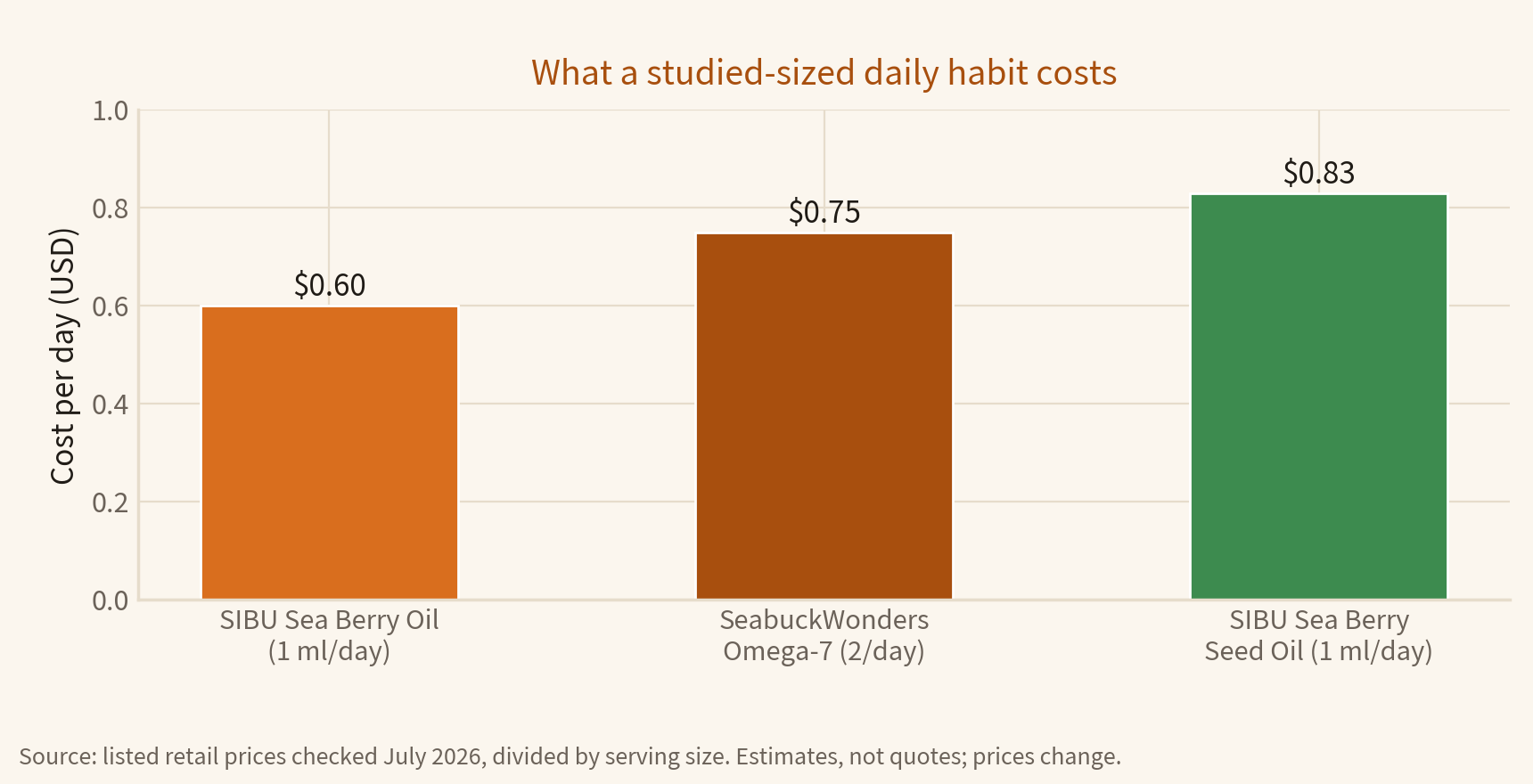
See the data behind this chart
| Product | Daily serving | Cost per day |
|---|---|---|
| SIBU Sea Berry Oil (52 ml) | 1 ml | ~$0.60 |
| SeabuckWonders Omega-7 Complete (120 softgels) | 2 softgels | $0.75 |
| SIBU Sea Berry Seed Oil (30 ml) | 1 ml | ~$0.83 |
1. SIBU Sea Berry Oil: best overall
SIBU Sea Berry Oil, 1.76 fl oz (52 ml)
Best overallWhy it wins. SIBU built its whole company on Himalayan sea buckthorn, and it shows in the paperwork: certified organic, supercritical CO2 extraction, and labels that tell you which part of the plant you are getting. The 52 ml bottle works out near $0.60 a day at a 1 ml serving, which undercuts most softgels.
What we do not love. The taste is earthy and the berry oil stains. This is a kitchen-counter oil, not a travel companion. If convenience matters more than price, the softgels below are the better daily habit.
Best for: anyone who wants the highest-quality liquid oil and will actually use it daily.
We may earn a commission at no cost to you.
2. SeabuckWonders Omega-7 Complete: best value
SeabuckWonders Omega-7 Complete, 120 softgels
Best valueWhy it wins. This is a proper blend, not a label trick: each 1,000 mg serving is 800 mg certified-organic berry oil (32 to 38% palmitoleic acid, printed right on the supplement facts) plus 200 mg seed oil. That blend is the closest thing on the shelf to what the dry-eye and skin studies actually used. At $0.75 a day from the 120-count bottle, nothing verified beats it on value.
What we do not love. The capsule is kosher beef gelatin, so it is not vegan. If that matters to you, see the vegan pick in our capsules guide.
Best for: daily supplementers who want study-form oil at the lowest honest cost per day.
We may earn a commission at no cost to you.
3. SIBU Organic Sea Berry Seed Oil: best pure seed oil
SIBU Organic Sea Berry Seed Oil, 30 ml
Best seed oilWhy it made the list. Sometimes seed oil is exactly what you want: lighter, pale, rich in omega-3 and 6, and friendlier on acne-prone skin. SIBU’s is organic and unrefined with nothing else in the bottle.
What we do not love. You are paying berry-oil money for an oil with almost no omega-7. Read our seed oil vs berry oil breakdown before deciding this is what you need.
We may earn a commission at no cost to you.
4. The Ordinary Sea Buckthorn Fruit Oil: budget topical pick
The Ordinary 100% Organic Cold-Pressed Sea Buckthorn Fruit Oil
Budget pickWhy it made the list. A single-ingredient, organic, cold-pressed fruit oil at a fraction of premium pricing. For topical use on skin, it delivers the carotenoid-rich berry oil experience cheaply.
What we do not love. Cold pressing is a step below CO2 extraction for preserving delicate fatty acids, and this is sold as a cosmetic, not a food supplement. Do not take it by mouth. For internal use pick one of the options above. It will also tint your face orange if you overdo it.
We may earn a commission at no cost to you.
How we chose
We started from every sea buckthorn oil we could verify a label and a retailer price for, then scored each one against the published rubric: purity and sourcing (30%), fatty acid profile (25%), third-party testing (20%), value (15%), and transparency (10%). Products that hid the plant part, the species, or the extraction method lost points no matter how pretty the bottle was. Two types never made the list at all: unnamed-origin bulk oils on marketplaces, and any blend that leads with cheaper carrier oils like sunflower.
The scores lean on documents rather than vibes, which is the same standard the rest of the site runs on. How we research sets out where our evidence grades come from and why a brand-funded study still gets labelled as one, and it is worth two minutes before you weigh any ranking on this page, ours included.
If you take blood thinners, are pregnant or nursing, or have surgery planned, read our safety notes and talk to your doctor before dosing.
What to look for on the label
- The plant part. Berry, pulp, or fruit oil means omega-7. Seed oil means omega-3 and 6. “Sea buckthorn oil” alone means ask.
- The species. Hippophae rhamnoides is the one the research used.
- The extraction. Supercritical CO2 preserves the fatty acids best. Cold pressed is the acceptable second. Avoid solvent-extracted oils.
- Organic certification. Sea buckthorn concentrates what it grows in, good and bad.
Common oil-buying mistakes
- The carrier-cut blend. Sunflower or olive oil leading the ingredient list means a diluted bottle at an undiluted price. A blend without ratios is a no.
- The bulk no-name jug. Big anonymous marketplace bottles offer no species, no extraction, and no recourse. Cheap oil you cannot verify is not cheap.
- The giant bottle “for value.” Oil oxidizes after opening, so a bottle sized for six months of use delivers three good months and three rancid ones. Buy for two to three months ahead.
- Swallowing the cosmetic bottle. Cosmetic-grade oils are not held to food standards, which is why our budget pick carries a do-not-eat note. Internal use means a food-grade bottle from the picks above.
The 60-second decision path
- Daily oral use, best verified sourcing: pick one, the liquid overall winner.
- Daily oral use, best value with zero measuring: the softgel pick, and the capsules guide for more options.
- Topical use only: the budget bottle, and expect tint at full strength.
- Unsure which oil type your goal needs: the seed oil vs berry oil breakdown before any cart.
Storage: what changes after opening
The printed best-by date assumes a sealed bottle. Once opened, the oxidation clock starts, and the unsaturated fatty acids mapped on the fatty acid profile page are the first casualties. Liquid oil goes in the fridge, cap tight, dropper wiped clean so nothing travels back into the bottle. Softgels get a cool, dry cabinet, never a steamy bathroom. Match bottle size to your real pace using the dosage page: at 1 to 3 grams a day, a 52 ml bottle is about two months, which is exactly the right size. Any oil that smells like crayons or old paint is done, whatever the date says. The oil nutrition page covers the absorption side: take your dose with a meal that contains some fat, or part of what you stored so carefully never gets absorbed.
Who should skip the liquid form
Liquid oil is the value winner and still wrong for some buyers. Skip it if the earthy taste or the measuring routine will kill the habit, because softgels exist precisely for you. Skip it if your kitchen runs warm and fridge space is tight, because oxidation will tax every degree. Skip it for travel-heavy lives, where a leaking dropper bottle ruins a bag and a softgel bottle does not. And skip it for purely topical goals, where the cosmetic-grade budget bottle does the same job for less.
Frequently asked questions
What is the best sea buckthorn oil to take?
For internal use, we rate SIBU's organic sea berry oil highest for sourcing and transparency, with SeabuckWonders as the best value alternative. Look for the plant part on the label, organic certification, and CO2 extraction.
Is it better to take sea buckthorn oil or capsules?
Liquid oil costs less per gram and absorbs the same, but many people dislike the taste and the staining. Capsules cost more per day and are far more convenient. The studies used both, so pick the form you will actually take every day.
How much sea buckthorn oil should I take per day?
The human studies used 1 to 3 grams per day, usually split across meals. In volume that is roughly 1 to 3.3 ml of liquid oil (a scant quarter to half teaspoon) or 2 to 6 softgels depending on the product.
Does sea buckthorn oil need to be refrigerated?
After opening, yes, or at minimum a cool, dark cabinet. The unsaturated fatty acids that make the oil valuable are the same ones that oxidize, and cold, dark, and sealed slows that down. If it starts to smell like crayons, it is done.