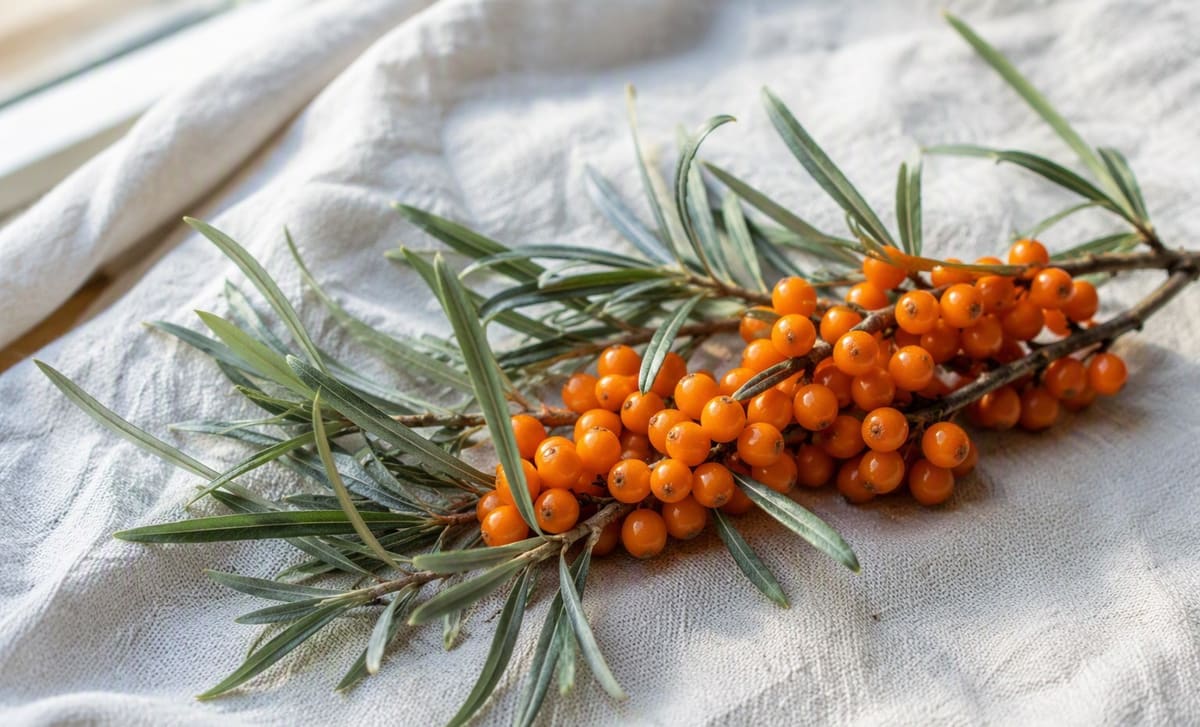
Sea buckthorn is a tough, thorny shrub (scientific name Hippophae rhamnoides) that grows from the coasts of Europe to the mountains of Asia and produces clusters of small, bright orange berries. Those berries are intensely sour, remarkably rich in vitamin C, and the source of a nutrient-dense oil used in supplements and skincare. That is the whole answer, and the rest of this page is the useful detail. The plant hub covers botany and identification in full.
The plant itself
Picture a silver-leaved shrub, two to four meters tall, armed with thorns, growing where most plants give up. Sea buckthorn is deciduous, fixes its own nitrogen through its roots, and tolerates cold, wind, salt spray, and poor soil. Plants are male or female, and only the females carry the orange berries, which cling to the branches deep into winter.
Where it grows
The native range stretches across temperate Europe and Asia, with its stronghold in the Himalayas and on the Tibetan Plateau. It also naturalizes easily and is planted deliberately for land reclamation, because few shrubs stabilize barren ground as well. The where it grows page maps the range, and the regions hub compares what different origins mean for the products on your shelf.
What people use it for
Food. The berries become juice, jam, powder, and tea, especially in Northern and Eastern Europe and across Asia. They are among the richest common fruit sources of vitamin C.
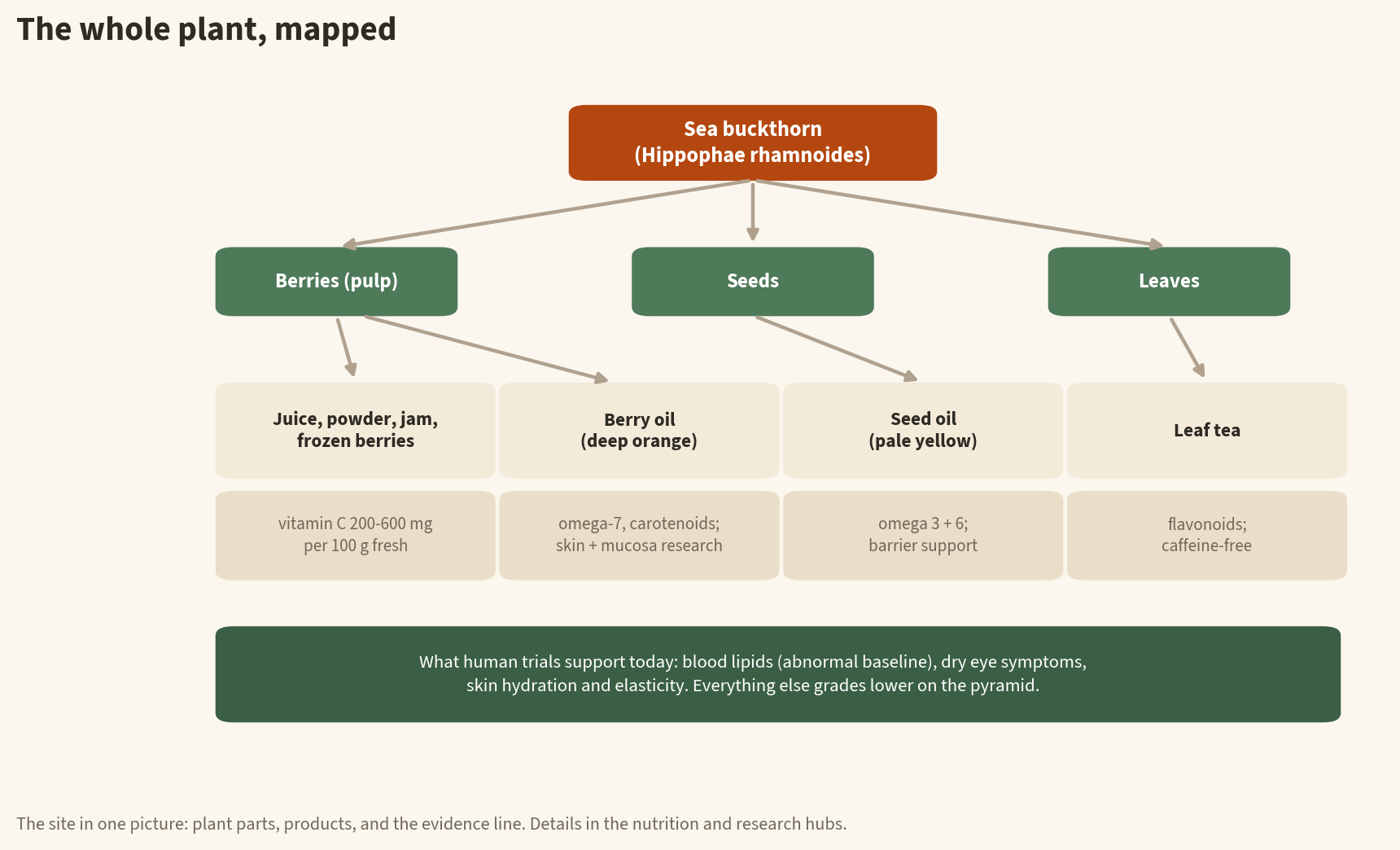
Oil. Pressed from the berry pulp or the seeds, the oil is the form the human trials used. Pulp oil and seed oil are different products with different fatty acid profiles, a distinction the nutrition hub explains.
Supplements. Softgels and capsules packaging the oil, marketed for skin, dry eyes, cholesterol, and more. Some claims have trial support. Many do not.
Skincare. Creams, serums, and body oils built on the berry oil’s carotenoids and fatty acids.
One plant, two oils
The detail that trips up most beginners: sea buckthorn produces two different oils. Pulp oil, pressed from the berry flesh, is deep orange and carries the omega-7 that built the supplement category. Seed oil is pale and lighter, built on omega-6 and omega-3. Labels that just say “sea buckthorn oil” without naming the part are telling you less than you deserve, and the oil guide teaches the label reading in five minutes.
Why it is suddenly everywhere
Three currents converged. The omega-7 story gave marketers a fresh nutrient to talk about. Clinical trials, small but real, showed benefits for skin hydration, dry eyes, and blood lipids. And social media did what it does with anything bright orange and photogenic. The result is a genuine nutritious plant wearing a louder reputation than the evidence justifies.
How this site covers it
Every claim on SeaBuckthornWorld is graded against the human evidence, from solid trials down to tradition and lab work, and we publish the null results alongside the wins. The method is spelled out in how we research, and the benefits hub is the fastest tour of what is proven, what is promising, and what is hype.
What it is not
Three clarifications kill most beginner confusion. It is not related to the true buckthorns, despite the borrowed name, a mix-up the name origin page untangles. It is not a citrus, whatever the vitamin C comparisons suggest. The acid profile is its own, as the berry page shows. And it is not a wellness fad invented last decade: the history hub documents centuries of use across Europe and Asia, and modern trials are still catching up to what traditional use assumed.
Frequently asked questions
What is sea buckthorn in one sentence?
Sea buckthorn (Hippophae rhamnoides) is a hardy, thorny shrub that grows across Europe and Asia and produces small bright orange berries, which people press for juice and nutrient-rich oil used in food, supplements, and skincare.
Is sea buckthorn a fruit or an herb?
A fruit. The usable parts are the berries and the oil pressed from their pulp and seeds. It sits in the food-and-supplement world rather than the herbal-medicine world, though traditional medicine systems have used it for centuries.
Is sea buckthorn related to buckthorn?
No, despite the name. True buckthorns are the Rhamnus family, unrelated. Sea buckthorn belongs to Elaeagnaceae, and the borrowed surname records an old resemblance guess. The name origin page tells the whole story.