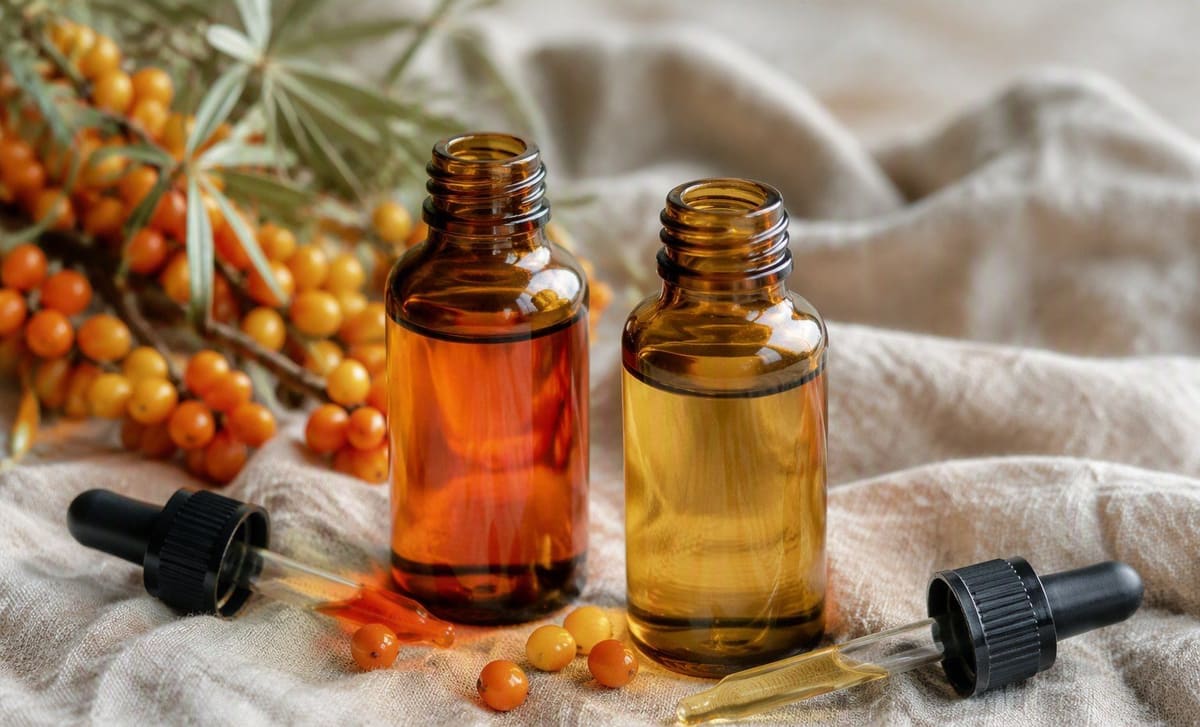
“Sea buckthorn oil” is two different oils sharing one name. Berry oil is thick, orange, and omega-7 rich. Seed oil is pale, light, and rich in omega-3 and 6. Every use case, every study, and every buying decision starts with knowing which one is in the bottle. This page is the decoder.
The two oils in one picture
Berry oil comes from the orange flesh. Deep color, earthy taste, 25 to 40% palmitoleic acid (omega-7), loaded with carotenoids. This is the oil behind most supplement research and most countertop stains.
Seed oil comes from the small dark seeds. Pale yellow, light texture, omega-3 and 6 in a near 1:1 ratio, virtually no omega-7. The better choice for acne-prone skin and for anyone who wants the fatty acids without the tint.
The chemistry sits in our seed oil vs berry oil breakdown. This page stays practical.
Oil is the default form on this site because the trials used oil. Everything else people buy, from softgels to jam, is laid out as every sea buckthorn product, sorted by form.
What the oil actually does, graded
Most pages about this oil open with a list of ten benefits. Ours is shorter, because we only count what human trials support, and the full grading lives on the benefits hub. The compressed version:
- Strongest: blood lipids. A 2022 meta-analysis of 15 randomized trials found triglycerides, total cholesterol, and LDL down and HDL up, clearest in people whose numbers started abnormal. Graded on the cholesterol page.
- Promising: dry eyes and skin hydration, each backed by real but single trials at 1 to 2 grams a day.
- The nulls, printed on purpose: that same meta-analysis found no effect on blood sugar, blood pressure, or body weight. Any bottle promising those is promising something fifteen trials could not find.
Two practical cautions travel with the benefits. The berry oil’s carotenoids will stain fabric and can tint skin at high topical doses, which is the orange palm the internet occasionally panics about. And one small study found reduced platelet aggregation, so the blood thinner page is required reading before surgery or alongside anticoagulants.
How it is made, best to worst
- Supercritical CO2 extraction. No solvent residue, preserves the delicate fatty acids. The gold standard.
- Cold pressing. Traditional and gentle, slightly less protective.
- Solvent extraction. Cheap, efficient, and a point deduction in our reviews.
Reading a label in fifteen seconds
Plant part named (berry, seed, or blend), species (Hippophae rhamnoides), extraction method, organic certification with a named certifier, and an origin you can question. Five lines. Anything missing is a choice the brand made, and not in your favor.
The name at the top of the label is the part that matters least. The same bottle sells as seabuckthorn oil in one shop, as hippophae oil in another, and as Hippophae Rhamnoides Fruit Oil or Seed Oil in a skincare INCI list. Different words, one plant. What actually changes between two bottles is the part of the plant, the extraction, and how fresh the oil is, so read those three and let the alias go.
Using it
As a supplement: 1 to 3 grams daily with meals, matching the trials detailed on the dosage page. In volume terms, 2 grams is about 2.2 ml, a scant half teaspoon. Measure in ml if you can: oil is lighter than water, so spoon math misleads.
On skin: a drop or two mixed into moisturizer at night, or pale seed oil straight. The face oil page has the full topical routine.
When you are ready for specific bottles, the oil buying guide scores the ones we verified, and capsules cover the same oils in portable form.
What the oil carries beyond fatty acids
The fatty acid profile gets the headlines, but three fellow travelers matter. Carotenoids give berry oil its traffic-light orange and much of its topical appeal, vitamin E (tocopherols) rides along as a natural antioxidant, and phytosterols come with the package, as the composition research cited above details. Just as notable is what the oil does not carry: vitamin C. It is water-soluble and stays in the juice fraction, so no oil, however pressed, delivers it. The carotenoids page and the phytosterols page profile the passengers, and the vitamin C page shows where the vitamin actually lives.
The teaspoon math, done properly
Oil is lighter than water, with a density around 0.92, which is why spoon math misleads. One level teaspoon holds about 4.9 ml, roughly 4.5 grams of this oil. The studied 1 to 3 grams a day works out to about 1.1 to 3.3 ml, a scant quarter to two-thirds of a level teaspoon. Heaped spoons overshoot, kitchen tablespoons vary, and the cleanest home instrument is a 5 ml syringe from any pharmacy. Every trial dose behind these numbers is tabled on the study dosages page.
Berry, seed, or blend in practice
The type question answers itself once the goal is named. Supplement goals point to berry oil or a blend, because that is where the omega-7 and the trial history live. Light topical use points to seed oil. A blend covers both jobs in one bottle, which suits anyone who wants a single purchase. The full head-to-head lives on the berry vs seed page, and it is worth five minutes before any bottle.
Storage and shelf life
A highly unsaturated oil is a perishable oil. Air, light, and heat oxidize it, so the rules are dark glass, a tight cap, a cool cupboard, and the fridge once opened. Rancidity is not subtle: a sharp, bitter, paint-like smell means the bottle is finished, whatever the date says. Buy the size you will empty in a couple of months rather than the jug, and the storage guide keeps the rest of the pantry honest.
Cloudy, thick, or separated
A bottle that clouds in the fridge or thickens in winter is not broken. Some natural waxes and saturated fractions set when cold, and they reliquify at room temperature without quality loss. What matters is smell, not looks: fresh sea buckthorn oil smells earthy and fruity, never sharp or stale.
The kitchen question
Treat sea buckthorn oil as a finishing oil, not a frying oil. High heat is unkind to its delicate unsaturated fats and carotenoids, so the right moves are a drizzle over finished dishes, yogurt, or salads, where the earthy note plays well against honey or citrus. The cooking guide has the pairings.
Buying the right size
Size math keeps oil fresh. At 2 grams a day, a 100 ml bottle (about 92 grams of oil) lasts roughly six weeks, neatly inside the freshness window. A 250 ml bottle stretches past three months at the same dose, past the point where an opened bottle stays its best. Two small bottles beat one big one, and the unopened one waits patiently in the cupboard.
Who should skip the bottle
Anyone on blood thinners or with surgery scheduled should clear supplement oil with a doctor first, the caution the safety hub details. Anyone who will not measure should buy capsules instead. And anyone whose bottle would sit for months should buy a smaller one, because fresh oil is the whole point.
Frequently asked questions
What is sea buckthorn oil used for?
Two main uses: as a daily supplement (1 to 3 grams with meals, the form used in the dry-eye, skin, and vaginal-health trials) and as a topical oil for skin. Which type you need depends on the goal: berry oil for omega-7, seed oil for omega-3 and 6 and lighter topical use.
Does sea buckthorn oil need refrigeration?
Not strictly, but it helps. A cool, dark cupboard is the minimum, and the fridge slows oxidation further once the bottle is open. Some oils cloud or thicken when cold, which is harmless and reverses at room temperature. What oil never forgives is a sunny windowsill or a shelf above the stove.