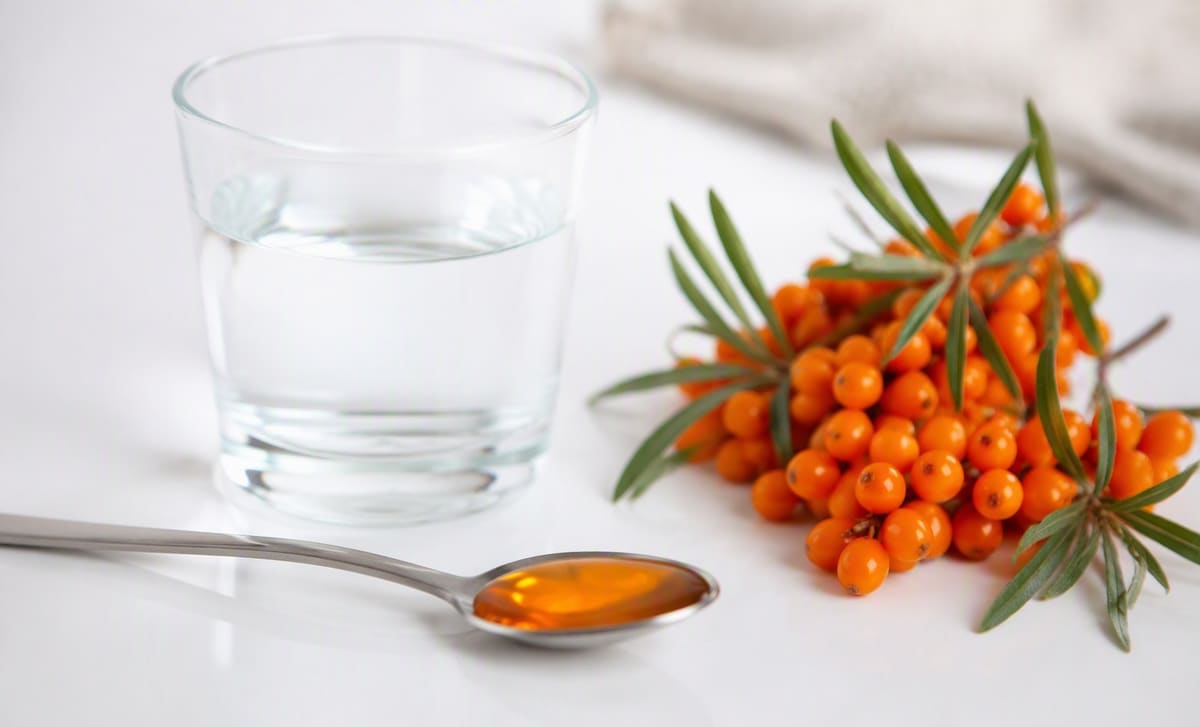
Yes, for most adults. Trials of 1 to 3 grams of sea buckthorn oil daily for up to three months reported no serious adverse events, and the berry has centuries of food use behind it. Four situations change the answer: blood thinners, pregnancy, upcoming surgery, and a stomach that cannot handle acidic juice. If none of those is you, the evidence supports sensible daily use.
This is the short-answer page. The full breakdown lives on the safety hub, and the studied amounts are on the dosage page.
What the safety record is built on
The confidence on this page comes from a specific pile of data: a 100-person dry-eye trial at 2 grams a day for three months, a 116-woman trial at 3 grams a day for three months, two skin trials at 1 and 2 grams, and a 15-trial meta-analysis pooling the rest. Across all of it, no serious adverse events at 1 to 3 grams daily. The clinical trials page lists them one by one, and the safety review grades the tolerability evidence.
The same record includes the one flag: 5 grams of berry oil a day for four weeks shifted platelet aggregation in 12 healthy men. Nobody was harmed. The flag exists because the direction of the shift points at bleeding tendency, which is why the four exceptions below are exceptions.
The four exceptions, in one breath each
Blood thinners. High-dose berry oil reduced platelet aggregation in a small controlled study. On warfarin, aspirin, clopidogrel, or similar? Doctor first.
Pregnancy and breastfeeding. Concentrated supplements are unstudied. Food amounts are fine, supplements wait. Full reasoning on the pregnancy page.
Surgery. Stop high-dose oil about two weeks before any planned procedure, and tell your surgical team what you take.
Acidic juice. Undiluted juice can irritate stomachs and enamel. Dilute it, take it with food, and choose capsules if reflux or ulcers are your reality.
What “safe” does not cover
Trials ran three months. Nobody has formally studied years of daily use, which is true of most supplements and worth knowing rather than fearing. The safe range here is also the studied one, 1 to 3 grams a day, and piling on far more is a separate question taken up on the overdose page. And quality matters as much as the plant: a safe species in a dirty factory is still a problem, which is why our buying guides weight sourcing and certification so heavily.
The long-term question
Years of daily use are unstudied for sea buckthorn, as they are for nearly every supplement sold. The practical response is not worry but rhythm: if you take it daily for months on end, mention it at your annual checkup the way you would mention a medication, and re-read the label of your own habit once in a while, because doses drift upward quietly. The studied ceiling stays 3 grams a day whether month one or month twelve, and the dosage page is the reference when memory gets generous.
Two groups the trials never included
Children and teenagers. Every dosing trial enrolled adults. Berries and diluted juice as food are fine for kids. Concentrated oil supplements are unstudied in anyone under 18, and we do not recommend what has not been studied.
People using it on their face. Topical oil has a different risk profile: carotenoid staining (temporary on skin, permanent on fabric) and occasional irritation from rich oils. Patch test first. The skin pages walk through it.
The allergy footnote
Documented allergic reactions are essentially absent from the published record, and the trials report no allergy signal. Rare is not never, so the first-time protocol matters: patch test topicals, start oral forms small, and know the reaction signs. Across the big trials’ combined 300-plus participants, no allergic events were reported, which is as close to reassurance as the record gets. The allergy page has the full protocol.
Why the verdict is yes, with footnotes
Safety pages err in two directions: alarm that scares people away from well-tolerated foods, and cheerleading that waves everyone through. This berry earns the middle. Centuries of food use, a clean trial record at studied doses, and exactly one measurable caution with a clear mechanism. The four exceptions exist because the evidence is good enough to show where it runs out. A supplement with nothing on this page would not be safer. It would be less examined.
What we watch
The literature gets re-read: new trials, case reports, and safety notices, with our guide to reading studies as the method. If a serious adverse event ever appears at studied doses, this page changes. So far the record says what it has always said: well tolerated at 1 to 3 grams a day, with the caution flags exactly where the four exceptions put them.
If something feels wrong
Stop. Seek care for anything beyond mild stomach upset, and bring the bottle so the label can speak for you. In the United States, report the reaction to FDA MedWatch. Our medical disclaimer explains the line between what we do (translate studies) and what only your doctor can do (advise you).
Frequently asked questions
Is sea buckthorn safe to take daily?
For most healthy adults, yes: human trials using 1 to 3 grams of oil daily for up to three months reported no serious adverse events. The exceptions are people on blood thinners, pregnant or breastfeeding women (supplements are unstudied), anyone with surgery within two weeks, and people whose stomachs cannot handle acidic juice.
Is sea buckthorn safe long term?
The trials ran three months, so years of daily use are formally unstudied, which is true of nearly every supplement. The practical answer: stay inside studied doses (1 to 3 grams of oil daily), mention the habit at your regular checkups, and re-check the evidence pages periodically. Nothing in the current record suggests a slow-building problem, and the record is what we have.