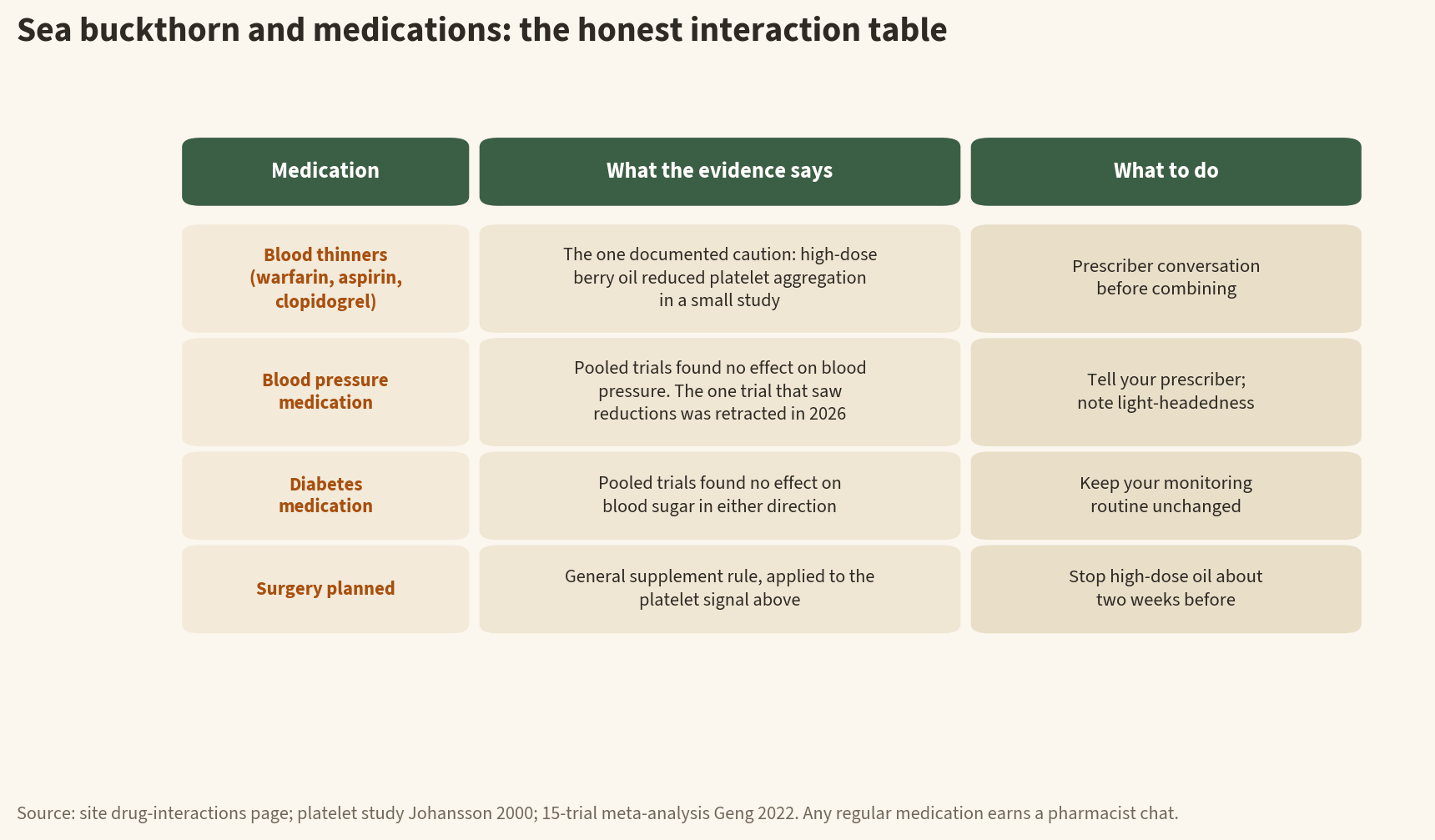
The blood-thinner caution is the real one, and it has two lines behind it now. A small human study found high-dose berry oil reduced platelet aggregation, and newer test-tube work found that phenolic extracts of defatted sea buckthorn seeds, a different material from the oils people swallow, reduced platelet activation and inhibited COX-1, the same enzyme aspirin blocks. Everything else is reasoned, not measured. Pooled trials found no effect on blood pressure or blood sugar, which lowers the theoretical risk with those medications without eliminating the conversation. Any regular medication plus a concentrated supplement equals one pharmacist chat.
See the data behind this chart
| Medication | Evidence | What to do |
|---|---|---|
| Blood thinners | Berry oil cut platelet aggregation in a small human trial, plus defatted seed extracts inhibited COX-1 in vitro | Prescriber conversation first |
| Blood pressure medication | No pooled effect. The one trial that saw reductions was retracted in 2026 | Tell your prescriber, then monitor |
| Diabetes medication | No pooled effect on blood sugar | Keep monitoring unchanged |
| Surgery planned | General supplement rule plus the platelet signal | Stop high-dose oil two weeks before |
The documented one: blood thinners
This is the caution with real evidence behind it, and there is now more than one study. In a human crossover trial, 12 healthy men taking 5 grams of berry oil daily for four weeks showed clearly reduced platelet aggregation. Separately, lab studies in 2024 and 2025 found that extracts of sea buckthorn seeds reduced platelet activation, and the 2024 extracts inhibited COX-1, the enzyme aspirin blocks. Put high-dose oil on top of warfarin, aspirin, clopidogrel, or the newer anticoagulants and the effects could add up toward bleeding that is harder to stop. The full breakdown, including which drugs, the in-vitro caveat, and what to tell your doctor, lives on the dedicated blood-thinner page, one of the cautions collected on the safety hub. If that is your situation, read it next.
Worth knowing what was actually measured. The human trial tracked ADP-induced platelet aggregation, a lab test that watches how eagerly platelets clump when the recruiting signal arrives, and the berry oil blunted that signal’s effect. The seed studies were run in vitro, on platelets in a dish rather than in people, and on a phenolic extract made after the fat had been stripped out of the seeds, which is not the seed oil sold in capsules. Read them as a mechanism signal about the plant, not as a bleeding event and not as a verdict on any particular bottle. Nobody bled in any of this work, which is why the response is a conversation rather than a ban. What the newer papers change is the reach of the question, because the platelet-touching chemistry is not confined to berry oil.
The reasoned ones: blood pressure and diabetes medication
Two logic chains deserve an honest look:
- Blood pressure medication. Pooled trial data found no significant sea buckthorn effect on blood pressure, so an additive drop into low blood pressure is unlikely. One small trial in hypertensive adults did report improvement, and it was retracted in 2026, so it no longer counts either way. Monitoring is still the safe move, because unlikely and impossible are different words.
- Diabetes medication. The same pooled analysis found no significant effect on fasting glucose, so hypoglycemia stacking is a theoretical concern at most. The blood sugar page covers that null in full.
Reasoned is not the same as tested. No trial has run sea buckthorn alongside these medications, so the correct posture is low alarm, high disclosure.
Every caution on one table
Five rows, and one distinction most summaries flatten. The COX-1 result came from seeds that had their fat stripped out with hexane before the phenolics were pulled out with methanol, so it describes sea buckthorn seed material. It is not a finding about the pressed seed oil in a capsule, which is close to the mirror image of what was tested.
| Drug class | The concern | What the evidence actually is | What to do |
|---|---|---|---|
| Anticoagulants: warfarin, apixaban, rivaroxaban, dabigatran | Slower clotting stacked on a drug prescribed to slow clotting | One crossover trial in 12 healthy men, 5 grams a day of berry oil for 4 weeks, cut ADP-induced platelet aggregation. Nobody bled. ●●○○ Preliminary | Get prescriber sign-off before you start. On warfarin, book an INR check when you start or stop |
| Antiplatelets: aspirin, clopidogrel | The same clotting question, plus one lab result that touches aspirin’s own enzyme | The same human trial. Separately, a hexane-defatted phenolic extract of the seeds inhibited COX-1 in a dish at 0.5 to 50 micrograms per milliliter. That extract is not seed oil. ●●○○ Preliminary, laboratory only | Prescriber conversation first. Treat berry oil and seed oil the same way, because neither one has been cleared |
| Blood pressure medication | An additive drop in blood pressure | Fifteen randomized trials pooled in 2022 found no effect on blood pressure. The single trial that reported reductions was retracted in 2026 and supports nothing now. ●●●● Strong, for the null | Tell your prescriber, keep the routine unchanged, and notice how you feel standing up |
| Diabetes medication | Blood sugar pushed lower than the medication intends | The same pooled analysis found no effect on fasting glucose. ●●●● Strong, for the null | Keep your usual monitoring and mention the supplement at your next review |
| Surgery, anesthesia, dental work | Bleeding during and after a procedure | No trial has measured surgical bleeding on sea buckthorn. The rule comes from the platelet signal plus standard supplement practice. ●●○○ Preliminary | Stop high-dose oil about two weeks before, and tell the surgical and anesthesia team what you take |
Read the two null rows as good news with a caveat attached. No measured effect on blood pressure or blood sugar means the stacking worry is small, and it also means nobody has run sea buckthorn alongside those medications to check. Low alarm, high disclosure.
The interactions that are not in the literature
Honesty cuts both ways here. No published study has found sea buckthorn interfering with liver enzyme systems, thyroid medication, or any of the other classic supplement-interaction routes. Absence of studies is not proof of absence, which is exactly why the disclosure rule exists: your medication list plus this supplement is a combination only your pharmacist or prescriber can actually check. The day a credible interaction study appears, in either direction, this page and the caution list change with it.
The surgery and anesthesia rule
Stop high-dose oil supplements about two weeks before any planned procedure, dental work included. Platelet function needs time to normalize, and your surgical and anesthesia team makes better decisions with a complete list of what you take. Restart only when they say so.
Two situations that raise the stakes
Polypharmacy. Five or more daily medications is the point where pharmacists start finding interactions between the drugs themselves, and adding a supplement to that mix deserves their full list, not a verbal summary. Older parents are the classic case, and helping them means bringing every bottle, theirs and the supplement.
A new prescription. The moment a new drug enters the routine is the moment to re-ask the question, even if sea buckthorn was cleared before. Interactions live between specific items, and the list just changed.
The pharmacist checklist
Pharmacists are the interaction experts most people never consult. Two minutes with them beats an hour of forum reading:
- Bring the bottle. The label states berry or seed oil, capsule size, and brand, which beats your memory.
- Name the dose in grams. “Two grams of sea buckthorn oil daily” is checkable. “Some sea buckthorn” is not.
- List everything. Prescriptions, over-the-counter drugs, and other supplements, because interactions happen between items, not in isolation.
- Mention upcoming procedures. The two-week rule applies even when the medication list is short.
The five-minute script
For the doctor or pharmacist visit, three sentences cover it: “I take sea buckthorn oil, two grams a day.” “It is the berry oil, here is the label.” “Does anything on my list change that?” Concreteness is what turns a shrug into an answer, and the label is what turns your memory into evidence. A label that names the plant part, the extraction, and the milligrams of oil per capsule makes that a thirty-second conversation instead of a guessing game, and the how to choose guide covers the five checks that separate those labels from the vague ones. If you see multiple prescribers, repeat it at each one, because supplement lists do not travel between offices the way prescriptions do.
Most healthy adults at 1 to 3 grams daily have no interaction issues at all, as is it safe explains. The goal of this page is narrower: if a prescription is part of your life, the supplement conversation belongs with a professional who can see the whole list. The safety review collects the tolerability data behind this page, the cholesterol meta-analysis is the source of the blood pressure and glucose nulls, and the blood pressure page covers the retraction that left those nulls unopposed.
Frequently asked questions
What medications does sea buckthorn interact with?
The documented caution is blood thinners. A small human study found high-dose berry oil reduced platelet aggregation, and newer test-tube work found that extracts of defatted sea buckthorn seeds reduce platelet activation and inhibit COX-1, the enzyme aspirin blocks. That makes warfarin, aspirin, clopidogrel, and similar drugs the ones to ask about, though the lab result is a mechanism signal on plant material rather than a measured bleed at a supplement dose. Beyond that, interactions are reasoned rather than measured. Pooled trials found no sea buckthorn effect on blood pressure or blood sugar, so additive risk with those medications is low but unstudied. Any regular medication earns a pharmacist conversation before you add concentrated oil.
Should I tell my doctor I take sea buckthorn?
Yes, and make it concrete: bring the bottle, name the dose in grams, and say why you take it. Doctors can only check interactions against what they know you take, and supplements are the items patients forget to mention most. Before any surgery, mention it weeks ahead, because high-dose oil should stop about two weeks before a procedure.
Can I take sea buckthorn with blood pressure medication?
Probably, with monitoring. The 15-trial meta-analysis found no sea buckthorn effect on blood pressure, so an additive drop is unlikely. The one trial that saw reductions with seed oil was retracted in 2026, so nothing measured now argues for stacking at all. The sensible posture: tell your prescriber, keep your medication routine unchanged, and note how you feel, especially when standing up.