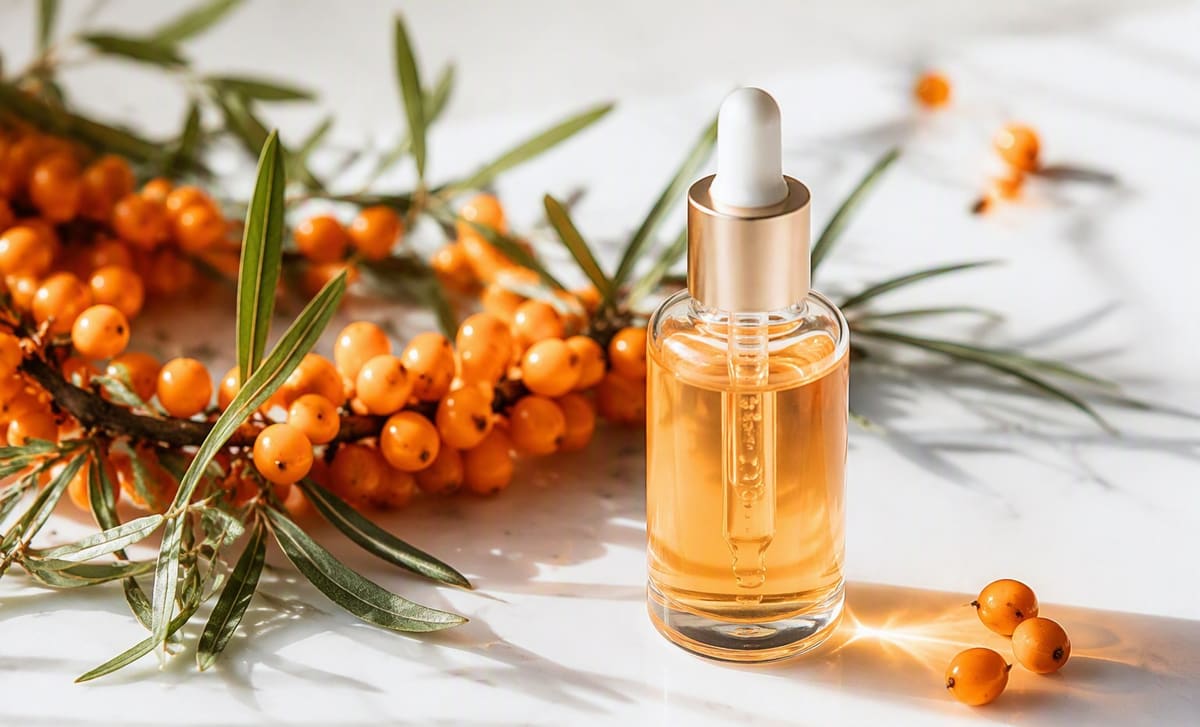
A vitamin C serum is a targeted active: L-ascorbic acid at 10 to 20 percent, the topical antioxidant with real dermatology evidence behind it. Sea buckthorn oil is an emollient: fatty acids and carotenoids that soften and protect the surface. One is a treatment step, the other is a moisture step, and sea buckthorn’s own vitamin C fame comes from eating the berry, never from applying the oil.
The comparison
| Sea buckthorn oil | Vitamin C serum (L-ascorbic acid) | |
|---|---|---|
| What it is | Pressed berry or seed oil | Water-based active serum |
| Key chemistry | Omega-7, carotenoids, vitamin E | L-ascorbic acid at 10-20%, low pH |
| Vitamin C content | None. The vitamin stays in the juice, not the oil | The entire point of the product |
| Evidence lane | Oral-oil trials: hydration, elasticity, collagen density | Decades of topical dermatology literature |
| Main job | Moisturize, occlude, support barrier | Antioxidant treatment step |
| Weakness | Orange tint, stains fabric | Unstable (oxidizes brown), can sting |
| When in routine | Last step, or mixed into cream | First step on clean skin, under sunscreen |
What the serum actually does
Topical L-ascorbic acid at 10 to 20 percent is one of the few skincare ingredients with genuine dermatology literature: antioxidant defense alongside sunscreen, support for collagen synthesis, and help fading dark spots over months of use. The catch is formulation. Vitamin C is fragile in water, so a real serum needs a low pH, airtight opaque packaging, and a place in your routine before it oxidizes. A brown serum is a dead serum.
Two more honest notes on the serum side. That low pH is also why vitamin C stings sensitive skin, which is its main tolerance complaint. And many products swap L-ascorbic acid for gentler vitamin C derivatives: kinder to skin and far more stable, but with a thinner evidence file behind them.
The vitamin C confusion, cleared up
Sea buckthorn berries are legitimately loaded with vitamin C: roughly 200 to 600 mg per 100 g fresh weight, varying by species and harvest. That fact is about eating the berry or drinking the juice.
The oil is a different substance. Vitamin C is water-soluble. It stays in the juice fraction when the berry is pressed, which means sea buckthorn oil, berry or seed, contains no meaningful vitamin C at all. Our vitamin C explainer walks the chemistry. So the comparison “sea buckthorn oil vs vitamin C serum” is really “oil vs active,” and eating vitamin C is a third, separate thing from applying it.
Where sea buckthorn genuinely fits
As a moisturizer and barrier oil, sea buckthorn berry oil sits comfortably after a vitamin C serum: the serum treats, the oil seals. Its carotenoids and vitamin E are antioxidants too, just a gentler, oil-phase kind that works in the lipid layers a water-based serum never enters.
And the oral route is its own lane. In one trial, 2 grams of oral oil a day raised measured skin hydration by about a third at one month and nearly half at three months, with elasticity up roughly a quarter. A 2024 placebo-controlled trial at 1 gram daily measured collagen density up 10 percent at 12 weeks. The skin hub covers both. That is inside-out support no topical serum attempts.
One more honest note: the reverse swap fails too. Drinking sea buckthorn juice for vitamin C is sensible nutrition, but it is not a topical antioxidant strategy. Eating vitamin C and applying it are different routes with different evidence, and we refuse to blur them.
The stability problem both sides share
Both products are fighting oxygen, and both lose if you let them. L-ascorbic acid oxidizes in water within months, faster in clear dropper bottles, and a serum that has turned amber belongs in the bin. Sea buckthorn oil oxidizes too: the seed oil is rich in polyunsaturates, and even the berry oil’s carotenoids fade with heat, light, and air. Both want dark glass, a tight cap, a cool shelf, and a purchase size you will finish within a few months. Our storage guide covers the oil side, and the serum side reduces to one rule: small, dark, airtight, fresh. A serum replaced quarterly and an oil finished in eight weeks are both cheaper than a big bottle that dies half full.
A morning and night split that uses both
The cleanest way to run both is to split the day. Morning belongs to the serum: L-ascorbic acid on clean skin, then moisturizer, then sunscreen, because its antioxidant work pairs with daylight exposure. Night belongs to the oil: two or three drops of sea buckthorn over your cream as the occlusive last step, tint management included. Each product does the job it is evidenced for at the time it makes sense, and neither is asked to impersonate the other.
Between the two sea buckthorn oils, the choice matters on the face. The berry oil is the carotenoid-rich one, deep orange and best kept to nights or two-drop doses. The seed oil is pale, lighter, and built on omega-3 and 6, the better pick for daytime layering under sunscreen. Our seed vs berry breakdown splits them properly.
Choose a vitamin C serum if
- You want the topical antioxidant step with the actual dermatology literature: photoprotection support, brightening, collagen pathways.
- You will store it properly and use it daily under sunscreen.
- Your goal is what topicals can reach: the surface layers.
- Dark spots and dullness are specific targets, the serum’s other studied lane.
Choose sea buckthorn if
- You want a rich moisturizing oil to pair with actives, tint management included, or the pale seed oil for a lighter feel.
- The inside-out route appeals: oral oil with human skin trials, products scored in our oil guide.
- You have already compared the face oils in sea buckthorn vs rosehip oil and want the antioxidant angle settled.
- Low-pH actives sting your skin and you would rather take the antioxidant route through carotenoid-rich oil and the berry itself.
More matchups live on the comparisons hub.
Frequently asked questions
Does sea buckthorn oil contain vitamin C?
No meaningful amount. Vitamin C is water-soluble and stays in the berry's juice, not its oil. Fresh sea buckthorn berries are loaded with it (roughly 200 to 600 mg per 100 g, varying by species and harvest), but the pressed oil, seed or berry, is not a vitamin C product. Any label claiming otherwise fails basic chemistry.
Can sea buckthorn oil replace my vitamin C serum?
No. A properly formulated L-ascorbic acid serum (10 to 20 percent) is the topical antioxidant with real dermatology literature behind it. Sea buckthorn oil is an emollient with carotenoid antioxidants, a different job. It works alongside a vitamin C serum as the moisturizing step, or as an oral supplement route with its own small skin trials, never as a substitute for the active.
Can I use sea buckthorn oil and vitamin C serum together?
Yes, in the right order. Apply the vitamin C serum first on clean, dry skin, give it a minute, then seal with moisturizer or a few drops of sea buckthorn oil. Morning suits the serum because its antioxidant action pairs with sunscreen, while the oil makes an easy night step. Watch the tint: berry oil can cast orange on pale skin, so use two or three drops or pick the paler seed oil for daytime.