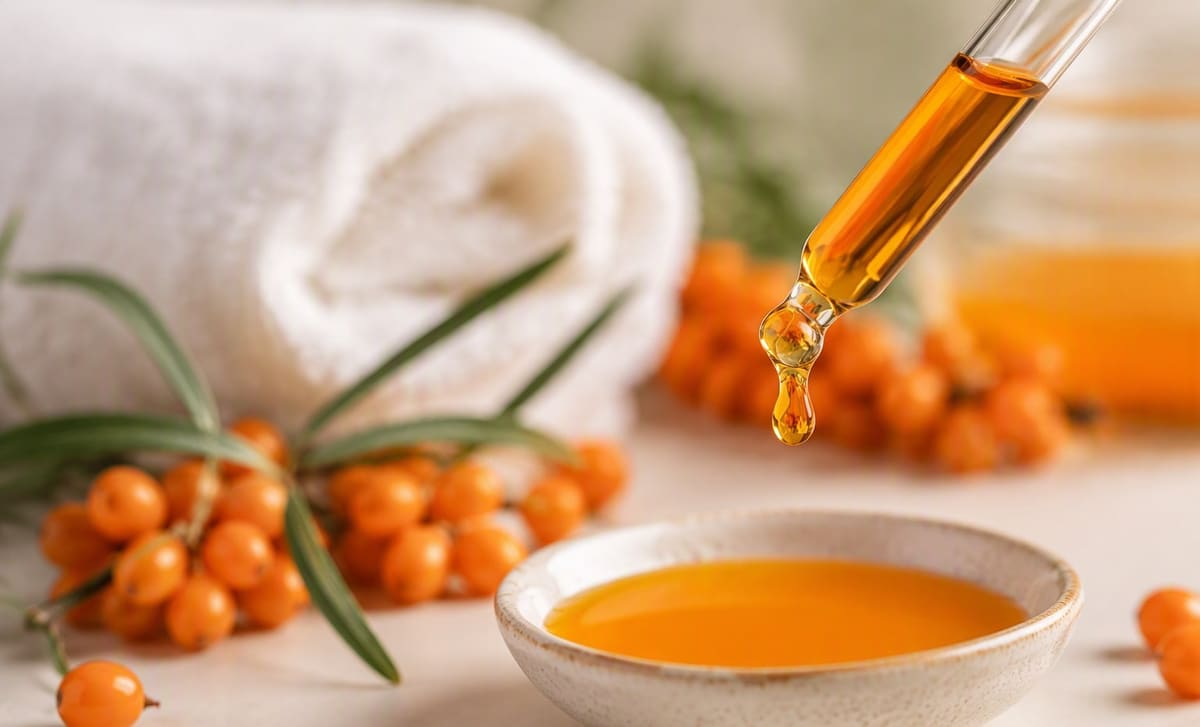
Two methods cover every face. The mixer: one or two drops of berry oil blended into night moisturizer, no visible tint. The straight method: three to four drops of pale seed oil pressed into damp skin, morning or night. Patch test either one for several days before your full-face debut.
Before you start: the patch test
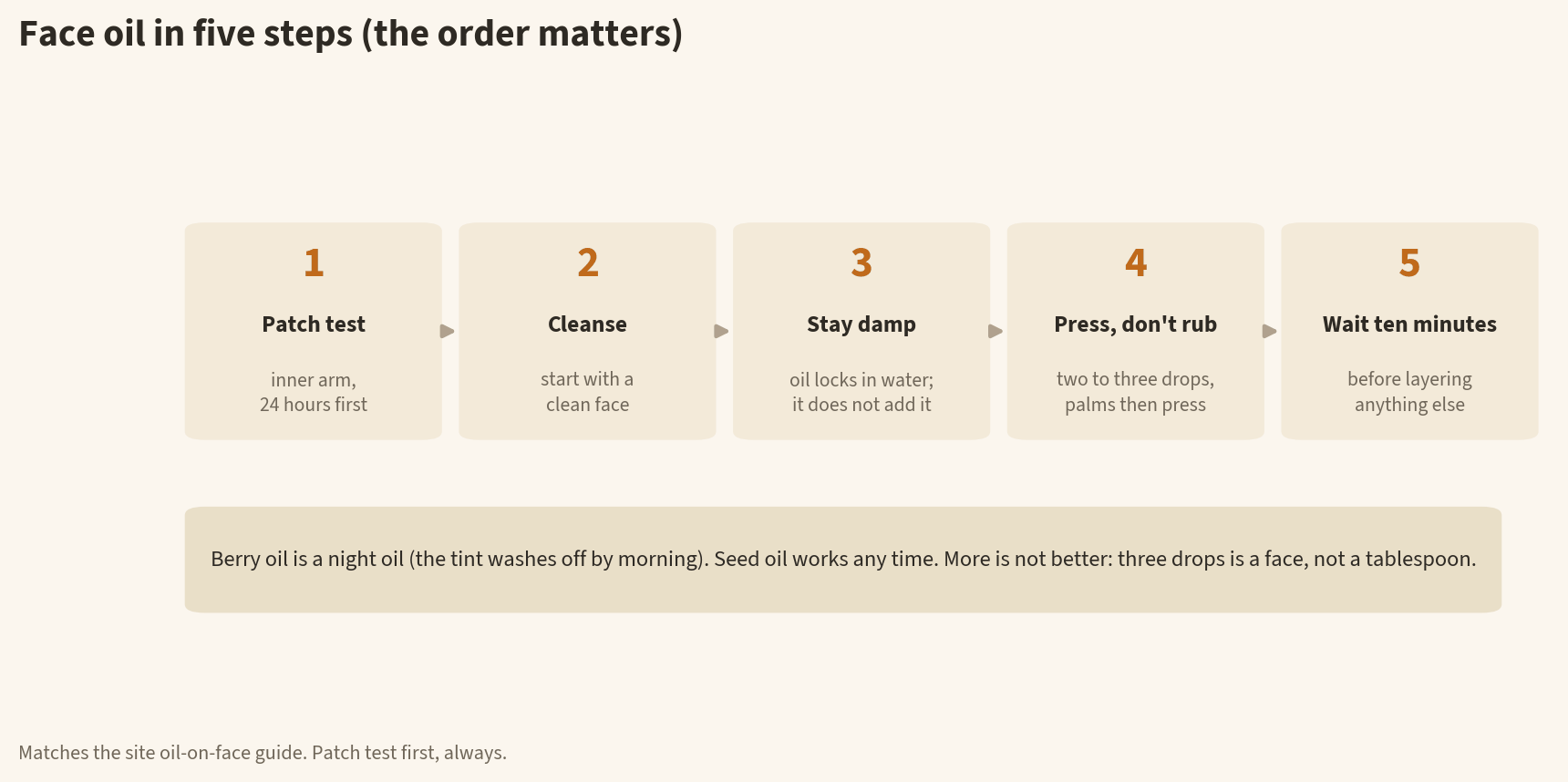
Apply a small amount to your inner forearm, once a day, for three to five days. No redness, itching, or bumps means proceed. Any reaction means this oil is not for your face, full stop. Boring, five days, non-negotiable, and the same rule opens every topical guide on the how-to-use hub.
Method 1: The mixer (berry oil, night)
- Cleanse and leave skin slightly damp.
- Pump or scoop your normal night moisturizer into your palm.
- Add one or two drops of berry oil. One if your skin is fair, two if it is deeper or very dry.
- Mix with a fingertip and apply as usual.
- Increase by a drop only after two comfortable weeks.
The dilution keeps carotenoid tint below notice while delivering the oil, which is the entire point of mixing.
Method 2: Straight seed oil (any time)
- Cleanse and leave skin damp. Damp skin spreads oil thinner and absorbs it faster.
- Dispense three to four drops into your palm.
- Press (do not rub) over face and neck with flat hands.
- Wait two minutes before layering anything else, including sunscreen in the morning.
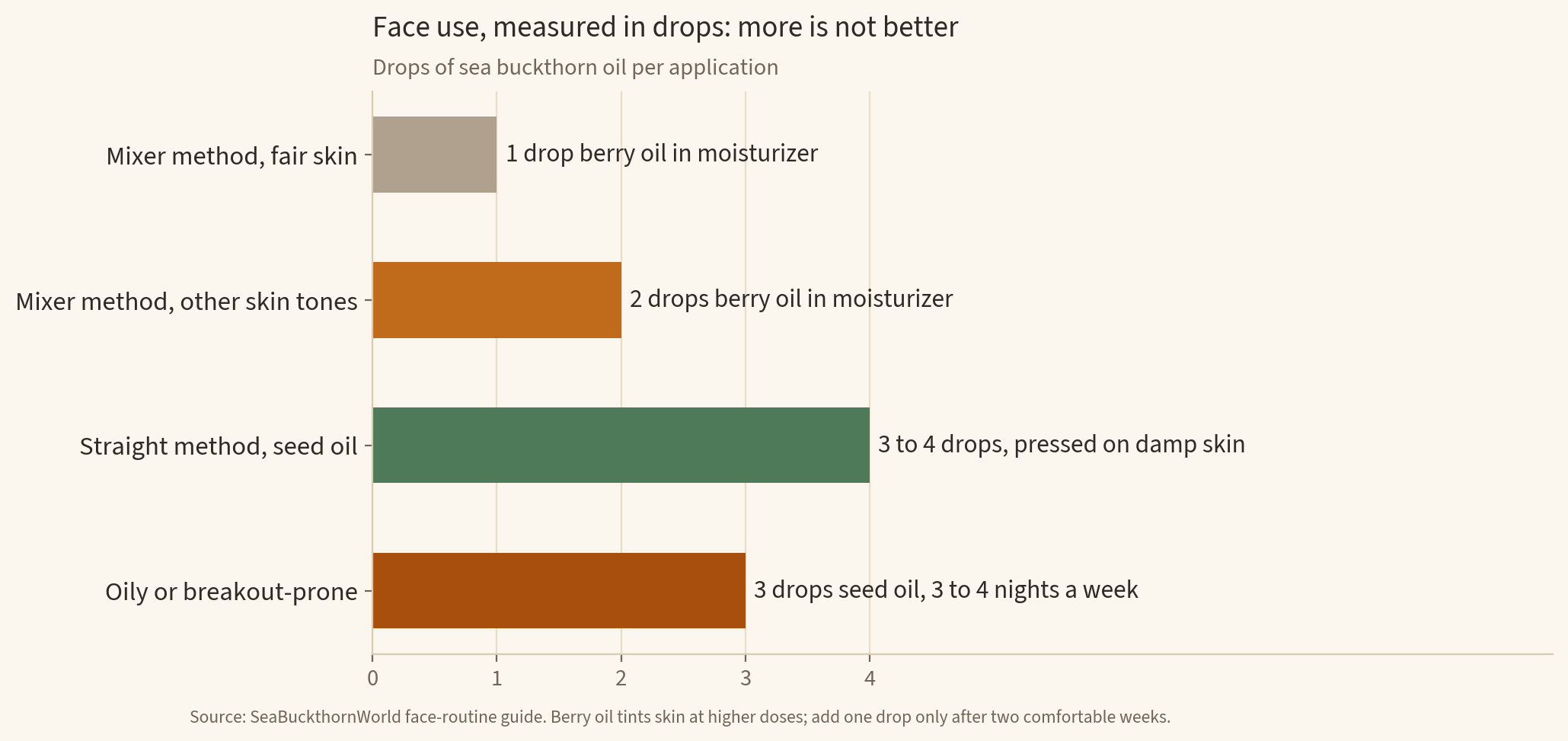
See the data behind this chart
| Method and skin type | Drops per application |
|---|---|
| Mixer method, fair skin | 1 drop berry oil in moisturizer |
| Mixer method, other skin tones | 2 drops berry oil in moisturizer |
| Straight method, seed oil | 3 to 4 drops on damp skin |
| Oily or breakout-prone | 3 drops seed oil, 3 to 4 nights a week |
Frequency and expectations
Nightly for the mixer, once or twice daily for seed oil. Hydration changes show in two to four weeks of consistency. The deeper outcomes the trials measured (elasticity, collagen density) took twelve weeks of oral use, so keep topical expectations at better hydration and glow. The evidence context lives on the skin hub.
Mistakes that ruin the experience
- Straight berry oil in daylight. Tint city. Night, mixed, or seed oil.
- Applying to bone-dry skin. It sits, shines, and transfers to pillows.
- Judging in a week. Skin turnover runs about a month.
- Skipping the patch test. See above. Again.
Product picks for both methods are scored in the face oil guide, and the berry vs seed page explains why the methods split by oil type.
Tuning by skin type
- Oily or breakout-prone. Seed oil only, three drops, three or four nights a week rather than nightly. Berry oil’s richness is wasted on skin that already makes plenty.
- Dry or mature. The nightly mixer with one to two drops of berry oil is your workhorse, and winter may earn a second drop.
- Combination. Seed oil across the T-zone, the mixer on cheeks. Two methods, one face, no conflict.
- Sensitive. Stretch the patch test to a week and introduce the oil as the only new variable. The allergy page lists the reactions that mean this oil is not for you.
The damp-skin detail, explained
Damp is not a flourish. Water on the skin thins the oil’s spread, so three drops cover the face instead of five, and absorption runs faster than on dry skin, where oil sits and shines. The right state is towel-patted, not dripping: skin that no longer beads water but still feels cool to the touch.
Layering with real actives
If your routine includes retinol, vitamin C serum, or exfoliating acids, the oil is the last step at night, and the strong actives keep their own evenings at first. Alternate nights for the first month: active one night, oil the next. Skin that stays calm has earned the right to combine them. Skin that objects has told you the schedule.
Troubleshooting the usual problems
- Visible tint by morning. One drop fewer, mixed more thoroughly, or switched fully behind moisturizer. Tint is always a dose problem.
- Pilling under sunscreen. Oil on dry skin, or layers stacked too fast. Damp skin, two-minute waits.
- New congestion after two weeks. Drop the berry oil, keep the seed oil, reassess in a month.
- No visible change at week four. Normal. Topical hydration shifts in weeks, and the oral trial outcomes took twelve weeks of swallowed oil. The dilution page tunes ratios further if none of this settles it.
What topical can and cannot promise
Topical use has honest, modest evidence behind it: better hydration, a calmer feel, some glow. The collagen-level outcomes in the research came from oral dosing. Keep the face oil in the moisturizer category, where it performs well, rather than the treatment category, where it has not been tested.
The morning-after check
The first week has its own small protocol: look at your skin in daylight each morning before anything goes on it. Calm and comfortable means continue. Any persistent redness or new bumps means stop and rethink the ratio, the frequency, or the oil itself. Daylight does not flatter, which is exactly why it is the judge.
Frequently asked questions
How many drops of sea buckthorn oil should I use on my face?
One or two drops of berry oil mixed into moisturizer, or three to four drops of seed oil used straight. More is not better: excess berry oil tints skin orange and excess of any oil just sits on the surface. Press into damp skin rather than rubbing onto dry skin.
Can I use sea buckthorn oil around my eyes?
Yes, with care. A single drop of seed oil pressed gently along the orbital bone, never into the eye itself, is the safe version. Berry oil can tint the thin skin there visibly, so keep it to the mixer method and away from the lash line. Any stinging means rinse and stop.