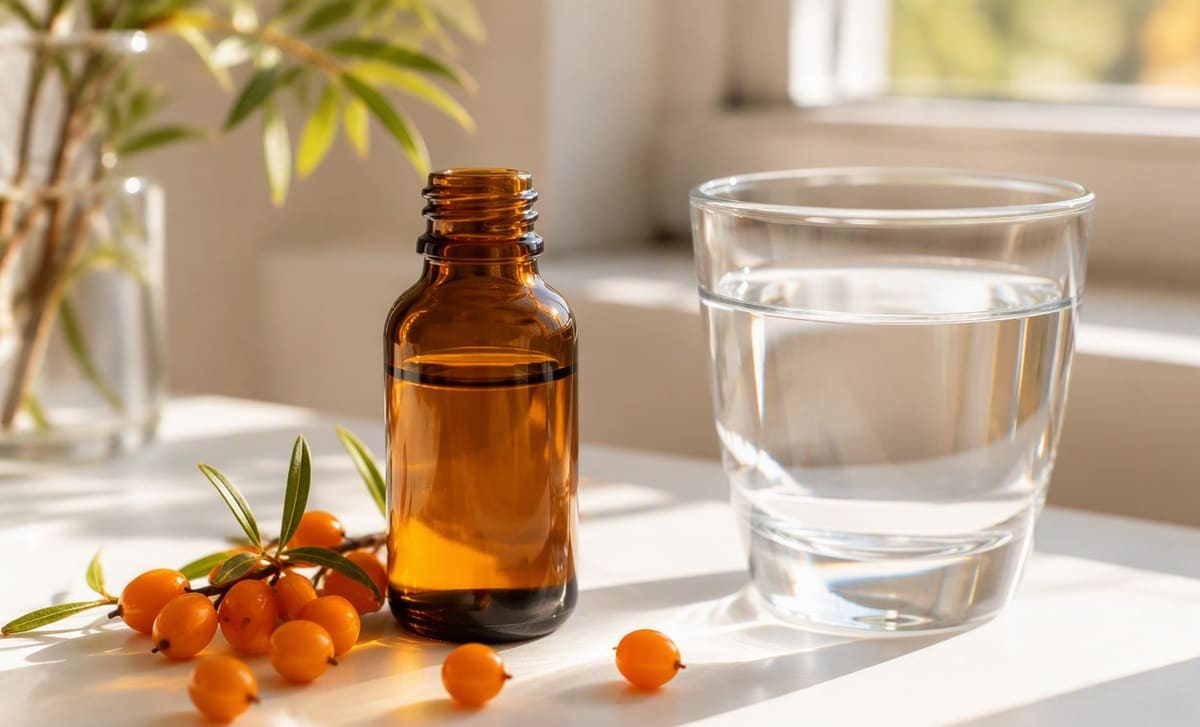
Sea buckthorn’s one solid eye claim is dry-eye relief, backed by a real placebo-controlled trial. The eyesight claims you will see elsewhere (carotenoids sharpening vision, curing eye disease) have no human trials behind them. Read the dry-eye page for the full study breakdown, and treat everything else as unproven.
Eye content attracts exaggeration faster than almost any health topic, because “carotenoids” sounds like it should mean “better vision.” Here is the honest map of what exists, graded on the same scale as every other claim in the benefits library.
In this collection
Sea buckthorn for dry eyes: the 2-gram trial
The one study that matters, explained in full: what improved, what did not, the follow-up that complicated the mechanism story, and the exact dose and duration tested. If you are here for dry eyes, start there.
Sea buckthorn for MGD: the evaporative dry eye angle
The dry-eye trial read in meibomian gland context, why lid care stays first-line, and where oral oil fits as the studied adjunct.
Sea buckthorn for vision: carotenoid logic, no trials
The berries carry carotenoids and the retina loves carotenoids, but no vision-outcome trial exists, and the AREDS story shows what real proof costs.
Sea buckthorn for eye strain: screens, blinks, honesty
Strain is blink-rate and focus fatigue, the 20-20-20 rule is free, and the dry-eye overlap is where the trial becomes relevant.
Sea buckthorn and cataract research: test tubes only
Antioxidant lab literature exists, human cataract research does not, and surgery remains the actual answer.
What sea buckthorn will not do for your eyes
The berries carry carotenoids, and carotenoids (especially lutein and zeaxanthin from other sources) do have eye-health research. But no human trial has tested sea buckthorn for macular degeneration, cataracts, glaucoma, or visual acuity. Carotenoid logic is not clinical evidence, and we grade it that way: traditional-to-preliminary at best.
Where sea buckthorn fits among dry-eye options
Artificial tears, humidifiers, screen breaks, and omega-3 supplements all have their own evidence bases, and none of them conflict with a sea buckthorn trial period. The studied dose (2 grams daily of a seed-and-berry blend) costs about a dollar a day using the products in our capsules guide. Whatever you try, severe or worsening symptoms belong with an eye doctor, not a supplement shelf.
How this collection is organized
Six pages, two tiers. The trial tier is one page: dry eyes, where a randomized placebo-controlled trial gives us something to measure. The no-trial tier is everything else: vision, cataracts, and eye strain, where the honest answer is that no human sea buckthorn trial exists, plus MGD, which borrows the dry-eye trial with the borrowing labeled. If you are new here, read the dry-eye page first, because it shows what evidence looks like in this cluster.
The trial, in three sentences
One hundred dry-eye patients took 2 grams of sea buckthorn oil daily for three winter months, half on placebo. The oil group’s tear-film osmolarity rose less, and its worst redness and burning scores were significantly lower: 6% versus 36%, and 12% versus 32%. The other 23 tracked symptoms showed no significant difference, which is why our verdict is modest help, well-documented. The dry eye trial page has the methods.
The questions the trial does not answer
Whether a second, independent trial replicates it. Whether benefits persist after stopping. Whether berry oil alone matches the blend. Whether severe dry eye responds the way mild to moderate did. Four open questions are why this cluster says “moderate evidence” and not “proven,” and they are the questions to bring to your eye doctor alongside the dose.
Talking to your eye doctor about it
The studied approach is 2 grams daily of a seed-and-berry blend, split with meals, for three months. Bring those numbers, mention blood thinners or planned surgery because of the antiplatelet signal, and keep artificial tears and humidifiers running as the base layer. The dosage tool translates the studied amount into real products. Worsening pain, light sensitivity, or vision changes skip this page entirely and go straight to an exam.
The one-sentence map
Dry eye has a trial, MGD borrows it honestly, and vision, cataract, and strain have none. If you remember that sentence, you have the cluster.
A note on the eyesight ads
Ads implying sharper vision from sea buckthorn are running ahead of an empty evidence file. The carotenoid logic is real nutrition and not a vision result, and the vision page shows what proof in this space actually costs.
Frequently asked questions
Is sea buckthorn good for your eyes?
For dry-eye symptoms, there is moderate human evidence: a 100-person randomized trial found 2 grams of sea buckthorn oil daily reduced the worst redness and burning symptoms over three months. Claims about improving eyesight or treating eye disease have no human trial support.
What dose did the dry-eye trial use?
Two grams of a seed-and-berry sea buckthorn oil blend daily, taken as 1 gram twice daily with meals, for three months. That is the dose to discuss with your doctor, and it is higher than the single softgel many labels suggest.