
Supercritical CO2 extraction is the best way to make sea buckthorn oil: low temperature, no oxygen exposure, no solvent residue, and the fragile fatty acids and carotenoids arrive intact. Cold pressing is the honest second, gentler on your wallet and slightly harder on the oil. Solvent extraction is cheap, efficient, and the reason “no method stated” on a label is bad news.
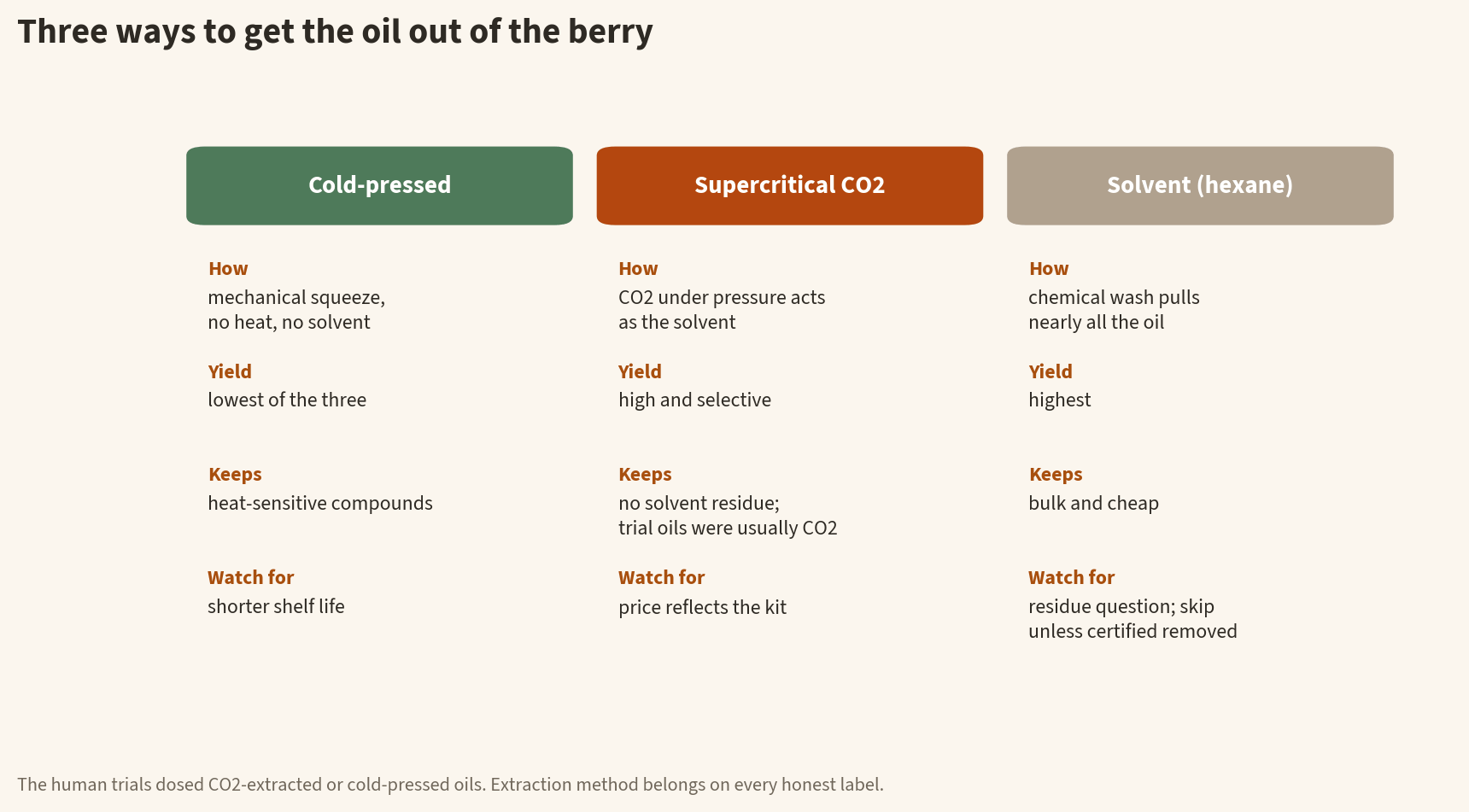
See the data behind this chart
| Method | Yield | Residue | Verdict |
|---|---|---|---|
| Cold-pressed | Lowest | None | Good; shorter shelf life |
| Supercritical CO2 | High, selective | None | The trial standard |
| Solvent (hexane) | Highest | Possible | Skip unless certified removed |
The three methods, compared
| Method | How it works | Quality effect | Cost signal |
|---|---|---|---|
| Supercritical CO2 | Pressurized CO2 acts as the solvent, then evaporates completely | Best preservation of fatty acids and carotenoids; zero residue | Premium equipment, premium price |
| Cold pressed | Mechanical pressure squeezes the oil out | Genuine oil with some heat and oxygen exposure during pressing | Mid-range, common in cosmetics |
| Solvent extraction | Hexane or similar dissolves the oil out, then is boiled off | Harsher processing plus trace-residue risk | Cheapest, bulk-market default |
Why the method matters for this oil specifically
Sea buckthorn oil’s value is concentrated in compounds that hate abuse: polyunsaturated fatty acids that oxidize, carotenoids that fade with light and heat, and vitamin E that sacrifices itself protecting the other two. Every step of extraction is a chance to damage them. CO2 extraction runs cool and oxygen-free, which is why it tops our scoring rubric. Cold pressing is mechanical and simple, and the price of that simplicity is some heat from friction and air contact. Solvent extraction maximizes yield, which is great for the producer’s margin and neutral-to-negative for you.
What the research used
The human trial that measured skin hydration instrumentally (the 2009 study behind the “+49% hydration” figure you see quoted everywhere) dosed supercritical CO2-extracted sea buckthorn oil. Composition reviews of sea-buckthorn oil likewise analyze CO2 and cold-pressed oils, not solvent bulk stock. When a study result is the reason you are buying, the extraction method is part of matching what was studied, alongside the plant part question that decides whether omega-7 is in the bottle at all.
Why labels rarely say
No rule requires an extraction statement, so silence is free. Brands using CO2 extraction pay a lot for that equipment and print the fact everywhere. Brands cold pressing honestly usually say so too, because it reads as craft. The labels that go quiet on method are the solvent-extracted and the blended-with-carrier products, because naming the method would cost them the sale. Treat a missing extraction line the way you would treat a missing ingredient list: as information.
What to ask, in order
- Does the label state the method? CO2 or cold pressed are the acceptable answers. Anything else, keep walking.
- If not, does the brand answer email? Ask directly. Serious brands reply with specifics, and vague replies are answers too.
- Does the rest of the label hold up? Plant part, species, origin, certification, per the how to choose checklist. Extraction is one line of five, and the other four catch most fakes first.
Common buying mistakes
- Paying CO2 prices for a twice-a-week face oil. The gap matters most for oil you swallow daily.
- Reading “pure” or “natural” as a method. Those words describe nothing about extraction.
- Assuming cold pressed means cold. Friction warms the press. The term means no added heat.
- Ignoring the method for a daily-dose oil. That is the one purchase where matching the studied standard matters most.
The 60-second decision path
- Swallowing daily for a studied goal? CO2 first, cold pressed acceptable, unstated is out.
- Topical a few times a week? Cold pressed is fine. Spend the savings on freshness.
- Method unstated anywhere, brand unresponsive? That is your answer.
- Two finalists? Pick the one with printed fatty-acid numbers, because print beats promise.
What oxidation actually costs
Rancidity is chemistry with a timeline. Polyunsaturated fats react with oxygen and form peroxides, which is why lab certificates report a peroxide value: low numbers mean fresh oil, climbing numbers mean an oil on its way out. Gentle extraction starts the clock with less damage and more intact vitamin E standing guard, which is the real quality argument for CO2. It buys time, not immortality.
Yields, and why method moves price
Pressing recovers less oil than CO2 or solvent extraction, and the loss is worst in the pulp, where the oil sits in soft flesh rather than a hard seed. Seeds press comparatively cleanly, which is part of why seed oil is cheaper. Lower yield per kilogram of berries means higher cost per bottle, which is why honest cold-pressed pulp oil is rarely the cheapest option and why suspiciously cheap “berry oil” so often turns out to be solvent-extracted or cut. Price, method, and plant part are one equation.
What a COA tells you about method
You cannot taste extraction, but a certificate of analysis sketches it. The peroxide value shows how gently the oil has been treated since the press, and the fatty acid profile confirms whether the plant part matches the label. Ask the brand for the current lot’s COA. Brands running careful CO2 operations share them happily, because the numbers are their best advertisement.
Storage implications
Extraction sets the starting quality, and storage decides how long it lasts. Even a perfect CO2 oil oxidizes in a warm, bright kitchen, and a cold-pressed oil needs the fridge after opening. Dark bottle, cool shelf, cap tight, finished in three to six months: the storage page has the full routine, and rancid oil fails every method equally.
A note on “extracts”
Some labels say “sea buckthorn extract” without saying what was extracted into what. An extract can be the oil, a concentrate, or a carrier-oil dilution, and the word alone tells you nothing. The extract explainer untangles the term, and the method rules on this page apply to whatever is underneath it. The CO2 extraction and cold pressed glossary entries define each method in one breath.
One honest caveat: for a cosmetic oil you smooth on your face twice a week, cold pressed is genuinely fine, and paying CO2 prices there is optional. For an oil you swallow every day for twelve weeks, matching the studied standard is worth the premium. The scored products that pass all five label lines are in the oil guide and the capsules guide.
If you take blood thinners, are pregnant or nursing, or have surgery planned, read our safety notes and talk to your doctor before dosing any oil, however well extracted.
Frequently asked questions
Is cold pressed sea buckthorn oil good?
Yes, it is the acceptable second method: mechanical pressing without solvents keeps the oil genuine, and for topical products it is perfectly reasonable. Supercritical CO2 extraction preserves the fragile fatty acids and carotenoids better, which matters most for oil you swallow daily. Solvent extraction is the method to avoid.
Does extraction method change the omega-7 content?
The plant part decides the omega-7 ceiling: berry oil has it, seed oil barely does. Extraction decides how much of the oil's fragile compounds survive into the bottle intact. CO2 extraction protects them best, cold pressing slightly less, and solvent extraction adds residue risk on top of the harsher processing.
Is solvent-extracted sea buckthorn oil dangerous?
Not in the acute sense: hexane extraction is legal, widespread in cheap oils, and residue limits exist. The problems are quality and transparency. Harsher processing treats the fragile compounds roughly, and a brand that hides the method is asking you to trust it about everything else too.