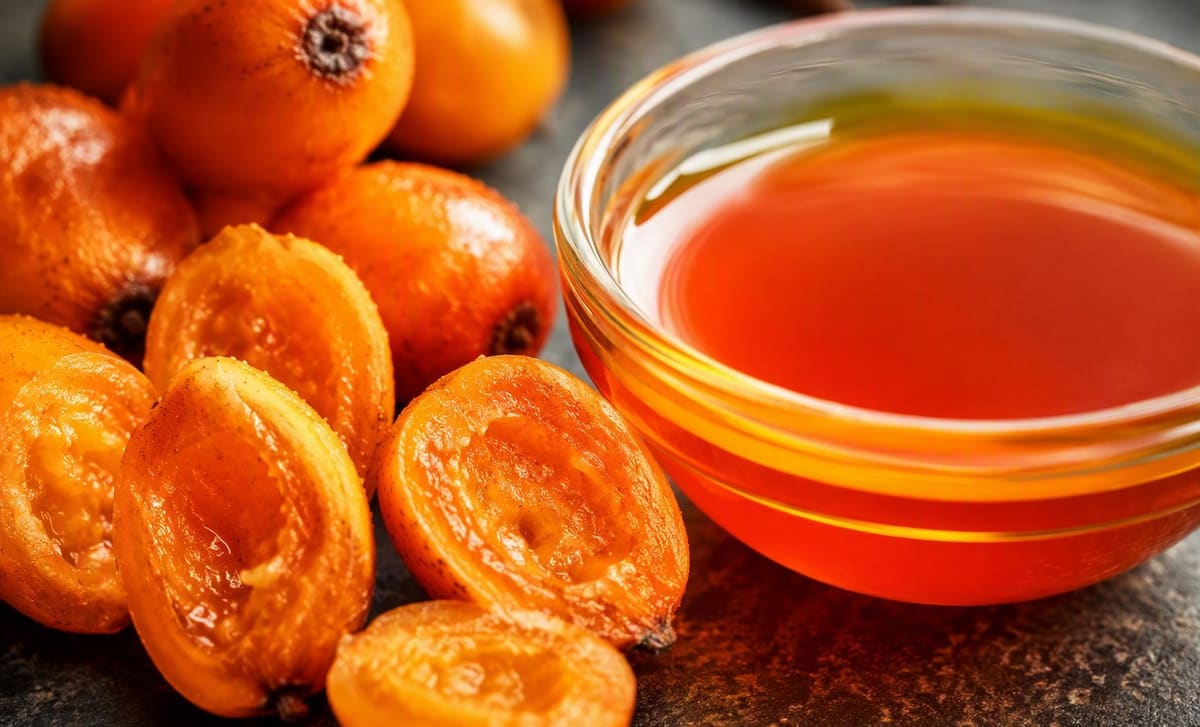
The famous orange is chemistry: a dense load of carotenoids, led by beta-carotene with lycopene and zeaxanthin alongside. Berry oil ranks among the richest plant sources of the family, seed oil stays pale, and the same pigments that color the berry will color your countertop.
The cast behind the color
Beta-carotene leads the panel, the same pigment that colors carrots. Lycopene, the tomato red, and zeaxanthin, the marigold yellow, ride alongside, with smaller carotenoids filling out the spectrum. Composition reviews put sea buckthorn berry oil among the richest known plant sources of the group, which is why the oil looks like liquid pumpkin and the juice glows.
Where they concentrate
Carotenoids are fat-lovers, so they follow the oil fraction. Berry oil carries the heavy load. Seed oil holds far less and stays pale straw in color, one of the quickest visual checks for which oil a bottle actually contains. Juice keeps some carotenoids from the pulp, and powders keep what the drying spared. The seed oil vs berry oil page turns that color split into a buying rule.
What a serving delivers, and where it goes
Carotenoids are fat-soluble, so the serving question and the absorption question are the same question. A teaspoon of berry oil, about 4.5 grams, carries the densest load, and it absorbs best with a meal that contains some fat. A glass of pulp-rich juice delivers a smaller share suspended in the pulp. Berries and powder land in between, taxed by drying. Once absorbed, the pigments distribute into fat tissue and skin, which is why heavy intake can tint skin yellow-orange over weeks, the harmless carotenemia our FAQ describes. The orange stain page covers the faster, more visible version: what the oil does on contact.
Form by form
- Berry oil: the concentrated form, among the richest plant sources measured.
- Seed oil: pale by comparison. Color is the quickest authenticity check in this aisle.
- Fresh or frozen berries: the full native panel.
- Juice: pulp-dependent. Cloudy keeps a share, clear keeps little.
- Powder: what the drying heat spared. Gentler drying keeps more orange.
Comparison context
These are the same pigment families that color carrots, tomatoes, and marigolds, and composition reviews rank sea buckthorn berry oil among the richest plant sources of the group. What we will not do is print per-gram comparisons against those foods, because the published numbers move with variety, origin, and method, and a false precision contest helps no one. The honest sentence: as a pigment source, this oil is in the top tier of what plants produce.
Common misreadings
- “More orange means more vitamin A.” Beta-carotene converts on demand, and the throttle prevents overdose. The tint risk is real and cosmetic, the toxicity risk is not the issue.
- “Carotenoids replace sunscreen.” They do not, at any dose. The glow page grades what they plausibly do for skin appearance, and sunscreen stays non-negotiable.
- “Pale oil is weaker oil.” Pale usually means seed oil, a different product with its own strengths, not a diluted berry oil. The antioxidants page frames carotenoids inside the wider cast.
Why the pill version disappointed
Carotenoids carry one of nutrition’s great cautionary tales. Diets rich in carotenoid-heavy plants consistently looked protective in observation, so researchers put the lead pigment in high-dose pills and tested it in large trials. The pills failed to deliver the protection, and in smokers they caused harm. That gap between the observed diet and the tested pill is the most instructive finding in antioxidant research, and it should set your priorities at the shelf. The takeaway was not that carotenoids are useless. It was that a pigment inside a food matrix, alongside fat and fiber and a hundred companion compounds, is a different exposure from a compressed isolate at many times food doses. It is one more argument for the bottle of orange oil or the bowl of berries over the capsule of purified beta-carotene, and against megadose logic in general. The vitamin C page tells a similar story for that vitamin: food-form dosing, food-form expectations.
The provitamin A story, briefly
Beta-carotene is provitamin A: your body converts it to retinol on demand and throttles the conversion when stores are full. That throttle is why carotenoid oils do not carry the vitamin A overdose risk that preformed retinol does. The vitamin A page covers the conversion and its safety logic in full.
Handling a pigment this strong
Two practical notes. First, these are fat-soluble compounds, so the oil absorbs best with a meal, as the oil nutrition page explains. Second, respect the stain: wipe the dropper, mind the white shirt, and expect a temporary tint on skin if you apply the oil straight. For bottles whose labels name the oil and subspecies behind the color, see the oil guide, and the nutrition hub places carotenoids in the full nutrient map.
Frequently asked questions
Can sea buckthorn carotenoids turn my skin orange?
Yes, and it is harmless. Heavy intake of carotenoid-rich oils can tint skin with a yellow-orange cast called carotenemia, the same effect heavy carrot juicers see. It fades when intake drops. The bottle version is less subtle: berry oil stains skin, fabric, and countertops on contact, so handle it like the pigment it is.
Do sea buckthorn carotenoids protect against sunburn?
Not in any way that replaces sunscreen. Carotenoid pigments have been studied for skin photoprotection with modest results at best, and no sea buckthorn trial has measured sunburn outcomes. The honest rule: the orange in the bottle is a nutrient and a dye, not a shield. Sunscreen, shade, and clothing remain the only proven sun protection.