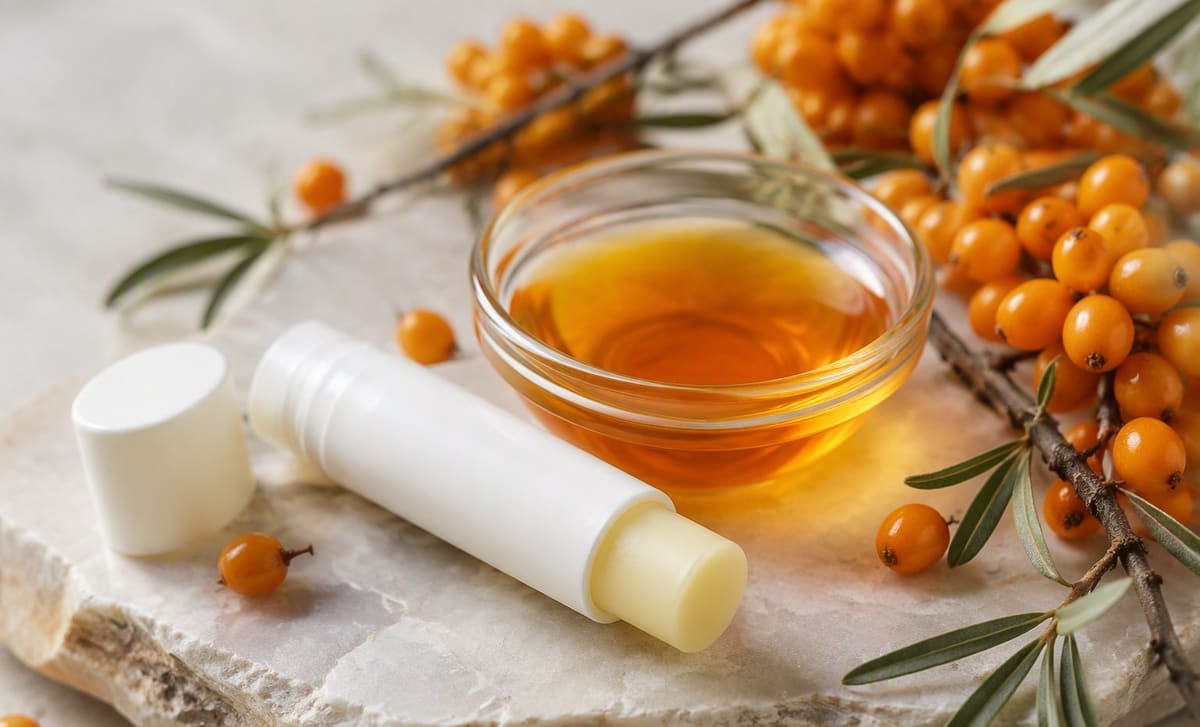
Sea buckthorn lip balm is the rare topical where the format, the dose, and the evidence all line up. Lips are thin-skinned, exposed, and nearly free of their own oil glands, a balm stays on for hours, and berry oil brings carotenoids plus a rich occlusive layer. You also swallow a share of whatever sits on your lips, which makes a food-grade berry oil a sensible ingredient rather than a gimmick. This is the one sea buckthorn topical that needs no apology.
Why lips are the right job
Most sea buckthorn topicals fight their own format. Soap rinses off in a minute. Shampoo lasts two. Lips solve the problem from the other side: the skin there is thin, constantly exposed to wind and dry air, and has almost no sebum of its own to fall back on. A wax-and-oil balm stays in place for hours, which gives the oil fraction real contact time. Leave-on is where this plant’s topical story works, and lips are the most leave-on real estate on your face.
Contact time is the hidden variable that sorts the leave-on end of the range from the wash-off end, and lips win it outright.
What the sea buckthorn adds
Occlusion. The base of any balm (beeswax, plant oils, butters) does the heavy lifting by sealing moisture in. Sea buckthorn oil is a good occlusive among many.
Carotenoids. Berry oil is dense with them, which is what gives an honest balm its deep orange color. On the lips that pigment can read as a sheer warm tint, a feature for some buyers and a surprise for others.
A food-grade ingredient. You inevitably eat a little of your lip product across the day. Sea buckthorn is a food plant with a long culinary record, so the swallowed share is a non-issue, unlike some synthetic actives. The oil explainer covers what is in the oil itself.
What to check on the label
- Hippophae position. Top third of the ingredient list means a real dose. After the flavor oils, it is decoration.
- Berry oil vs seed oil. Berry oil brings the carotenoids and the color. Seed oil is paler and lighter. Both work in a balm, and the berry version is the classic.
- SPF honesty. A balm without stated SPF is not sun protection, no matter how orange it looks.
Classic European sea buckthorn lines (Weleda’s is the archetype) built this category on exactly this template: berry oil plus beeswax, no theatrics. The skincare guide shows where balms sit among the leave-on options worth paying for.
How a balm is built
Every balm is the same three-part architecture: a wax for structure, oils for glide and occlusion, and sometimes butters for body. Beeswax is the classic, candelilla the vegan swap. Sea buckthorn plays a supporting role in that architecture, because a small share of berry oil already colors a tube deeply. A “sea buckthorn balm” is rarely a tube of pure oil, and that is formulation sense, not stinginess: pure berry oil would stain everything it touched. If plain oil on the lips is what you are weighing instead of a balm, the lips page takes that route apart.
The tint question, settled
The warm tint is carotenoids, the same pigments that color the berry. On lips it reads as sheer warmth rather than lipstick, it builds with layers, and it fades like any balm. If you want the care without any color, seed-oil formulas are the answer. If you want the tint, look for berry oil high in the ingredient list, because position is dose. The carotenoids page explains what the orange actually is.
Reapplication is the dose
Lips have almost no oil glands and take constant weather, and eating, drinking, and licking strip product off on schedule. So the working rule is after meals, before going out into wind or cold, and the thickest layer before bed. One myth to retire: lips do not become dependent on balm. They simply show dryness fast when unprotected, and the balm was never the cause.
The day-and-night routine
Daytime calls for thin layers under whatever else you wear, seed-based if tint is a worry. Night is where berry-oil balms earn their keep: a thick layer before bed gives the oil hours of undisturbed contact, which is the whole point of a leave-on product. Pair it with the wider skincare routine and the lips stop being the dry spot the rest of the face is solving.
Storage and shelf life
Heat is the structural enemy: a tube in a hot car or a sunny pocket melts, and while it resolidifies, the texture can turn grainy. Sunlight ages the oils, so cap the tube and keep it out of windowsills. Respect the period-after-opening symbol on the packaging, because fingers and lips introduce company that oil and wax cannot fight forever.
What a fair price buys
Balms are cheap to formulate and expensive to brand, so price signals are weak here. What a fair price buys is honest positioning of Hippophae in the ingredient list, a named oil type, and no fragrance drama. Beyond that, you are paying for packaging and perfume.
The DIY route
A home version is genuinely simple: melt one part beeswax with three to four parts of a bland carrier oil, stir in sea buckthorn oil drop by drop to the color you want, and pour into tubes or tins. You control the wax, the scent (none is a choice), and the berry share, and a batch costs less than two branded tubes.
Who should look elsewhere
Zero-tint seekers should pick a seed-oil formula. The fragrance-sensitive should scan for “parfum” or “aroma” before buying. And anyone whose lips are cracked at the corners, bleeding, or flaring for weeks needs a pharmacist or dermatologist, not a nicer balm: that is cheilitis territory, and it has real treatments.
Frequently asked questions
Does sea buckthorn lip balm tint your lips?
Often slightly. Balms made with real berry oil carry its carotenoids, which can leave a warm, sheer orange tint. Some people buy it exactly for that. If you want zero color, look for seed-oil-based formulas or check swatches before buying.
Can I just put sea buckthorn oil on my lips?
Yes, and it works. Straight berry oil is the original version of this product. Two catches: it stains fabric and fingers on contact, and without any wax structure it migrates. A balm is the same idea with manners.
Can sea buckthorn lip balm replace sunscreen on lips?
No. Unless the tube states an SPF and lists UV filters, it is not sun protection, however orange the oil. Lips burn easily, so in strong sun pair the balm with a stated-SPF lip product.