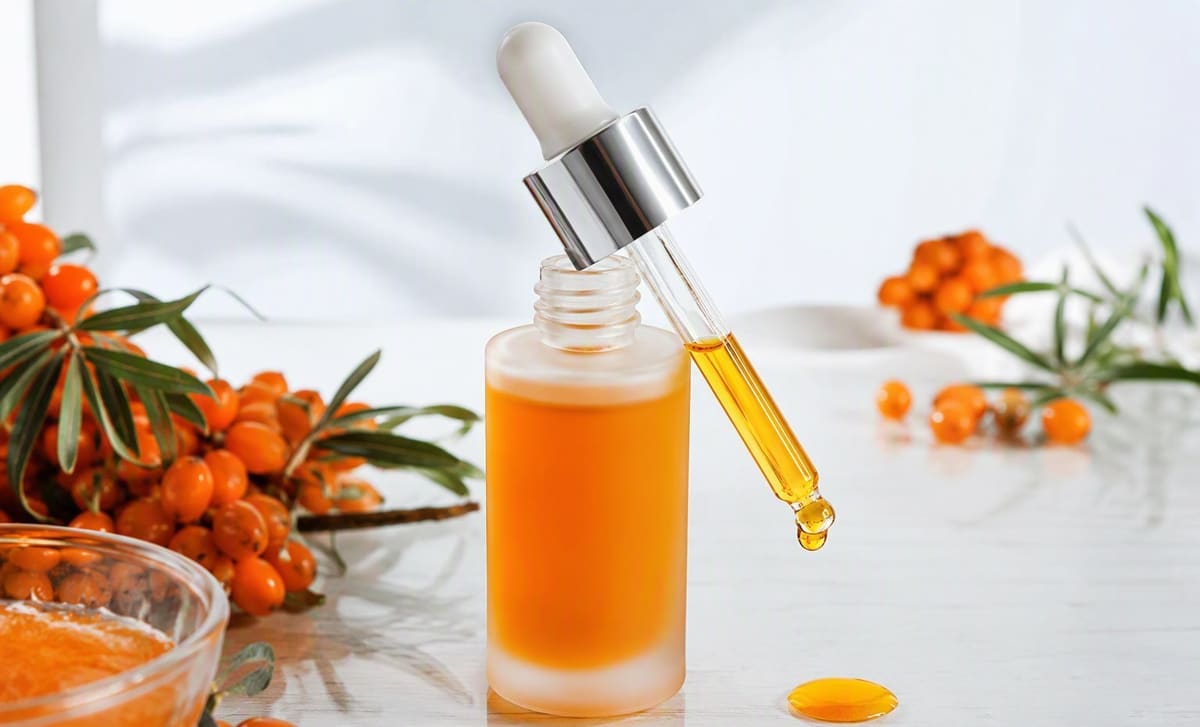
A sea buckthorn serum is only as sea buckthorn as its INCI list. The oil near the top means a real dose. The oil after the fragrance means a marketing sprinkle. What it can honestly do: soften, add surface glow, and deliver carotenoids to the surface. What it cannot claim: the skin-trial results, because those came from swallowing the oil, not spreading it.
The INCI list is where the truth lives
Cosmetic ingredients are listed in descending order of concentration. Look for Hippophae Rhamnoides Fruit Oil (berry) or Hippophae Rhamnoides Seed Oil:
- Top five positions: a meaningful percentage. This is a sea buckthorn serum.
- Below the preservative line: anything after phenoxyethanol or fragrance sits under about 1 percent. That is a serum with a sea buckthorn story, not a sea buckthorn dose.
The Ordinary’s Sea Buckthorn Fruit Oil skips the ambiguity entirely by selling the single oil (check current price at The Ordinary). Formulated serums can be lovely, but the INCI list decides what you are paying for, and the products hub maps every other form on the shelf.
Water-based versus oil-based serums
Two different products share the word serum. Water-based serums are thin, fast-absorbing liquids built on water and humectants. Sea buckthorn in one of those is a water-soluble extract: flavonoids and some vitamins, a different slice of the plant than the oil. Oil-based serums are blends of plant oils, and there sea buckthorn arrives as the actual oil, fatty acids and carotenoids included.
Check the first ingredient. Aqua means water-based. A named plant oil means oil-based. The carotenoids page explains what the oil route brings that the water route cannot.
What percentages mean on serum labels
A few brands state the sea buckthorn percentage outright, which is the clearest labeling you will find. Most say nothing, and then INCI position and tint do the estimating. A serum that pours deep orange carries real berry oil, because carotenoids stain at meaningful doses. A clear serum with sea buckthorn on the front label carries very little berry oil, whatever the box implies.
Neither is automatically wrong. A 2 percent serum in a well-built formula is a legitimate product. It should simply be priced like 2 percent, and you should know that is what you are buying.
What the oil contributes topically
Berry and seed oils are emollients: they fill the gaps between surface skin cells and smooth the feel immediately. The carotenoids that make berry oil orange are antioxidants on paper, and the fatty acids (palmitoleic, linoleic, oleic) are skin-barrier lipids. All of that supports a reasonable expectation of softer, calmer-looking skin.
Berry or seed, serum edition
Check which oil the INCI names. Fruit Oil means berry: carotenoid-rich, orange, the one with tint risk. Seed Oil means pale and linoleic-heavy, the friendlier pick for blemish-prone faces. A serum that says only “Hippophae rhamnoides” without the part is leaving the most useful word off the label.
Expectations versus the trials
Keep the two lanes separate. The measured skin improvements in humans came from oral oil: about 49% hydration gain over three months in the uncontrolled 2009 study, and 8% hydration plus 14% texture improvement against placebo in the 2024 trial. No serum has been through anything like that. A good serum gives you emollience and a same-day glow. The inside-out results, if they happen for you, come from the spoon, and the skin hub grades that evidence claim by claim.
How to use one well
- Water-based products first, serum after, cream on top to seal.
- Two or three drops, pressed in, not rubbed.
- Patch test on the jaw or inner arm for a few days before full-face use.
- Berry-oil serums at night if you are fair: the tint washes off skin, but pillowcases are less forgiving.
Layering with the rest of your routine
Thinnest to thickest is the rule: water-based products, then serum, then cream, then sunscreen in the morning. An oil-based serum goes after the water-based steps and can replace or precede a cream, depending on how much sealing your skin wants.
Sea buckthorn oil is chemically quiet, so it layers fine alongside common actives like vitamin C, niacinamide, or retinoids. If your skin is sensitive, introduce one new product at a time, a week apart, so you can tell what disagrees with you. The sensitive skin page has the careful version of that advice.
Storage and shelf life
Light and air are the enemies. Dark glass with a pump beats a clear dropper bottle, and a cool drawer beats a sunny shelf. Most serums carry an open-jar symbol (6M or 12M) that states their after-opening life.
Oil serums can go rancid, and you will smell it: a waxy, stale, crayon-like note replacing the fruity one. That is oxidation, and the bottle is done. Berry-oil serums also stain fabric, so cap them properly and store them upright.
Buying notes
Decide between a single-oil product (full control, full tint risk with berry) and a formulated serum (elegant texture, check the INCI position). Give any new serum four weeks of consistent use before judging it, because skin turnover runs on that clock and day-three verdicts measure nothing. Straight oils are covered on the face oil page, and tested picks live in the skincare buying guide.
Who should skip a serum
Very oily skin often prefers a lighter seed-oil product or none, and the oily skin page covers that calculus. Anyone expecting the trial numbers from a bottle: those came from oral oil, as the skin studies page makes plain, and no topical product has matched them. And anyone unwilling to patch test for a few days before full-face use should start with a single-oil product, where the ingredient list is one line long.
Frequently asked questions
Do sea buckthorn serums actually work?
As emollients, yes: a serum with real sea buckthorn oil softens and adds surface glow from day one. For measured skin change, the only human trials used oral oil (hydration up 8% against placebo at 12 weeks in the controlled one). No serum has trial data, so judge it as skincare, not as the studies in a bottle.
Will sea buckthorn serum stain my skin orange?
Serums built on berry oil can leave a faint warm tint on fair skin, and can mark pillowcases and collars if overapplied. Two or three drops, pressed in well, avoids it. Seed-oil serums are pale and carry no tint risk.
Can I use a sea buckthorn serum every day?
Yes, once or twice daily is normal for leave-on products, after a patch test. Two or three drops is the dose, pressed into damp skin. If you use a berry-oil serum in the morning, give it a minute to settle before sunscreen, and watch collars on fair skin.