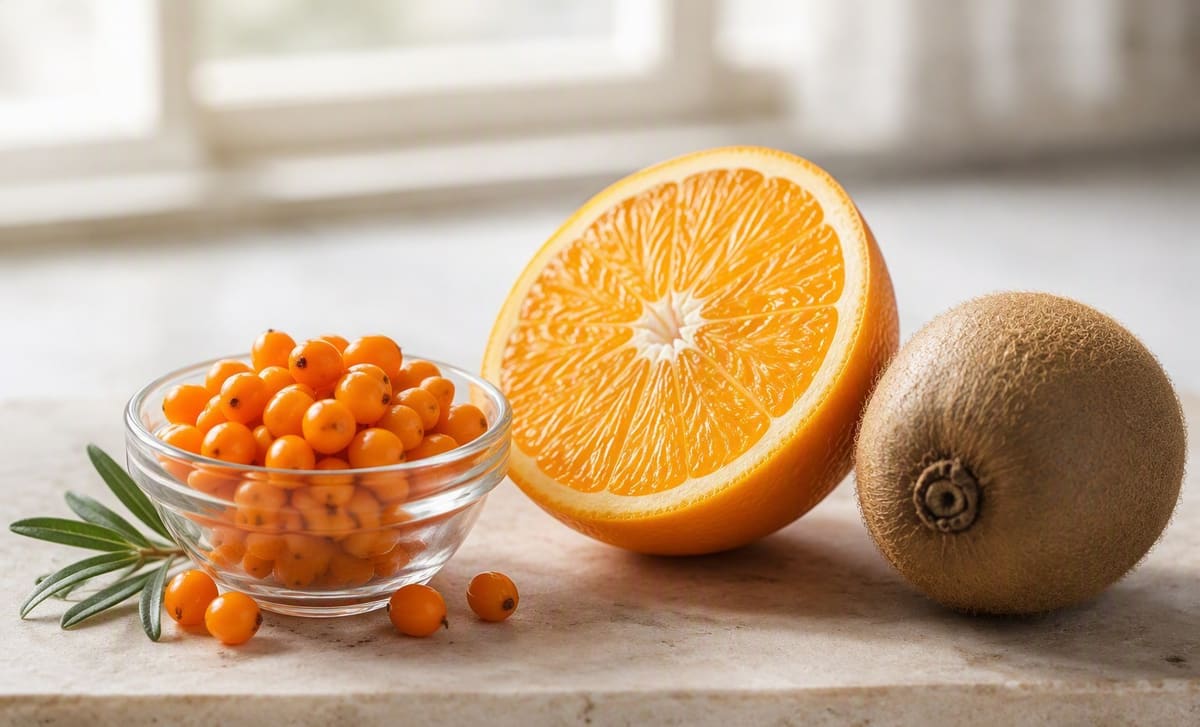
Sea buckthorn berries are genuinely rich in vitamin C: published analyses put them at roughly 200 to 600 mg per 100 g fresh weight, depending on variety and where they grew. Even the low end is several times an orange by weight. The catch is everything that happens after picking. Heat, drying, and months of storage destroy vitamin C fast, so the number on a fresh-berry chart rarely survives into your juice or powder.
Why every site quotes a different number
The 200 to 600 mg per 100 g range is not sloppiness. It reflects real variables:
- Variety. Different cultivars differ several-fold.
- Altitude and climate. Harsher conditions push vitamin C higher.
- Ripeness and season at harvest.
- Test method. Older titration methods and modern chromatography do not agree.
Any source quoting one heroic figure without naming its variety and method is cherry-picking. Literally. The nutrition hub puts this number in context with the berry’s other nutrients.
The processing tax, line by line
- Fresh or properly frozen berries: full value.
- Juice: loses some immediately, more with pasteurization, and keeps losing it on the shelf. Check “best by” distance, not just the label claim.
- Dried berries and powder: heavy losses. Vitamin C is fragile against heat, oxygen, and time, and drying applies all three.
- Oil: essentially zero. Vitamin C is water-soluble and stays in the juice fraction, not the oil. An oil capsule is the wrong product if vitamin C is your goal.
Per real serving
Translate the range into portions. A 100 g bowl of fresh berries carries the full 200 to 600 mg, variety permitting, and properly frozen berries land close behind. A 250 ml glass of pure juice carries a meaningful share of that, shrinking with pasteurization and shelf time, as the juice nutrition page quantifies. A 30 ml shot of pure juice is a smaller serving of the same thing. A spoon of powder keeps what the drying spared, which is the minority of the original. A softgel of oil brings essentially none. The same plant spans from “several times your daily need” to “zero”, and the form chooses where you land.
The daily-need frame
Adult reference intakes for vitamin C sit under 100 mg per day. Even the low end of the fresh-berry range, 200 mg per 100 g, covers that more than twice in a single bowl, and the high end covers it many times over. That makes fresh sea buckthorn a genuine surplus food for this vitamin, one of the few fruits where a normal serving overshoots the entire daily target. Severe deficiency is rare in modern diets, so the real question for most people is optimization, and food handles optimization well. The processing tax is why the surplus rarely survives into the packaged product, and why the form you buy decides everything.
The 1,500 mg myth
Somewhere online, sea buckthorn’s vitamin C climbed to 1,500 mg per 100 g and beyond. No verified analysis supports figures like that for fresh berries. The inflation usually traces to quoting dry-weight measurements without saying so, or to copying a number attached to a concentrated extract and pasting it onto the fruit. The verified fresh range tops out around 600 mg. When you see four digits, you are reading a different measurement wearing the fruit’s name.
Keeping it alive in your kitchen
Vitamin C dies by heat, oxygen, light, and time, so the handling rules write themselves. Buy frozen berries or freeze fresh ones fast. Choose juice in dark bottles, refrigerate it, and finish it within the producer’s window rather than yours, because that habit decides more of what survives than picking between the two bottles in our juice roundup ever will. Dilute with cool water, never hot. Keep powders sealed and dry, and do not bake with them if the vitamin is the point, since the oven is the tax at maximum rate. The fresh vs dried vs powder page scores each form’s retention before you buy, and the recipes hub builds these rules into everything it suggests.
The honest comparison
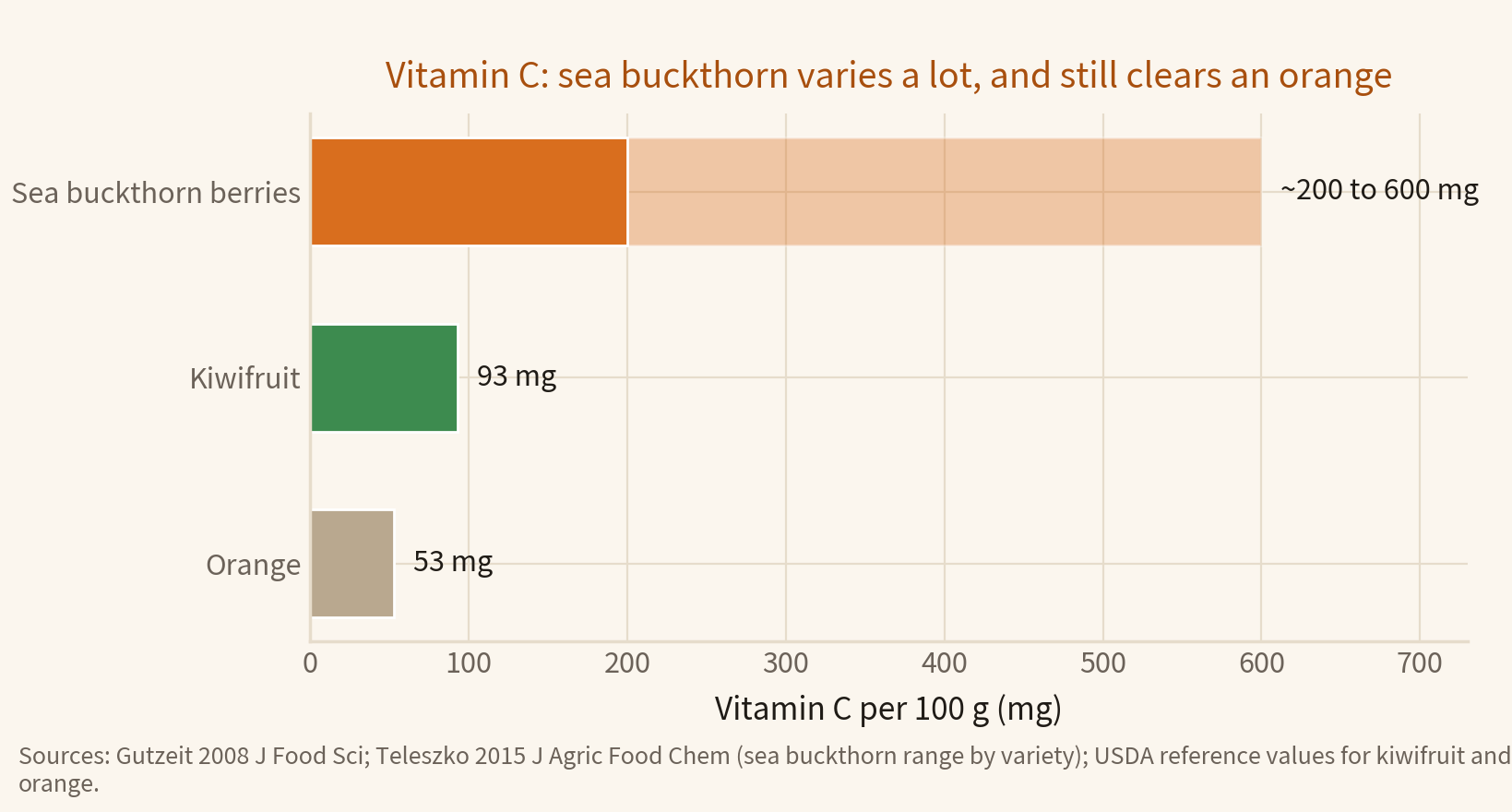
Per 100 g fresh, even low-range sea buckthorn beats oranges (~53 mg), kiwis (~93 mg), and most berries. Per actual serving of an actual product, the ranking depends on processing, which is why we evaluate products individually rather than repeating the fresh-berry chart. The recipes hub shows how to handle the berries so more of it survives to the glass.
What the one berry trial found
Worth knowing: the flagship whole-berry trial dosed 28 grams of berries daily for three months and measured what happened. Colds and infections arrived at the same rate as placebo, while an inflammation marker improved modestly. That is the honest immunity frame for the berry’s vitamin C: real nutrient, real intake, and no cold-prevention effect in the one trial that checked, as the immunity hub states plainly. Enjoy the surplus. Skip the force field.
See the data behind this chart
| Food | Vitamin C per 100 g |
|---|---|
| Sea buckthorn berries | ~200 to 600 mg (variety dependent) |
| Kiwifruit | 93 mg |
| Orange | 53 mg |
Frequently asked questions
How much vitamin C is in sea buckthorn?
Published analyses put fresh berries at roughly 200 to 600 mg per 100 g, depending on variety and where it grew. Even the low end beats oranges (about 53 mg per 100 g). Heat, drying, and storage destroy much of it, so processed products carry far less than fresh-berry numbers suggest.
Is sea buckthorn better than a vitamin C tablet?
They answer different needs. A tablet gives a precise, cheap, shelf-stable dose, which wins on certainty. The berry and its juice deliver vitamin C inside a food matrix with carotenoids, flavonoids, and organic acids alongside, which wins on everything except precision. For daily eating, the food form is the richer choice. For a guaranteed measured dose, the tablet has no mystery about it.