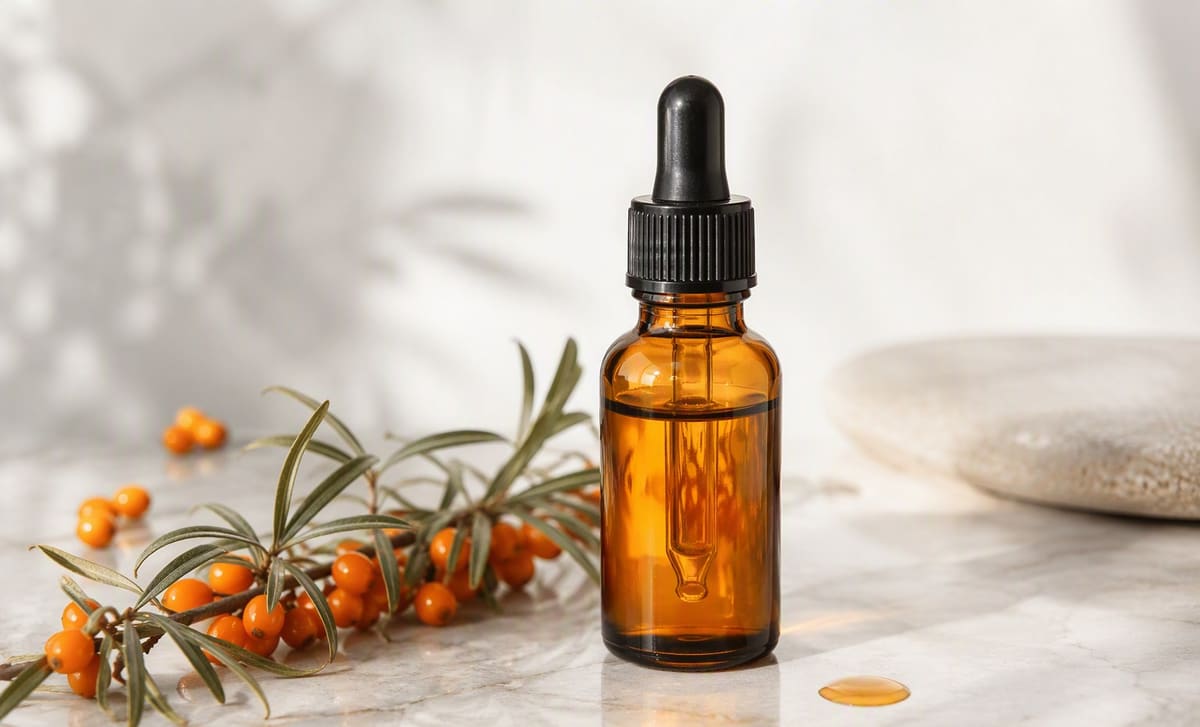
As a face oil, sea buckthorn splits by plant part. Pale seed oil goes straight on: a few drops pressed into damp skin, safe for daily use and acne-prone faces. Deep-orange berry oil works best mixed one or two drops into your night cream, because its carotenoids tint. Publisher and formulator ratings place both oils at the low end of the comedogenic scale, though no lab study has pinned an exact number on them. Light oils high in unsaturated fatty acids, like these, are the kind that rarely clog pores. Patch test regardless.
Face oil versus supplement oil
Same plant, different job. Supplement oils are food-grade and dosed in grams. Face oils are cosmetic-grade, dosed in drops, and sometimes blended with other botanicals. A food-grade berry oil can work on your face (that is what The Ordinary sells, at cosmetic prices), but check that your cosmetic oil is not something you should swallow. The lanes cross less than you would think. That same split runs through the category, which is why our product breakdown separates the topicals from the things you take by mouth.
Choosing by skin type
- Dry or mature: berry oil mixed into night cream. The carotenoids and omega-7 suit thirsty skin, and night hides any tint.
- Oily or acne-prone: seed oil only, straight, few drops. Linoleic-rich and light, as explained on the acne page.
- Sensitive: seed oil, patch test for a week, then graduate if calm.
The tint, managed
Berry oil’s orange is carotenoids sitting on the surface. It washes off, it is not staining in any permanent sense, and one or two drops in moisturizer dilutes it below notice for most skin tones. Straight berry oil on fair skin in daylight is the only genuinely risky move, and now you know not to make it.
Technique that makes the difference
Apply to damp skin, press rather than rub, and give any new oil two weeks of consistent use before judging. Step-by-step routines live on the how to use face oil page, product picks in the skincare guide, and the evidence behind topical use on the skin hub.
What is actually in the bottle
Two products share the face-oil shelf. The first is a single oil: 100% sea buckthorn, plant part named, nothing else. The second is a formulated face oil, where sea buckthorn shares the bottle with carriers like jojoba, squalane, or rosehip. Neither is automatically better, but the ingredient list tells you which one you are paying for. Sea buckthorn in the top third means a real share. Sea buckthorn near the end, after the fragrance, means tint and marketing. Sensitive skin should also scan for essential oils and “parfum,” the usual irritation suspects. Food-grade berry oil on a face is legitimate (The Ordinary built a product on exactly that idea), but cosmetic-grade oil is not dinner, so keep the lanes straight in both directions.
Seed, berry, or blend for your face
The decision mirrors the supplement one. Seed oil is the daily driver: pale, light, no tint, friendly to oily and combination skin. Berry oil is the treatment oil: richer, carotenoid-dense, tinted, best diluted into cream at night. Blends split the difference in one bottle, which suits minimalists. Dry and mature skin usually votes berry at night and seed by day. Oily skin votes seed only, a few drops, damp face, done.
The comedogenic question, extended
Publisher and formulator ratings put both oils at the low end of the pore-clogging scale, and no lab study has pinned an exact number, as we said up top. What the theory adds: light oils rich in linoleic acid are the kind oily skin usually tolerates best, and seed oil is exactly that. But skin is individual, and charts do not wash your face. The working protocol: patch test on the inner arm for a week, then along the jawline for a few days, then commit. Any bump cluster means stop, not push through.
Where oil sits in a routine
Order matters. Water-based products first, oil last, because the oil’s job is sealing everything underneath it in. Morning: a few drops of seed oil, or skip to sunscreen. Night: the berry-oil-in-cream slot. One thing oil never replaces is SPF, since no plant oil is sunscreen. The skincare routine guide maps the full order, and the oil cleansing page covers the wash-side use of the same bottle. For mixing ratios that keep the tint civilized, the dilute oil guide does the math.
Storage, and the life of an open bottle
Light and air age carotenoids, which is why honest face oils come in dark glass. Keep the cap tight, the shelf cool, and the bottle out of the sunny bathroom window. An open bottle is best used within a few months, and a dropper that touches your face should touch nothing else. The storage guide applies to the whole collection.
Mixing with what you already own
Face oil plays well with a plain moisturizer: mix the drops into a blob in your palm rather than layering and hoping. Introduce one new product at a time, a couple of weeks apart, or you will never know which one helped or hurt. And if foundation pills over your oil, the answer is fewer drops, not more product.
Who should pause first
Anyone mid-flare with cystic or inflamed acne should see a dermatologist before experimenting with any oil. Anyone on prescription retinoids should ask that prescriber before layering oils on top. And anyone unwilling to patch test should honestly stick to products with a return policy, because the tint section above is not the only surprise a face can get.
Frequently asked questions
Can you put sea buckthorn oil directly on your face?
Yes, with technique. Seed oil can go straight on, a few drops pressed into damp skin. Berry oil is better mixed one or two drops into moisturizer because its carotenoids can tint skin orange. Publisher and formulator ratings place both oils at the low end of the comedogenic scale, though no lab study has pinned an exact number on them. Patch test first either way.
How many drops of sea buckthorn oil should I use on my face?
Fewer than instinct says. Two to four drops of seed oil pressed into damp skin covers a face, and one or two drops of berry oil mixed into moisturizer is the whole dose. More oil does not mean more effect, just more shine, more tint, and a faster-emptying bottle.