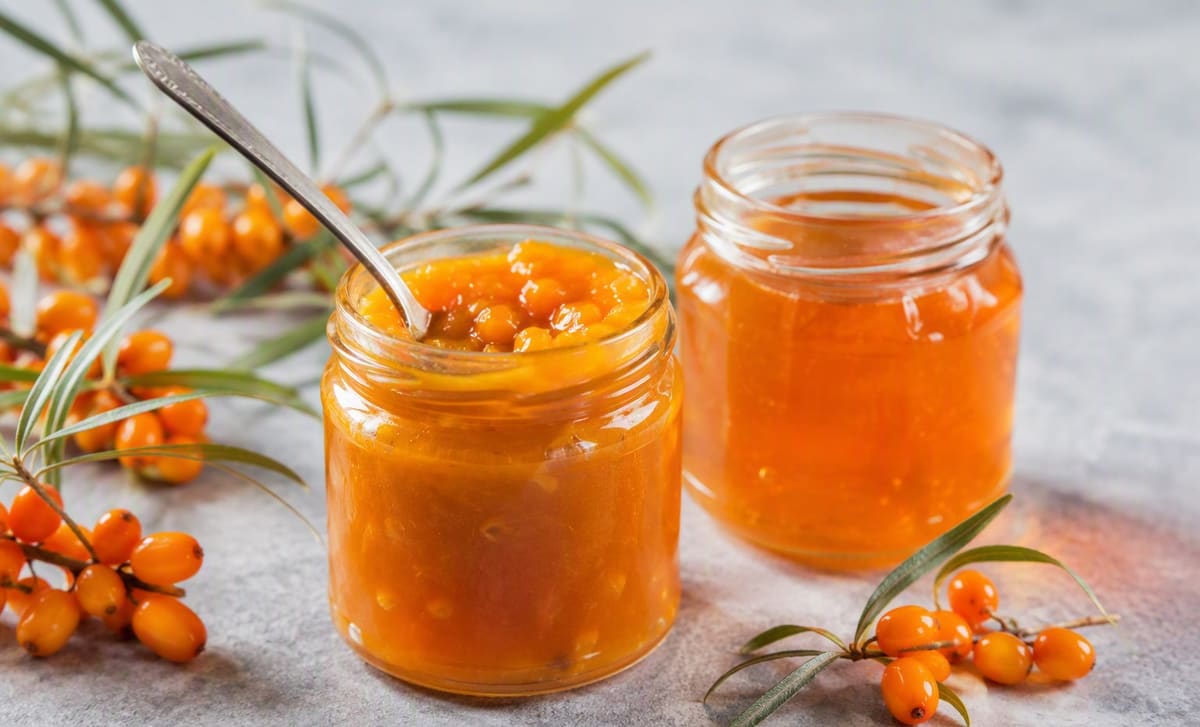
Sea buckthorn jam is the berry’s sourness made civilized: sugar and heat turn a fruit that fights you raw into a bright, tropical spread. It is also a dessert, not a supplement. Sugar leads the recipe and cooking costs part of the vitamin C, so buy it for toast, cheese boards, and rich meats, and leave the health claims to fresher forms.
What the jar actually contains
Jam law, anywhere you buy it: fruit plus sugar plus heat. The sea buckthorn version usually means crushed berries cooked with sugar until the mix sets, sometimes with apple or pectin for body. The berry’s acids are natural preservers, which is why the tradition works, and the sugar does the rest of the keeping.
Jam is the sweetest corner of everything this berry gets turned into, and the sugar is why. Two honest costs hide in that process. Vitamin C loses to heat and time, so the famous 200 to 600 mg per 100 g of the fresh berry does not survive into the jar at full strength. And sugar is not a guest here but a structural ingredient, often a third or more of the jar by weight. This is why our jam recipe opens with the same confession: make it because it is delicious.
How to pick a good jar
- Fruit content first. Quality preserves state fruit per 100 g, and higher is better. A jar leading with sugar and listing sea buckthorn down the line is jam-flavored syrup.
- Short ingredient list. Berries, sugar, maybe lemon or pectin. Anything longer is formulation, not preservation.
- Origin you can question. Sea buckthorn jams come from growing regions, the Nordics, the Baltics, the Himalayas, and a named place is a claim you can check.
Where it earns its shelf space
On toast and in yogurt, obviously. Less obviously and more traditionally: as a sharp sauce for rich, fatty meats, where the acidity cuts fat the way cranberry does at Thanksgiving. A spoonful in salad dressing or a pan sauce is the cook’s move. The recipes hub collects the rest.
If the sugar content gives you pause, the same flavor lives in frozen berries with none of the syrup, and the forms comparison shows where jam sits in the honest taxonomy: a pantry pleasure, not a health strategy. Our price guide prices the grocery forms as groceries, which is the check that catches a jar charging supplement money for sugar.
Jam versus jelly, mechanically
The difference is straining. Jam cooks the crushed fruit, pulp and all, so it keeps the fiber and the full texture. Jelly starts from strained juice, which sets clear and smooth but leaves the fiber and pulp behind. The set itself is teamwork between pectin, acid, and sugar, and this berry’s fierce acidity is why it preserves and sets so eagerly. For a fruit with this much character in its pulp, jam is usually the better jar, and the jelly recipe shows the strained route for contrast.
The sugar question in numbers
Traditional preserve math runs near equal parts fruit and sugar, which is how a jar reaches a third or more sugar by weight. A tablespoon therefore carries a few grams of added sugar: fine for a treat, not a health food. Reduced-sugar jars exist, but less sugar means weaker preservation and a reformulated pectin, which honest labels show. Sugar-free versions swap preservatives and sweeteners in, a different product wearing the same name.
Fruit percentage, the quality tell
European-style preserves print fruit per 100 g on the label, and it is the single best quality signal: 50 g or more of fruit per 100 g is a serious preserve, while 30 g reads closer to syrup with berry flavoring. If the jar does not state it, the ingredient order tells the same story, with sugar listed first as the warning sign.
What survives the boil
Vitamin C takes the biggest loss, to heat in the pot and time in the jar, as the vitamin C page explains form by form. What survives is the berry’s personality: the tropical-sour flavor, the tart acids, much of the carotenoid color, and in jam, the fiber. So a good jar keeps the character and spends the vitamin stats, which is exactly the trade a preserve is for.
Storage, sealed and opened
Sealed jars live in the cupboard. Once opened, the jar moves to the fridge and the clock shortens to weeks, with a clean spoon every time. Mold or fizzing means the whole jar goes, because scraping the top does not make it safe. Remember that sugar is the preservative here, so low-sugar jars spoil faster than traditional ones.
The cheese-board secret
Sea buckthorn jam’s second career is savory. Its acidity cuts rich, fatty foods the way cranberry sauce does at Thanksgiving: aged cheeses, pâtés, roasted meats, and anything smoked. A small jar pulled out for guests does more for a cook’s reputation than a pantry of ordinary preserves, and it uses up the jar long before the fridge clock runs out. Serve it like a condiment, not a spread: a small spoonful beside the food, because the intensity that makes it good also makes a thick layer a mistake. Leftover jar ends melt into pan sauces with a splash of water or wine.
Who should skip, and the homemade edge
Skip the category if you restrict sugar or if you expect supplement effects, because jam delivers neither. Make it yourself if you want the upper hand: fruit percentage, sugar level, and set are all yours to control, and frozen berries make jam a year-round project rather than a two-week harvest scramble. The savory sauce recipe shows where else a jar earns its keep.
Frequently asked questions
Is sea buckthorn jam good for you?
It is good for your breakfast, not your biomarkers. Jam keeps the berry's flavor and some of its character, but sugar leads the ingredient list and cooking costs a real share of the vitamin C. Enjoy it as a preserve, in the portions any jam deserves, and get your nutrients from fresher forms.
What is the difference between sea buckthorn jam and jelly?
Jam contains the crushed fruit, pulp and all, so it keeps the fiber and the full flavor. Jelly is made from strained juice, giving a clear, smooth set with no fruit pieces. For this berry, jam also keeps more of what made the fruit interesting.
How long does an opened jar of sea buckthorn jam keep?
In the fridge, with a clean spoon every time, several weeks is a safe working rule. Sugar is the preservative, so low-sugar jars keep noticeably less. Mold, fizzing, or an off smell means the whole jar goes. Scraping the top does not make it safe.