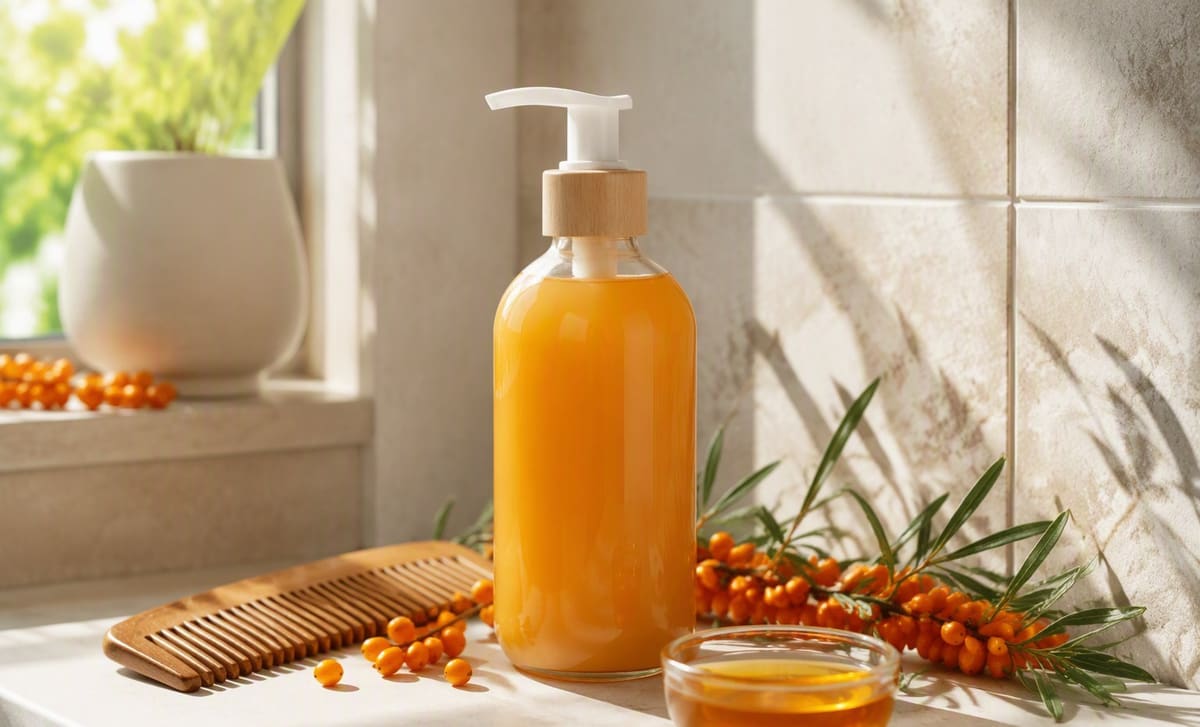
Sea buckthorn shampoo is a rinse-off product, so the honest question is not whether the berry helps hair, but how much of it survives a two-minute wash. The answer: enough for scent, color, and a small conditioning contribution, not enough to reproduce anything from the oil studies. A good sea buckthorn shampoo is a good shampoo first. Judge the surfactants before the story.
The contact-time ceiling
Shampoo sits on your head for one to three minutes, heavily diluted, and then rinses away. Whatever oil the formula carried goes mostly down the drain. The sea buckthorn research involves oral oil dosed daily for weeks, or leave-on topical use, and a rinse-off wash is neither. The realistic contributions are a clean scalp, a pleasant scent, and a trace of oil that the conditioner step (or your own sebum) would supply anyway.
Rinse-off is a category problem rather than a shampoo problem, and sorting the wash-off products from the leave-on ones is the first job our product coverage does.
What surfactants do (and which are gentle)
Surfactants are the cleaning agents, and they decide whether a shampoo leaves hair squeaky or soft. Strong sulfates, sodium lauryl sulfate and its relatives, clean hard and strip hard. Gentler systems use glucosides, isethionates, or betaines, which clean adequately with less collateral damage to the hair’s own oils.
Healthy hair sits around pH 4.5 to 5.5, and a shampoo near that range keeps the cuticle lying flat. Alkaline products lift it, which is the mechanical reason true soap bars can leave hair rough, especially in hard water. The scalp page covers why the skin underneath votes in this election too.
Hard water deserves its own sentence. Its minerals react with true soap to form scum that dulls hair, which is why soap bars struggle in hard-water regions while syndet bars and liquids barely notice. If your kettle furs up, choose the format accordingly.
Bar vs liquid
Shampoo bars come in two species. True soap bars are saponified oils: alkaline, which can lift the hair cuticle and quarrel with hard water. Syndet bars are pressed synthetic surfactants: pH-balanced, and they behave like bottled shampoo with the water removed. A sea buckthorn soap bar behaves like soap. A sea buckthorn syndet bar behaves like shampoo. The first ingredients tell you which you are holding: sodium cocoate and its cousins mean soap, sodium cocoyl isethionate means syndet.
Liquid shampoos are easier to formulate mildly and easier to dose with oils. Neither format is inherently better. The surfactant system and the pH decide how your hair feels, not the shape of the product.
Reading the INCI list
Water leads most liquid formulas, surfactants follow, and then comes the interesting part. Hippophae rhamnoides oil or extract in the top third means a real dose. After the preservatives and fragrance (phenoxyethanol, parfum), the amount is a rounding error, there for the front of the bottle rather than your hair.
One nuance: seed oil and berry oil are different products, per the seed vs berry breakdown. Berry oil brings the carotenoids and the orange tint. Seed oil is paler and lighter. Both are acceptable in a wash-off product, and neither justifies a premium on its own.
How much sea buckthorn a shampoo can hold
Less than the marketing suggests. A shampoo is mostly water and surfactants, and heavy oil loading breaks the lather and destabilizes the formula. Realistic sea buckthorn content sits at a few percent at most, which is why INCI position matters: top third, a real contribution. Below the fragrance, a label ingredient.
Even a generous dose faces the rinse. The how to use page shows where oil actually pays off for hair: left on, not washed off.
Pairing it with the leave-on route
The wash is the opening act. A pre-wash oil treatment, a few drops of berry or seed oil through the lengths thirty minutes before shampooing, is where sea buckthorn does its real hair work, because contact time is measured in minutes to hours rather than seconds. Conditioner after the wash then seals the cuticle the shampoo just lifted.
That division of labor, shampoo to clean, oil to treat, conditioner to seal, is the honest version of what a single bottle promises. The shampoo and conditioner page has the full routine.
Storage and shelf life
Liquid shampoos are low-maintenance: cap them, keep them out of direct sun, and respect the open-jar month symbol on the pack. If a liquid changes color or separates and will not recombine with a shake, its time is up. Bars need more thought. A bar that sits in a puddle dissolves into mush and wastes quickly, so give it a draining dish and airflow. Kept dry, a bar outlasts a bottle gram for gram.
Who should skip it
Anyone hoping for regrowth: no shampoo delivers that, and the hair growth page explains what actually has evidence. Anyone fighting dandruff should look for proven active ingredients first, per the dandruff page, with sea buckthorn as a pleasant extra rather than the plan. And anyone with very dry or tightly curled hair may find any foaming shampoo too much, however nice the berry story.
Who it suits
If you like the scent, the color, and a brand that publishes its formula, a sea buckthorn shampoo is a pleasant daily driver. If you want sea buckthorn to do something measurable for your hair, the leave-on route is the serious one: our shampoo and conditioner page shows how the wash fits around oil treatments, and the hair buying guide ranks the products that stay on.
Frequently asked questions
Is sea buckthorn shampoo good for hair growth?
No shampoo has human trial evidence for regrowing hair, sea buckthorn included. A clean, calm scalp supports normal growth, and a mild shampoo helps by not getting in the way. Anyone promising regrowth from a rinse-off bottle is selling, not citing.
Is a sea buckthorn shampoo bar better than a liquid?
Format matters less than chemistry. A pH-balanced syndet bar and a mild liquid are equivalent for hair. A true soap bar is alkaline, which can rough up the hair cuticle, especially in hard water. Read the first three ingredients before you judge the format.
How often should you use sea buckthorn shampoo?
As often as your scalp asks for washing, which for most people is two to three times a week, more for oily scalps and sweaty routines. A mild formula matters more than the schedule. If your hair feels stripped, the answer is a gentler surfactant system or less frequent washing, not a different hero ingredient.