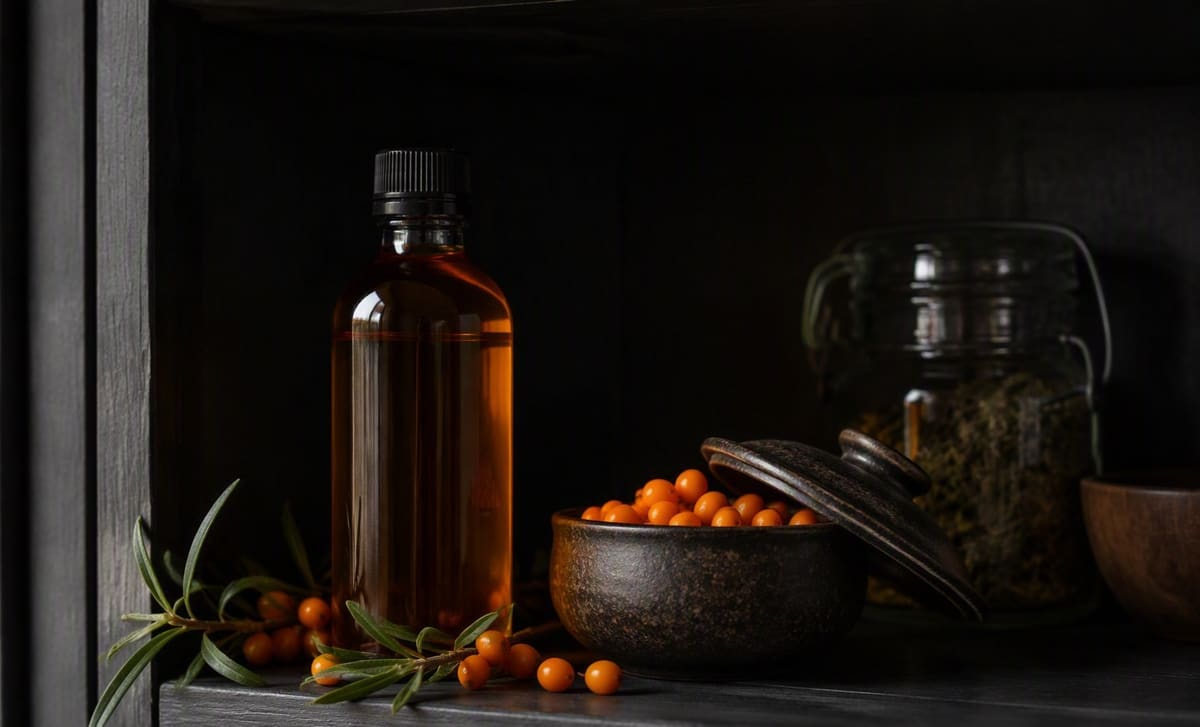
Sea buckthorn’s enemies are oxygen, light, and heat, in that order. Oil lives in a dark bottle in the fridge after opening and should be finished within 3 to 6 months. Powder and dried berries want airtight jars in a dark cupboard. Juice goes in the fridge and freezes well. Softgels want cool and dry. When in doubt, smell the oil: rancid is unmistakable.
Oil: the fragile one
The same unsaturated fats and carotenoids that make the oil valuable make it perishable. Oxygen oxidizes them, light speeds the process, and heat finishes the job. Every use on the how-to-use hub assumes the bottle is still good, so four rules cover it:
- Dark glass, tight cap. If your oil arrived in clear glass, decant it or store the bottle in a cupboard, never on a windowsill.
- Fridge after opening. Cooler temperatures slow oxidation noticeably. Some oils cloud or thicken when cold. That is physics, not spoilage, and it clears at room temperature.
- Finish it. Three to six months once opened is the honest window. Buy the bottle size you will actually use, per our oil explainer. Half the clock is spent before the bottle reaches you, which is why our channel comparison ranks sellers by stock freshness rather than price.
- Smell before you pour. Fresh sea buckthorn oil smells earthy and fruity. Rancid oil smells sharp, stale, faintly like old paint. Your nose detects oxidation long before your eyes do. If it smells off, it is off.
Powder and dried berries: airtight and dark
Both are shelf-stable but not shelf-immortal. Vitamin C fades with every month of storage, so buy smaller amounts more often. Airtight jars, a dark cupboard, and a dry spoon every time. Clumping in powder means moisture got in. The powder explainer covers what survives drying in the first place.
Juice: cold, then colder
Refrigerate after opening and finish within a week. For longer storage, freeze it in ice cube trays and bag the cubes: portioned, quick to thaw, and good for months. Freezing costs a little vitamin C and keeps almost everything else.
Softgels: cool, dry, and dated
The pantry wins over the fridge here, because condensation is the bigger risk. Keep the bottle sealed, away from the stove and the bathroom cabinet’s humidity, and respect the printed date. Softgels that stick together in a glossy clump have seen too much heat.
The full clock, form by form
- Oil, opened: 3 to 6 months in the fridge.
- Oil, sealed: the printed date, kept cool and dark.
- Powder: 6 to 12 months airtight, fading rather than spoiling.
- Dried berries: about a year airtight, per the dried berries explainer.
- Juice, opened: a week in the fridge.
- Juice, frozen: several months as cubes.
- Softgels: the printed date, pantry conditions.
The worst storage spots in your kitchen
Three locations quietly destroy every form. The windowsill, where light and heat arrive together daily. The shelf above the stove, which cycles through cooking heat twice a day. And the bathroom cabinet, where humidity condenses inside bottles and jars. A dark cupboard away from the cooker beats all three, and the fridge beats the cupboard for opened oil and juice.
The freezer, form by form
Juice freezes beautifully in cube trays. Whole berries freeze even better, spread on a tray first so they do not clump into a brick. Powder and dried berries gain nothing from freezing and risk condensation on the way out. Softgels should never freeze, because the gelatin shells crack. Oil in the freezer is unnecessary: the fridge already slows oxidation to a crawl.
The smell test, done properly
Pour a teaspoon into a spoon, not your palm, and sniff. Fresh oil smells earthy, fruity, a little musky. Rancid oil smells sharp and stale, like old paint or crayons, and the difference is not subtle. Taste confirms only if the smell is ambiguous: a bitter, harsh note means bin it. Oxidized oil is not dangerous in a spoonful, but it has lost the compounds you bought it for, which is the entire point.
Buying the size you will finish
At the studied 2 grams a day, about 2.2 ml, a 100 ml bottle lasts roughly 45 days and a 250 ml bottle about four months. The small bottle wins on freshness unless your household shares it. Powder math runs similar: a teaspoon a day empties a 150-gram bag in about two and a half months. The make juice page shows why the berries themselves should spend their waiting time frozen, not bottled.
When in doubt
Storage questions resolve the same way every time: air, light, and heat are the enemies, so whichever option closes tighter, sits darker, and runs colder is the right one.
The label date versus the real clock
Printed dates assume unopened bottles stored sensibly. Once the seal breaks, the clocks on this page take over, and they run faster than the label suggests. Write the opening date on the cap with a marker. It is the cheapest freshness device ever made.
Frequently asked questions
Does sea buckthorn oil go bad?
Yes. The unsaturated fats oxidize with exposure to air, light, and heat. Kept sealed, dark, and refrigerated after opening, a bottle stays good for 3 to 6 months. The smell test is decisive: fresh oil smells earthy and fruity, rancid oil smells sharp and stale.
Can I freeze sea buckthorn oil?
You can, but you do not need to. The fridge already slows oxidation enough for the 3 to 6 month opened window, and freezing adds condensation risk when the bottle comes back out. Freeze juice and whole berries happily. Keep oil and softgels merely cold and dry.