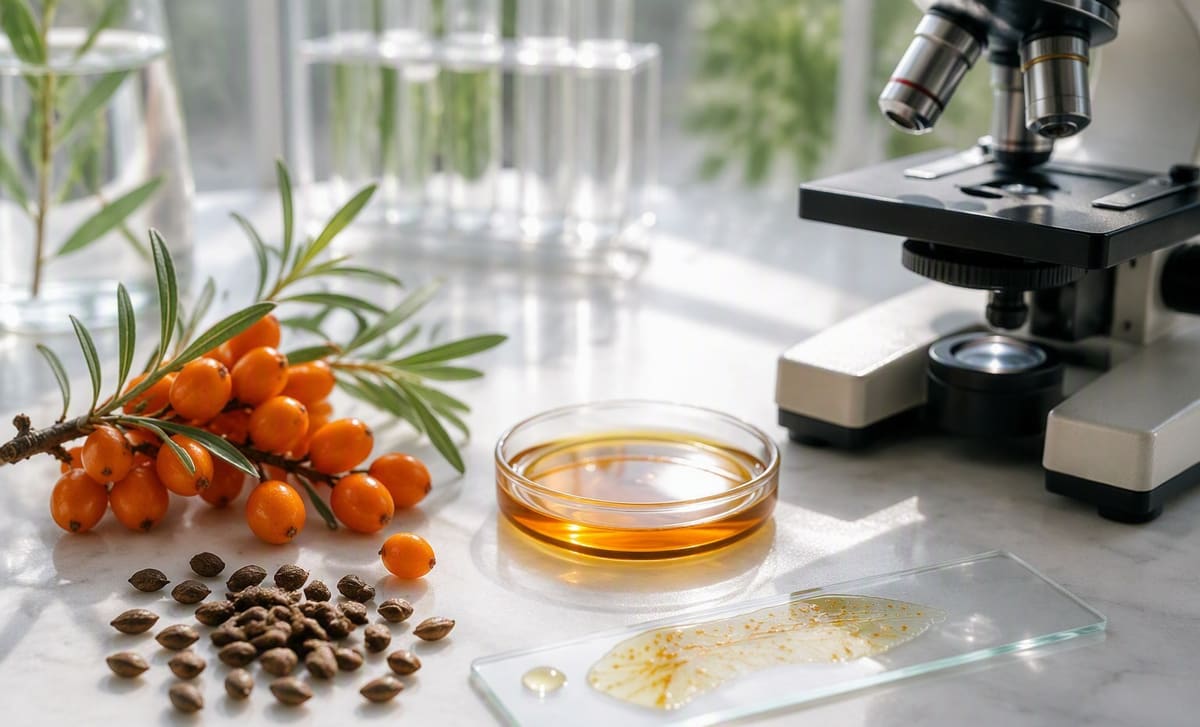
Phytosterols are plant sterols shaped enough like cholesterol to compete with it during absorption. Berry oil carries them at meaningful levels, which is part of why researchers put this oil in lipid trials. The honest question is dose, and a teaspoon delivers a share of a studied dose, not the dose itself.
What phytosterols do
In the gut, plant sterols crowd into the same absorption pathway as cholesterol and leave less room for the real thing. The effect is strong enough that sterol-fortified margarines and yogurts carry approved cholesterol claims in many countries, backed by trials that dosed sterols in gram quantities daily. That is established nutrition science, and it is the frame every phytosterol claim should borrow.
How the fortified-food trials worked
The trials behind those approved claims share a consistent shape: daily sterols dosed in gram quantities, delivered through fortified spreads or dairy, against placebo, with LDL as the endpoint. LDL moved, reliably enough that regulators in multiple countries allow the claim on the packaging. Two details matter for our purposes. The doses were grams per day, and the delivery was food, which is exactly the scale and the lane where sterols perform. Keep both in mind when a softgel label borrows the claim.
What the oil holds
Composition reviews place sea buckthorn berry oil among the richer plant sources of phytosterols, part of the same fat-soluble passenger list as the carotenoids and vitamin E covered on the oil nutrition page. This is genuinely unusual chemistry for a fruit oil, and it belongs in the plant’s favor.
The scale honesty
Now the discipline. The fortified-food trials that lowered LDL dosed sterols around 2 grams per day. A level teaspoon of sea buckthorn oil is about 4.5 grams of oil, of which sterols are one fraction among fatty acids, carotenoids, and tocopherols. The contribution is real and smaller than the amounts that moved LDL in the sterol trials. Claiming the oil works like a fortified spread would be borrowing a dose it does not deliver.
The teaspoon math, in full
Push the arithmetic one step further. Inside that 4.5 gram spoon, phytosterols share space with everything else, so the sterol cargo is a fraction of the spoon, not the spoon. Even the trial-style habit of 1 to 3 grams of oil daily delivers sterols well below the gram doses that moved LDL in the fortified-food studies. The gap is measured in multiples, not rounding error. Composition reviews do place the berry oil among the richer plant sources, so the fraction is respectable as fractions go. Real contribution, smaller headline.
The stanol footnote
Labels in this category mention stanols alongside sterols, and the distinction is small. Stanols are the saturated cousins of sterols, present in plants in smaller amounts, working through the same absorption-blocking mechanism. Fortified products use whichever their supplier has, and the cholesterol claim covers both. Sea buckthorn’s story is the sterol side, and nothing about the stanol corner changes the dose math above. File it under trivia that explains a label word.
Why researchers still care
Phytosterols are one ingredient in the oil’s lipid rationale, alongside its fatty acid pattern, mapped on the fatty acid profile page. The pooled human trials did find lipid improvements in people with abnormal levels, and the cholesterol page grades that evidence without handing the credit to any single compound. For bottles that preserve the full passenger list, the oil guide is the practical stop, and the nutrition hub keeps the cast complete.
Why attribution stays shared
Those pooled trials found triglycerides, total cholesterol, and LDL down, with HDL up, strongest in people whose levels were abnormal to start. Which passenger deserves the credit? The fatty acid pattern is the biggest by mass. The sterols have the clearest mechanism. The carotenoids and tocopherols ride along. Nobody has run the trial that separates them, and the whole-oil result is the only honest thing to cite until someone does. That is not a weakness in the evidence. It is what the evidence, read carefully, actually says.
The whole-diet frame
One last anchor keeps the sterol story honest: phytosterols are not rare in the diet. Nuts, seeds, legumes, and vegetable oils all carry them, and a varied plant-leaning diet delivers a steady background supply every day. Sea buckthorn oil’s contribution rides on top of that baseline, respectable and modest at once. The pattern that moves health markers in population studies is the whole plant-leaning diet, with sterols as one suspected contributor among many. This bottle is a member of that pattern, not a replacement for it.
Shopping for the claim
If LDL is your target, start with the tools the trials actually dosed: diet change first, sterol-fortified foods or gram-dose sterol supplements where your doctor agrees, and prescriptions when the numbers justify them. Sea buckthorn oil fits as a food with a sterol bonus and its own modest lipid evidence, graded on the heart hub. The capsules guide shows which products deliver the oil honestly. What it will never be is a fortified spread in softgel form, and any label implying that deserves your skepticism.
Frequently asked questions
Do the phytosterols in sea buckthorn oil lower cholesterol?
The mechanism is real and the dose is the catch. Plant sterols lower LDL when consumed in the gram-range doses used in fortified-food trials. A teaspoon of sea buckthorn oil weighs 4.5 grams total, with sterols as one fraction among many, so it delivers a share of a studied dose rather than the dose itself. Credit the oil's phytosterols as part of the lipid story, not as a substitute for the amounts that moved LDL in trials.
Can I take a phytosterol supplement instead?
Standalone phytosterol supplements exist and are dosed in the gram range the trials actually used, which makes them the studied form if LDL is your specific target. That is a conversation for your doctor, especially alongside any statin. Sea buckthorn oil is better understood as a food with a sterol bonus than as a sterol delivery vehicle.