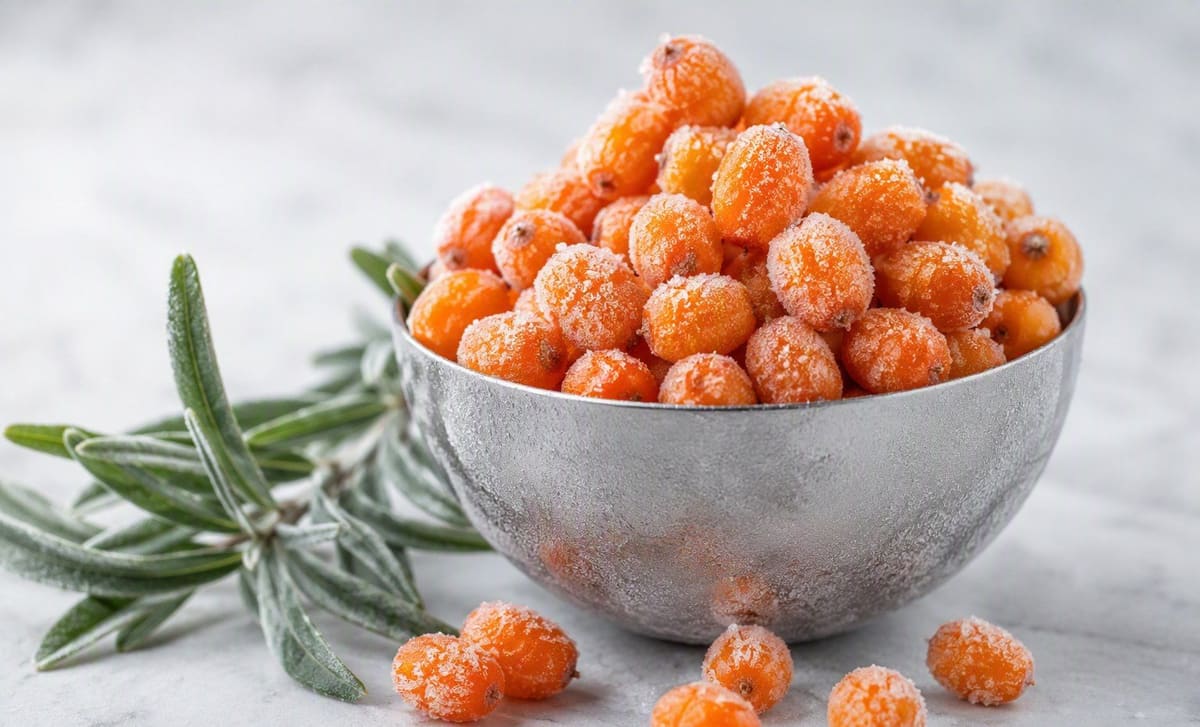
Frozen sea buckthorn berries are fresh berries with the clock stopped: most of the vitamin C, the full tart character, and none of the perishability. They are the form to buy when a recipe says fresh and the season says no. Freezer to blender, no ceremony required.
Why freezing wins the preservation contest
Every preservation method pays a tax, and freezing pays the least. Drying concentrates sugar but costs vitamin C. Canning and jam-making spend vitamin C on heat and add sugar. Freezing just pauses the berry, which is why the nutrition numbers for properly frozen berries sit close to fresh. The one casualty is texture: ice crystals break cell walls, so thawed berries go soft. In a smoothie, a sauce, or a pot of oatmeal, nobody ever knows.
A bonus quirk of this berry: freezing also mellows the sourness a little, which our raw berries page covers for anyone brave enough to eat them straight.
Frozen and dried are the two whole-fruit entries on the sea buckthorn shelf, and they trade opposite things. Freezing keeps the vitamin C and costs you texture. Drying keeps the texture and costs you the vitamin C.
Where to find them
In Northern and Eastern Europe, frozen sea buckthorn sits in ordinary supermarket freezer sections and ethnic groceries, a staple rather than a specialty. Elsewhere the hunt goes online: specialty suppliers and small farms ship berries frozen, and in growing regions like Canada and the northern US, farmers markets in season sometimes sell bags straight from the orchard freezer. The USA region page maps where the shrub actually grows, and our where to buy guide ranks the channels by which ones actually ship fruit rather than only bottles. Wherever you buy, judge the bag the way the label section below does.
How to use them
- Smoothies: straight from the freezer, no thawing, per the smoothie recipes. They chill the drink and mellow each other at the same time.
- Juice: crush and strain like fresh, per the make juice guide.
- Jam and sauces: into the pot frozen, exactly as the jam recipe allows.
- Baking: fold in frozen so they hold shape longer and bleed less.
Keep the bag sealed and cold. Freezer burn is the only real enemy, and a bag used within a few months never meets it. The forms comparison shows where frozen berries sit against every other form.
The nutrition case, with the fresh numbers
Fresh sea buckthorn carries roughly 200 to 600 mg of vitamin C per 100 g, varying by species and harvest, and freezing at harvest locks most of that in place. Cold is a pause button, not a process: no heat, no oxygen bath, no sugar syrup. The carotenoids and the tart acids ride through freezing without complaint. What fades in the freezer is texture, not chemistry, which is exactly the opposite of drying. The vitamin C page shows how the forms stack up, and the fresh vs dried vs powder comparison puts frozen in context.
Thawing, and when not to bother
Do you need to thaw first? Usually no. Blender, pot, and saucepan all take the berries straight from the bag. When you do thaw, for a yogurt topping or a garnish, do it in the fridge and keep every drop of the released juice. That liquid is flavor and water-soluble vitamins leaving the berry, so pour it into the dish rather than down the drain. Never refreeze thawed berries: the texture collapses a second time and the quality drops with it. The cooking guide and the savory sauce recipe both start from frozen.
Dose realism for a food form
The single human trial of whole berries dosed 28 g a day for three months. Colds were unaffected, and an inflammation marker improved. That’s the honest frame for frozen berries: a daily food with real nutrients and modest expectations. A handful in breakfast is a good habit. It isn’t a protocol, and the studied oil benefits live in a different aisle, as the study dosages page makes plain.
Reading the freezer-bag label
Whole, loose berries beat a solid block, because a block hints at a thaw somewhere in the chain. A named origin and a harvest or best-by date separate a farm product from an anonymous commodity. Organic certification with a named certifier earns its premium here, since you eat the skin and everything on it. And the ingredient list should read “sea buckthorn berries,” full stop.
Freezer management
The enemies are air and temperature swings. Squeeze bags flat and tight, portion what you will use in a month, and keep the freezer genuinely cold. Freezer burn shows up as dry, grayish patches and flat flavor: a quality problem, not a safety one. Best quality lives in the first few months, though a well-sealed bag stays usable well beyond that.
Freezing your own
If you find fresh berries in season, home freezing is easy: rinse, dry thoroughly (surface water makes ice glue), spread on a tray so the berries freeze individually, then bag with the air pressed out. Tray-freezing is what keeps them loose instead of a brick, and a cold, fast freeze keeps texture as good as a home freezer manages.
Who should buy frozen, and who should skip
Buy them if you blend smoothies, make juice, jam, or sauces, or want the closest thing to fresh outside the season. Buy them in bulk in harvest season if you have the freezer space. Skip them if freezer space is tight, if you want a straight-from-the-bag snack (they’re still intensely sour, frozen or not), or if your real goal is the oil trials, which the oil page covers instead.
Frequently asked questions
Are frozen sea buckthorn berries as good as fresh?
Nutritionally they are the closest form to fresh you can buy. Freezing at harvest locks in most of the vitamin C and flavor that drying and canning destroy, and the berries go straight from freezer to smoothie or pot. Texture softens after thawing, which matters for garnish and not at all for blending.
Where can I buy frozen sea buckthorn berries?
In parts of Europe they appear in supermarket freezer sections and Eastern European groceries. Elsewhere, online specialty suppliers and farms ship them frozen. In North America, growers in sea buckthorn regions sometimes sell frozen berries at farmers markets in season.
How long do frozen sea buckthorn berries keep?
Sealed and steadily frozen, they are at their best for several months and usable well beyond that. Freezer burn is a quality problem, not a safety one: dry grayish patches and flat flavor. The enemies are air and temperature swings, so squeeze bags tight, portion what you will use, and keep the freezer cold.