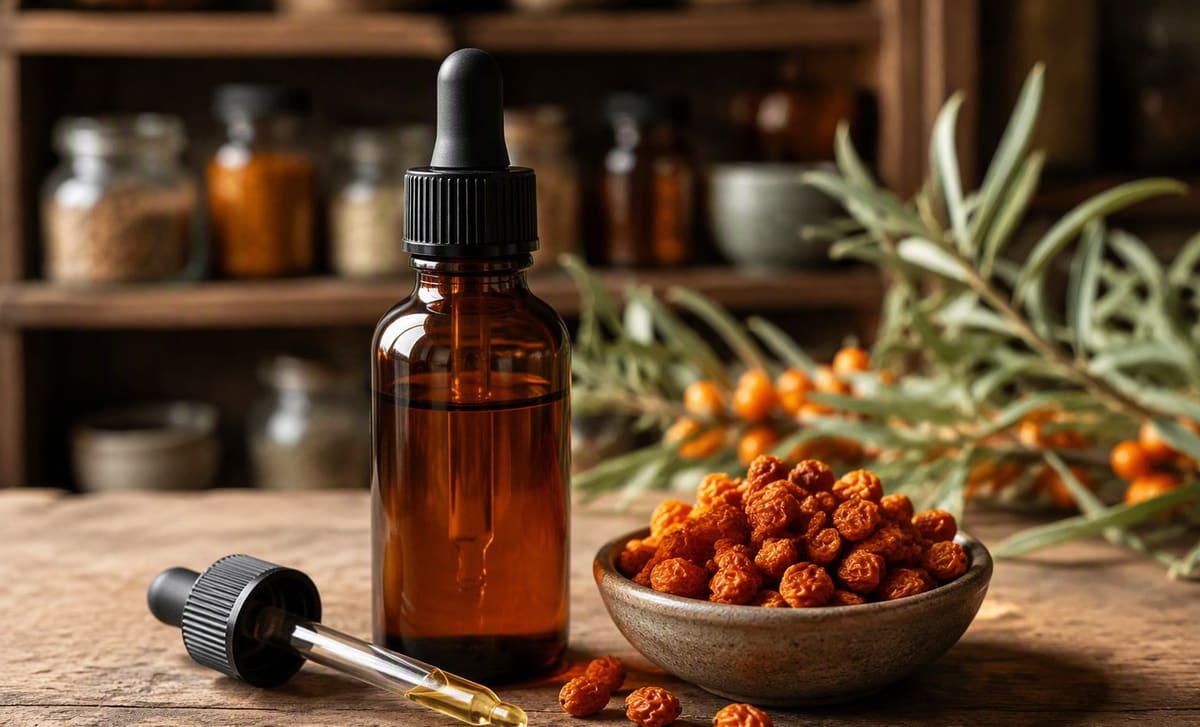
A sea buckthorn tincture is the plant steeped in alcohol or glycerin, sold in a dropper bottle. It extracts flavonoids and some carotenoids, very little of the oil the trials studied, and it comes with the vaguest dosing in the whole category. No human trial has tested one. This is the form to buy only with open eyes.
What the solvent actually pulls
Extraction is selective chemistry. Alcohol pulls the plant’s flavonoids and some pigments efficiently. It is a poor solvent for the fatty oils, which hold the omega-7 and most of the carotenoids that made the plant famous. Glycerin is milder still. So a tincture delivers a different slice of the plant than the oil does, and it happens to be the slice with the least human research behind it.
Solvent choice is what separates most entries on the wider product map from each other, and alcohol happens to select the least studied fraction of all.
The extract explainer covers standardized extracts, the more transparent cousin of this category.
Ratios and alcohol percentages, decoded
Two numbers define a tincture, and honest makers print both. The extraction ratio compares plant to solvent: 1:5 means one kilogram of plant per five liters of liquid. A 1:2 tincture is stronger than a 1:5, though stronger only means more plant per drop, not more of any specific compound.
The second number is the alcohol strength. Tinctures commonly run anywhere from about 20 to 60 percent alcohol depending on the plant and the target compounds, because different constituents dissolve best at different strengths. Berry and leaf flavonoids extract well at moderate strengths, which is where most sea buckthorn tinctures sit. Glycerites swap the alcohol for vegetable glycerin: sweeter, alcohol-free, and generally weaker as solvents.
If the label states neither ratio nor solvent strength, you are holding the least accountable product in the category.
The dropper dosing problem
Ask a tincture label how much sea buckthorn is in your dropperful and most go silent. Milliliters of liquid are not milligrams of plant, and the ratio of plant to solvent (the extraction strength) rarely appears. Compare that to the studied oil doses of 2 to 3 grams a day, a number you can measure with a scale or count in softgels, and the transparency gap is the whole story. You cannot match a dose you cannot see.
The dosing math you can actually do
With a stated ratio, you can at least estimate plant equivalents. A 1:5 tincture carries about 200 mg of dried plant per milliliter, so a full dropper (roughly 1 ml) represents a fifth of a gram of berry or leaf. Three droppers a day is 0.6 grams of plant material, and mostly not the oil fraction at that.
Set that against the studied doses on the study dosages page: 1 to 3 grams of concentrated oil daily, measured in human trials. The mismatch is not subtle. Tincture math can be done honestly, and when you do it, you land far from anything the research tested.
The alcohol note
Most tinctures use ethanol as the solvent, and a dropperful carries a small amount of it, roughly a sip’s worth. For most adults that is trivial. For anyone avoiding alcohol entirely (pregnancy, recovery, religious practice), glycerin-based versions exist and the label must say which solvent it used. If it does not say, that is your answer. Non-alcoholic versions give up some extraction strength for that freedom, which is a fair trade when alcohol is off the table.
Storage and shelf life
Alcohol is an excellent preservative, which is the tincture’s one structural advantage: alcohol-based tinctures keep for years in a cool, dark place, tightly capped. Amber glass helps, and most bottles come in it. Glycerites are more perishable and deserve the fridge after opening and a closer eye on the date.
Evaporation is the quiet failure mode: a loose cap lets the alcohol escape and concentrates whatever is left, so cap bottles properly and store them upright.
Reading the bottle in ten seconds
- Solvent named. Ethanol or glycerin, with the strength printed for ethanol.
- Ratio printed. 1:2 or 1:5, so you can do the dosing math above.
- Plant part named. Berry, leaf, and seed are different tinctures.
- Maker named. A real company answers ratio questions. An anonymous listing does not.
One nutrient to cross off the list: vitamin C is water-soluble and barely dissolves in strong alcohol, so a tincture is a poor route to it. If that vitamin is the goal, the vitamin C page points to the forms that actually carry it: juice, powder, and frozen berries.
Who should skip it
Beyond anyone avoiding alcohol, skip the tincture if what you want is what the trials measured: the research dosed oil, not drops. Skip it if you want to know your dose, unless the maker prints the ratio. And skip it if value matters, because dropper bottles carry small amounts of plant at premium prices per gram. The flavonoids page describes the slice of the plant a tincture does deliver.
Who this form suits, honestly
Herbalists and traditional-medicine users who specifically want a preparation in this format, from a maker who states the plant part, the solvent, and the extraction ratio. For everyone else, the same money buys more plant in a clearer form: the oil itself, scored in the oil guide, or softgels from the capsules guide, both at doses you can actually verify against the trials. The forms comparison shows the full lineup, tincture included.
Frequently asked questions
What is sea buckthorn tincture used for?
Tinctures are traditional herbal preparations: the plant steeped in alcohol or glycerin, taken by the dropperful. For sea buckthorn, no human trial has tested a tincture for any outcome, so the honest use is as a traditional preparation, not as a delivery system for the studied oil benefits.
Is a tincture the same as sea buckthorn oil?
No. Sea buckthorn oil is the pressed or CO2-extracted lipid of the berry or seed, the form the trials dosed. A tincture is an alcohol or glycerin extract that pulls different compounds (mainly flavonoids) and carries little of the oil. Different bottle, different contents, different evidence.
How long does a sea buckthorn tincture last?
Years, if it is alcohol-based, capped tightly, and stored cool and dark. Alcohol is the preservative, which is why tinctures outlive almost every other form. Glycerin-based versions are more perishable: refrigerate after opening and respect the date. A loose cap ruins either kind by evaporation.