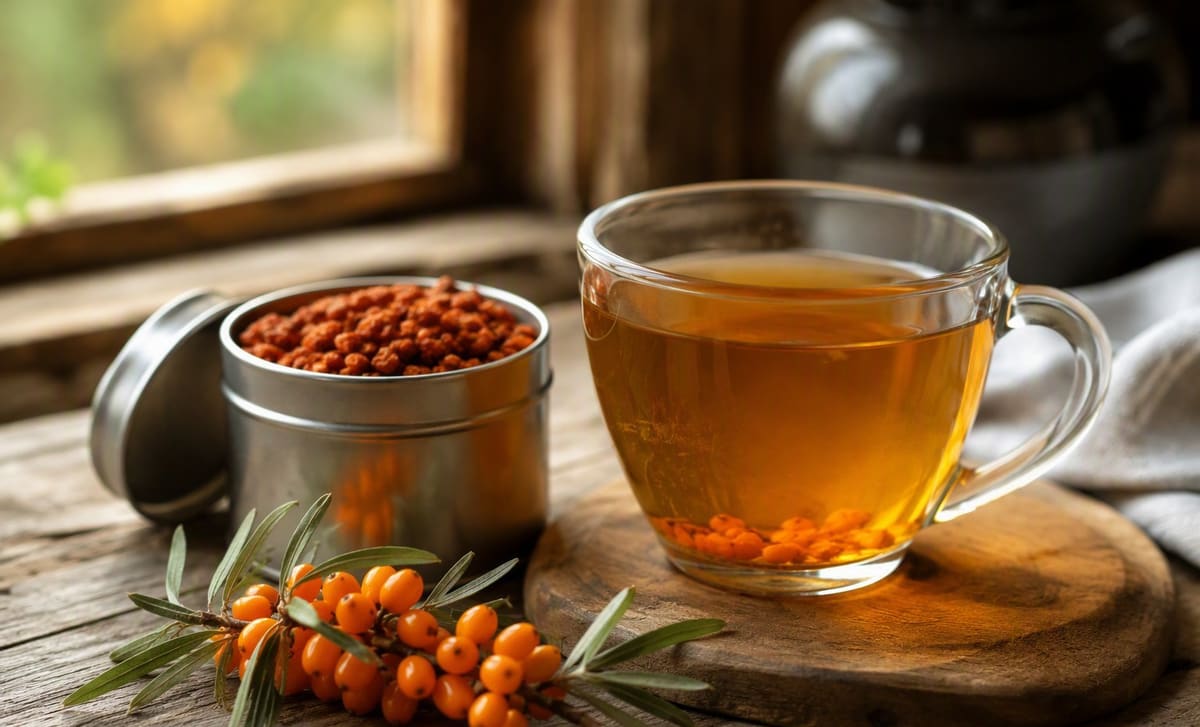
Sea buckthorn tea is two different products sharing one name. Leaf tea is a mild herbal infusion with flavonoids. Berry tea is a tart fruit infusion, closer to a hot, sour juice. Neither carries the oil, the omega-7, or anything near a studied dose. No human trial has tested the tea. File it under pleasure, and it overdelivers.
Leaf tea and berry tea are not the same thing
Leaf tea is the dried leaf, brewed like any herbal tea. The leaves carry flavonoids (the quercetin, kaempferol, and isorhamnetin family that shows up across sea buckthorn research) in a mild, grassy, slightly green-tasting cup. It is the calm version, and it is naturally caffeine-free.
Berry tea is dried berry pieces or whole dried fruit, sometimes mixed with rosehip or hibiscus. It brews bright orange and properly sour, a hot version of the juice experience. Some vitamin C survives into the cup, but heat and drying have already taken their share, so count it as a bonus rather than a dose. The products hub shows where tea sits among the other forms.
What is not in the cup
The oil. Sea buckthorn’s famous fatty acids, including omega-7, live in the berry’s oil fraction, and oil does not steep into water. The human trials behind dry eyes, skin hydration, and vaginal dryness dosed 1 to 3 grams of that oil daily. A teacup delivers none of it.
This is the single most common misunderstanding in the category, and blend packaging encourages it. A bag labeled sea buckthorn tea is a drink, full stop.
What the research actually studied
No human trial has dosed sea buckthorn tea, for anything. The studied form is oil at 1 to 3 grams daily, catalogued on the study dosages page, and none of it infuses into a teacup. The leaf side of the plant has genuine laboratory research behind its flavonoids, which the flavonoids page covers, but lab findings are not human outcomes, and the traditional vs evidence page draws that line carefully. The leaf benefits page applies that same line to the leaf itself: rich in flavonoids, and untested in people.
None of this is a knock on tea. It is the honest frame: a pleasant, traditional drink with a good ingredient story, not a delivery system for trial results.
What is in the cup, honestly
- Water-soluble flavonoids, more from leaves than from berries.
- Fruit acids and a modest amount of vitamin C in berry versions.
- A genuinely pleasant sour-orange brew that blends well with mint, ginger, or a spoon of honey.
Caffeine, timing, and the acidity note
Both versions are naturally caffeine-free, so they work as evening drinks. Berry tea is the one to treat with mild respect on the acid front: gentler than juice, but still tart. Sip it with or after food if your stomach is sensitive, and rinse with plain water if you drink it all day, following the same common sense as the safety notes. Leaf tea needs no such planning.
Brewing it properly
Leaf tea behaves like any herbal infusion: a heaped teaspoon per cup, just off the boil, five to eight minutes. Berry tea wants more patience, because dried fruit gives up its flavor slowly. Crush the berries lightly, steep ten minutes, or simmer them for five on the stove. A second steep of the same berries still tastes of something, which is more than most fruit teas can claim.
Making it worth the cup
- Blend it. Rosehip doubles down on the tart fruit angle, ginger adds heat, mint cools it, and a spoon of honey rounds the sour edges.
- Ice it. Berry tea over ice with sparkling water is a respectable homemade soda.
- Steep twice. Dried berries keep giving on the second pour, especially if you simmered the first.
- Cook with it. Strong berry tea works as the liquid in porridge or rice pudding, and our tea recipes go further.
Buying notes
Read whether the product is leaf, berry, or a flavor blend. In blends, sea buckthorn can sit far down the ingredient list behind hibiscus and apple, which means you are buying hibiscus tea with an accent. Single- ingredient products cost more and tell you exactly what you steep. The tea buying guide scores what is on the market, and the forms compared page puts tea in honest context against the oil forms.
Loose, bagged, or blended
Format shapes flavor here. Loose leaf and loose dried berries give you control over strength and usually better raw material. Bags trade a little of that control for convenience, and pyramid bags give dried fruit room to expand and steep properly. Blends can be excellent or mostly filler, and the ingredient order tells you which before you pay.
Storage and shelf life
Dried leaves and berries want the same treatment: airtight containers, darkness, and dryness. Leaf tea loses aroma within months once the seal breaks, so buy small amounts often. Dried berries keep longer but can mold if they pick up moisture, so if they smell musty or feel soft, retire them. A cupboard near the kettle is fine. A jar on a sunny shelf is not.
Who enjoys it
Tea people. If a warm, tart, caffeine-free drink sounds good, both versions earn a cupboard slot. If you arrived here chasing studied benefits, the oil explainer is the form the research used, and our vitamin C page explains why the berry’s numbers vary so widely by origin.
Frequently asked questions
Is sea buckthorn tea good for you?
It is a pleasant tart drink with modest upside: leaf tea brings flavonoids, berry tea brings some vitamin C and fruit acids. No human trial has tested sea buckthorn tea for any health outcome, so enjoy it as a beverage, not as a protocol.
Does sea buckthorn tea contain omega-7?
Effectively no. Omega-7 lives in the berry's oil, and oil does not infuse into hot water. A cup of sea buckthorn tea contains the water-soluble side of the plant only. If omega-7 is your goal, oil is the form that carries it.
Can you drink sea buckthorn tea every day?
Yes, as a beverage it is an everyday drink, naturally caffeine-free. If you drink the berry version constantly, mind the mild acidity on enamel and sensitive stomachs, the same common-sense rules as juice. Leaf tea needs no caveats at all.