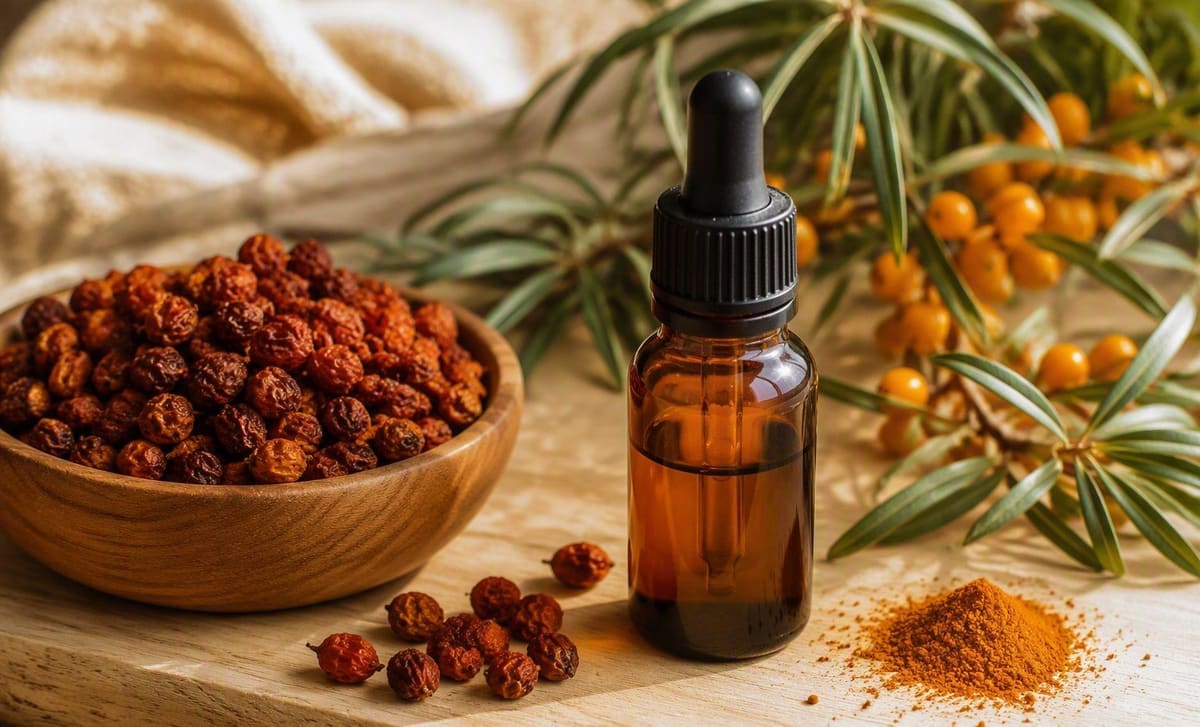
Extract is a process word, not a promise. On a sea buckthorn label it can mean a concentrated CO2 oil, a flavonoid fraction, or an ordinary oil cut with a cheaper carrier. Some are standardized to a named compound, most are not. Plain oil tells you exactly what you get. Extracts often charge more to tell you less. Read the standardization line, or buy the oil.
Extract is the vaguest word on the shelf, and the products hub sorts every other form by what its label actually commits to.
What extract actually means
Extraction pulls some fraction of the plant out and concentrates it. The word describes a method, not a quality tier:
- CO2 oil extracts. Supercritical carbon dioxide pulls the oil from berry or seed without solvent residue. This is the good kind, and the oils used in human trials were CO2 extracts.
- Flavonoid extracts. Solvent extraction of berry or leaf material, concentrated for the water-soluble compounds. A different product from oil, aimed at a different shelf.
- Tinctures. Alcohol-based extracts, the loosest category of all, with the least dosing transparency.
How the main extraction methods differ
Cold pressing squeezes the oil out mechanically: no heat, no solvent. It is the traditional route, it keeps the native fatty acid profile intact, and it yields less oil per berry, which is why pressed oils cost more.
Supercritical CO2 uses carbon dioxide under pressure as the solvent, then releases it completely, leaving no residue behind. It pulls the oil efficiently and gently, which is why the trial oils were usually CO2 extracts.
Solvent extraction, used for flavonoid fractions and cheaper oils, dissolves the target compounds out with ethanol or harsher solvents, then evaporates them off. Done well it is standard industry practice. Done cheaply it is the bottom of the market, and the label will not tell you which you got.
The fatty acid profile page shows what a good berry or seed oil looks like on paper. That is the benchmark any oil extract should be measured against.
Standardization, decoded
A standardized extract guarantees a minimum of a named marker: for example, flavonoids at a stated percent, or omega-7 at a stated percent. That is a real commitment, and it lets you compare products on numbers instead of adjectives.
Without that line, potency floats with the harvest. Natural berry oil already varies widely: palmitoleic acid (omega-7) runs roughly 15 to 54 percent of fatty acids depending on subspecies, and seed oil runs its own ranges for omega-3 and 6. An extract advertised as rich in omega-7 at 40 percent may be nothing more than decent ordinary berry oil with a markup.
Ratio claims and percentage math
A “10:1 extract” means ten kilograms of plant material went in for every kilogram of extract that came out. Impressive, until you ask which compounds made the trip. A 10:1 water extraction of berries concentrates the water-soluble side and leaves the oil behind entirely. The ratio describes effort, not content.
Percentage claims are better because they are testable: “standardized to 30% flavonoids” is a number a lab can verify, batch after batch. The question for any extract is simple: standardized to what, measured how, and is the number printed on the label. Silence on any of the three is an answer.
The carrier question
Flip the bottle. Many extracts list sea buckthorn first in marketing and second in ingredients, behind sunflower or another carrier oil. There is nothing wrong with a blend if it is priced like one. The honest metric is cost per gram of actual sea buckthorn, and the label rarely helps you compute it. Our tools page has the per-day cost formula that cuts through this.
Why plain oil is usually the better buy
Single ingredient, known composition, and the exact form the human studies dosed at 1 to 3 grams daily. The oil explainer decodes berry versus seed, the capsules page covers the same oil in softgel form, and the forms compared page prices the options per studied day. If you take the advice in this page’s headline and buy the oil, our tested oil picks are the bottles that name the plant part and the extraction on the label.
Dose realism against the trials
The human trials dosed plain oil at 1 to 3 grams daily, and the study dosages page lists them form by form. An extract can only match that evidence if you can compute how much of it equals the studied oil. With a stated omega-7 percentage, the math is possible. Without one, you are comparing a number to a mystery. When the label gives you nothing to compute with, the honest assumption is that the dose is small.
Red flags on extract labels
- No plant part named. Berry and seed are different products. A label that just says sea buckthorn extract is dodging the question.
- No standardization. No marker, no guaranteed potency.
- Proprietary blends. Sea buckthorn inside a blend with a shared milligram total means its actual dose is hidden.
- Ratio claims alone. “10:1 extract” says concentration of something unspecified, which is marketing arithmetic, not information.
Storage and shelf life
Liquid extracts follow oil rules: dark glass, a cool shelf, cap tight, and the fridge after opening to slow oxidation. Softgel extracts are the most stable format, since the shell keeps air off the oil. Dry extract powders want airtight containers away from light. Any extract that smells waxy, stale, or paint-like has oxidized, and no date on the label overrides your nose.
When an extract makes sense
If you want the flavonoid side of the plant without the acidity of juice, a standardized flavonoid extract is a coherent product, provided the marker and percentage are on the label. That is a narrow case. For everything the trials studied, oil remains the form with the evidence, and the omega-7 page explains why that fatty acid gets the headlines.
Frequently asked questions
Is sea buckthorn extract better than the oil?
Usually it is just less clear. Plain oil is a single ingredient with a known fatty-acid profile, and it is the form the human trials dosed. Extracts range from excellent CO2 concentrates to carrier-diluted blends, and the label rarely tells you which. If no standardization is stated, the oil is the more honest buy.
What does standardized mean on a sea buckthorn label?
It means the maker guarantees a minimum percentage of a named marker compound, such as flavonoids or omega-7, batch to batch. That is genuinely useful when the marker matters to you. Without a standardization line, potency can vary with every harvest and you have no way to know.
How do I compare two sea buckthorn extracts?
On four lines: plant part (berry or seed), extraction method (CO2, pressed, or solvent), the standardized marker and its percentage, and cost per gram of actual sea buckthorn. A product that answers all four beats one with prettier marketing and fewer facts. If either product hides the marker percentage, you cannot compare doses, only prices.