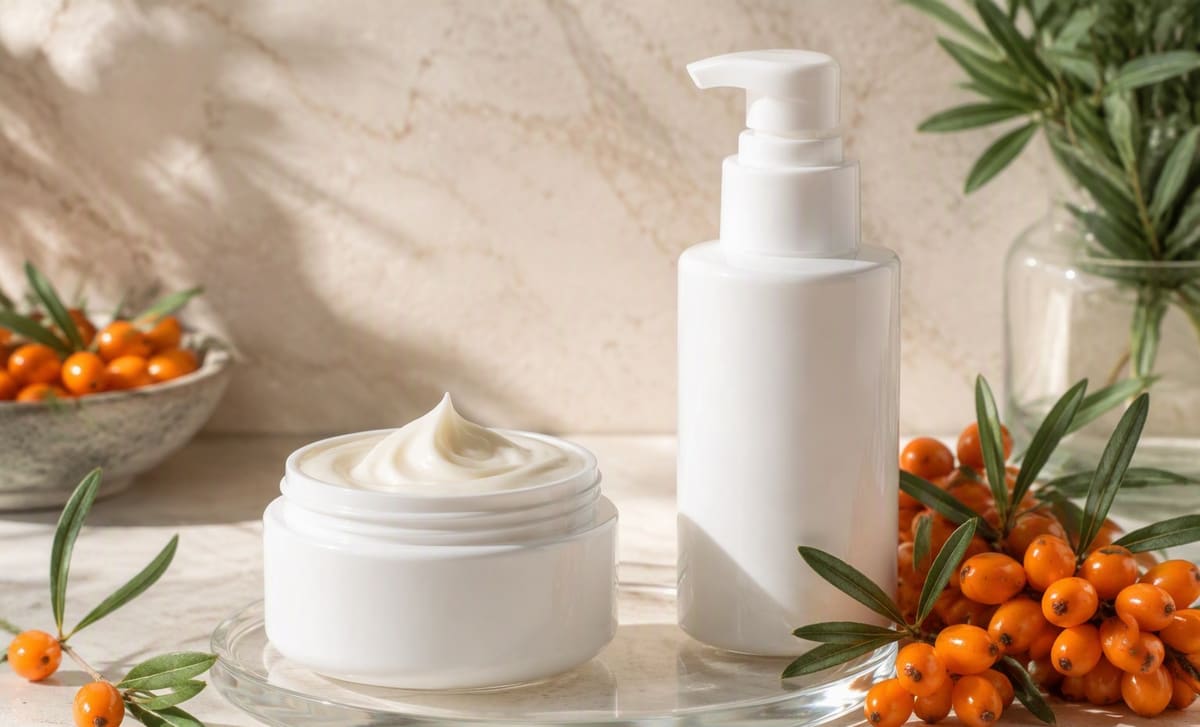
A sea buckthorn cream is an emulsion: water and oil held together, with sea buckthorn living in the oil phase, usually a few percent of the jar. That is enough for soft, comfortable skin, not for serum-level concentration. Weleda’s line is the classic example. Creams suit people who want one easy step. Straight oil suits people who want control.
Emulsion basics, in sixty seconds
Creams and lotions are oil droplets suspended in water (or the reverse) with emulsifiers holding the truce. The oil phase of a typical cream runs roughly 10 to 30 percent of the formula, and sea buckthorn is usually one oil among several inside that phase. A lotion is the same idea with more water, which is why lotions feel lighter and creams feel richer.
The INCI list tells you where sea buckthorn sits in that picture. High on the list, it shapes the product. Below the preservatives, it decorates the label. Anything under about 1 percent can be listed in any order, so a hero ingredient trailing the fragrance is decoration, not a dose. The products hub maps every form this oil arrives in.
What the percentages on the jar mean
Some makers state a sea buckthorn percentage outright, and it is worth reading against the emulsion math. If the oil phase is 20 percent of the jar and sea buckthorn makes up a quarter of that phase, the jar carries 5 percent sea buckthorn oil. That is a strong cream. Most sit well under it, which is why INCI position matters more than the front label.
Honest labels name the exact ingredient, Hippophae Rhamnoides Fruit Oil or Seed Oil, in a position that matches the marketing. Vague labels say “with sea buckthorn” and let the orange box do the talking. A cream that stays ivory almost certainly keeps the dose low, because berry oil stains formulas at meaningful percentages. Neither is a scandal, but you should know which one you are paying for.
What sea buckthorn adds to a cream
Emollient fatty acids that soften on contact, plus carotenoids if the formula uses berry oil (formulators keep the dose low enough that the cream stays ivory, which also tells you the dose is modest). The less obvious advantage of a cream over straight oil is the water phase itself: humectants like glycerin pull moisture into skin, something no oil can do. That pairing, humectant plus emollient, is why a good cream outperforms oil alone for plain dryness.
The Weleda example
Weleda has run a sea buckthorn line (body lotion, hand cream, body oil) for decades, built on the berry. It is the category’s proof that the plant works as everyday skincare: accessible, sensibly formulated, and priced for the body aisle rather than the luxury counter (check current price at Weleda). Other makers play the same notes at higher price points. The skincare buying guide scores the field.
Day cream, night cream, lotion, hand cream
Same plant, four textures. Day creams run lighter so they sit well under sunscreen and makeup. Night creams push the oil phase higher for slower absorption. Body lotions add water for spreadability across large areas. Hand creams add waxes and richer emollients, because hands get washed constantly and need the extra film.
The sea buckthorn story is identical across all four. The difference is the vehicle, so pick the texture you will actually use daily. A perfect formula you hate touching loses to a decent one you apply without thinking.
Cream versus straight oil
- Cream wins: convenience, no tint risk, humectants included, pleasant texture, body coverage.
- Straight oil wins: concentration, ingredient control, mixing into your own routine, face-targeted drops at night.
Plenty of people run both: cream after the morning shower, a few drops of berry or seed oil pressed into damp skin at night. The face oil page covers the straight-oil technique, and the serum page sits between the two.
Storage and shelf life
Creams are emulsions, and emulsions age. Heat and sunlight speed up the breakdown, and every finger dip into a jar adds microbes, which is why pumps and tubes win on hygiene. Check the open-jar symbol on the pack (a small jar icon with a number like 6M or 12M): it states how many months the product stays good after opening. Unopened, a cream typically keeps for a couple of years. The clock that matters starts when you break the seal.
If the scent shifts waxy or stale, the oils are oxidizing and the jar is done, whatever the date says. The same goes for visible separation that shaking does not fix. A cool, dark shelf beats a sunny bathroom windowsill for every formula in this category.
Who suits what
Normal to dry body skin, and anyone who will not tolerate routine fuss: cream or lotion, daily, after bathing. Face-focused users chasing concentration: oil or serum, with cream as the seal on top. Sensitive skin: patch test either way for a few days on a small area.
Body butters sit at the rich end of this family: more oil phase, less water, slower to rub in, better on shins and elbows than on faces. Keep face products for the face, where heavier formulas can feel occlusive.
Who should skip a cream
Very oily or blemish-prone faces often do better with a light seed-oil serum or nothing at all, and the acne page explains the comedogenic logic. Anyone chasing measured, trial-level skin change should read the skin studies page: the numbers there came from oral oil, and no cream replicates them. And if your skin is reactive, the sensitive skin page is the careful read before any new product, sea buckthorn or not.
For the inside-out route the trials actually measured, the dry skin page has the evidence.
Frequently asked questions
Is sea buckthorn cream good for your skin?
As a moisturizer, yes: a well-made cream hydrates and the sea buckthorn oil in it adds emollient fatty acids. What it is not is the studied route. The human skin trials dosed oral oil, so expect soft, comfortable skin from a cream, not trial numbers.
Cream or straight oil, which should I choose?
Cream for convenience and whole-body use, oil for concentration and control. Creams bring humectants like glycerin that oil lacks, and they never stain. Straight oil gives you the full-strength ingredient in drops. Many people use both: cream by day, oil at night.
How long does a sea buckthorn cream last once opened?
Follow the open-jar symbol on the packaging, usually 6 to 12 months after opening. Pumps stay fresher than jars because fingers and air stay out. Store away from heat and sunlight, and retire the cream early if the scent turns waxy or stale, which signals the oils oxidizing.