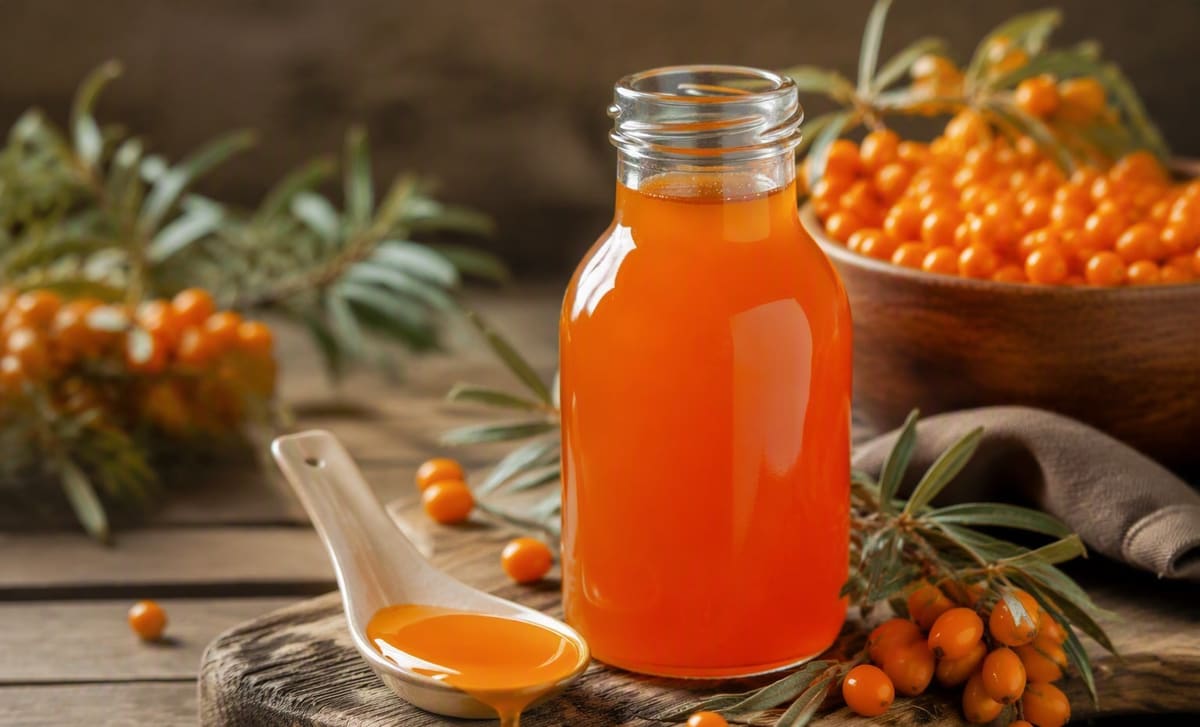
Sea buckthorn syrup is cooked-down juice and sugar: the berry’s tropical sourness in pourable form. It belongs on pancakes, in sparkling water, and over ice cream. An older European tradition sold it as a vitamin tonic, but any syrup is mostly sugar, so the honest modern home for it is the dessert shelf, not the medicine cabinet.
Two traditions in one bottle
The dessert tradition is alive and well: a bright orange syrup that turns plain yogurt, porridge, and pancakes into something that looks catered. The flavor is sour-forward even under the sugar, which is what makes it interesting where other syrups are just sweet.
The pharmacy tradition is older. In parts of Europe, sea buckthorn syrup sat in apothecaries as a winter vitamin tonic, back when a concentrated juice was a reasonable way to deliver vitamin C. That made sense before freezers and citrus imports. Today the same bottle is better understood as a preserve, because the sugar that makes it shelf-stable also makes it a treat.
Syrup, jam, and honey all land in the same place: nice food, thin dose. The product line-up puts them next to the forms that actually carry one.
How syrup is made (and what that does to the berry)
Classic syrup is juice cooked with sugar, often around equal parts by weight, until it thickens. The cooking concentrates flavor, and the sugar preserves it. Both steps cost the berry something. Heat trims the vitamin C, and dilution in sugar means every spoonful is more sweet than fruit.
The traditional logic was sound: before freezers, sugar was how you kept a harvest usable through winter, and the berry’s acids help, since acid plus sugar is a combination microbes struggle with. What you hold today is that preservation technology wearing a gourmet outfit. Homemade versions follow the same logic: simmer berries with sugar, strain, bottle. The recipes hub has the dessert side of the craft.
The sugar reality, on the label
Syrup is a preservation technology: enough sugar, and microbes lose. The practical result is that a tablespoon of syrup is a tablespoon of sugar with sea buckthorn flavoring, whatever the front label implies. Vitamin C survives cooking in reduced amounts and keeps fading in the bottle. Read the ingredient order: if sugar or glucose syrup leads, the berry is the flavor, not the base.
Reading the label: the juice percentage
Honest syrup labels state the fruit or juice content, and the numbers vary enormously, from juice-first recipes to sugar-first ones where the berry is a flavoring. The ingredient order tells you which you hold: sea buckthorn or its juice first means fruit-led, sugar or glucose syrup first means candy-led.
Watch also for “no added sugar” versions, which are usually concentrated juice rather than true syrup. They run tarter and thinner, sit closer to the berry, and need the fridge sooner after opening. The sugar content page gives the baseline numbers to compare any bottle against.
Syrup, concentrate, juice: three different bottles
These three sit near each other on shelves and confuse everyone. Juice is the pressed fruit, ready to dilute. Concentrate is that juice with water removed, stronger, meant to be diluted back. Syrup is juice cooked with sugar, the sweet one of the family. Prices per bottle can look similar while the contents differ wildly, so the label word matters more than the price tag. The juice explainer covers the first two in detail, and our price guide prices all three as the groceries they are. When in doubt, buy the bottle whose first ingredient is the berry.
Dose realism, with a spoon
A tablespoon of syrup carries whatever vitamin C survived the cooking and the months, inside a spoonful that is mostly sugar. Compare that honestly with the studied forms: the human trials dosed oil at 1 to 3 grams daily, as the study dosages page lists, and fresh or frozen berries carry the vitamin side without the sweetener. Syrup wins on pleasure per spoon, not nutrients per spoon. Buy it for the pancakes and you will never be disappointed.
The uses worth buying for
- Breakfast: over pancakes, waffles, oatmeal, and yogurt, where it plays the role maple syrup plays, only tart.
- Drinks: a spoonful in sparkling water or hot tea, the fastest sea buckthorn lemonade and the easiest winter warmer, as our tea recipes show from the berry side.
- Desserts: brushed on cakes, drizzled on ice cream, or folded into whipped cream. The dessert recipes use the same sour-plus-cream logic.
- Cheese boards: a small pour next to sharp or rich cheeses.
Keep it refrigerated after opening and use it within a few weeks, like any preserve. If it is the nutrients you are after rather than the flavor, frozen berries deliver more of them with none of the sugar, and the forms comparison maps every form honestly.
Storage and shelf life
Unopened syrup is one of the most shelf-stable forms in the whole category, thanks to the sugar, and keeps for many months in a cupboard. Once opened, refrigerate it and use it within a few weeks. Watch the cap and the rim, where drips grow mold first. Crystallization at the bottom is harmless: stand the bottle in warm water and the sugar redissolves.
Who should skip it
Anyone counting sugar for any reason, since syrup is sugar by construction. The glycemic index page covers the berry itself, which is a different conversation from its syrup. Anyone wanting the studied benefits, for whom the oil explainer is the right door. And anyone who simply does not enjoy sour-sweet flavors, though in our experience the pancakes change minds.
Frequently asked questions
What is sea buckthorn syrup used for?
Mostly desserts and drinks: over pancakes, ice cream, and yogurt, stirred into sparkling water or tea, or brushed on cakes. In parts of Europe it also has an old pharmacy tradition as a vitamin tonic, but any syrup is mostly sugar, so the modern honest use is culinary.
Is sea buckthorn syrup healthy?
It is tasty. A syrup is sugar plus flavor by definition, and whatever vitamin C survives the cooking shares the spoon with a lot of sweetness. As an occasional dessert ingredient, enjoy it. As a health product, the dose of sugar comes with it, so look to fresher forms instead.
Does sea buckthorn syrup need to be refrigerated?
Unopened, no: the sugar preserves it in the cupboard for months. Once opened, yes, refrigerate and use within a few weeks, wiping the cap and rim where drips invite mold. If it smells fermented or shows fuzz, it is done.