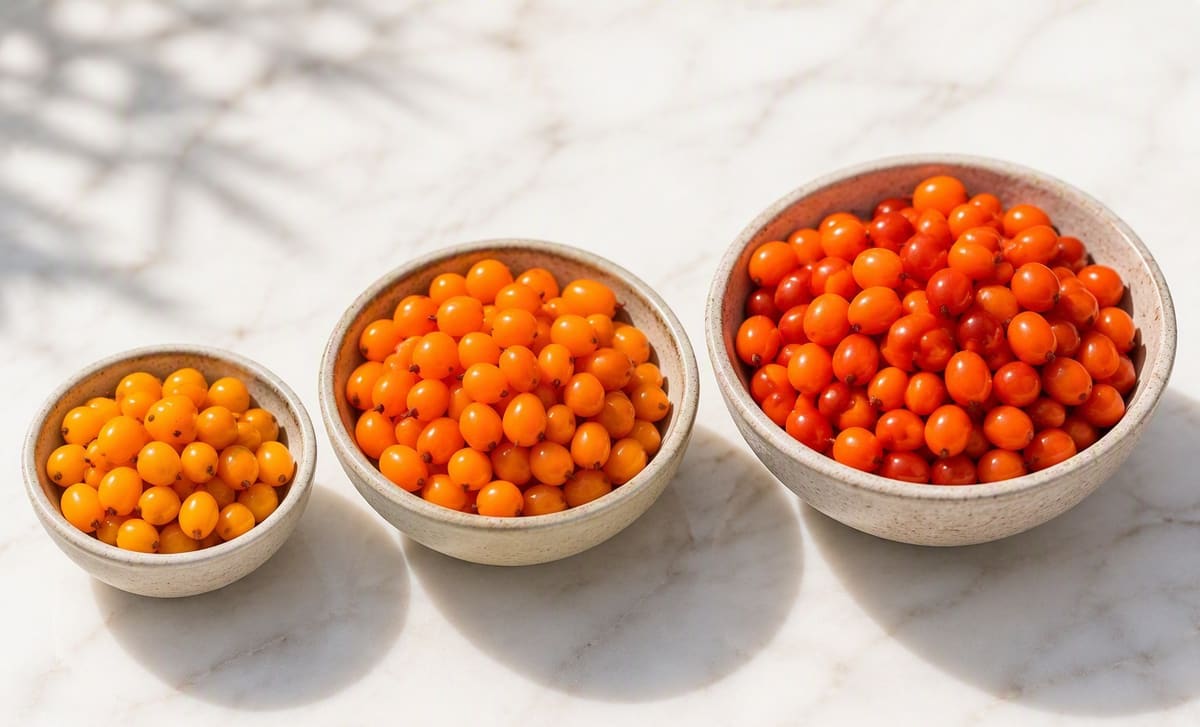
Wild sea buckthorn is small-berried, fiercely thorny, and stubbornly variable. Twentieth-century breeding changed all three. Modern cultivars carry bigger berries on longer stalks with fewer thorns, and the right choice for you depends on your winters first and everything else second.
What breeders changed
Soviet programs, especially in Siberia and the Altai, did the heavy work, selecting for berry size, yield, and reduced thorns. German and Canadian programs followed for their own climates. The gains are real: bred plants fruit earlier, crop heavier, and pick easier than wild stock. The flavor stays tart, because the breeding targeted farming, not dessert. The cultivation history page traces those programs.
Names you will meet
Garden catalogs in Europe and North America commonly offer German-bred females such as Leikora, Askola, and Orange Energy, and the Canadian-bred Indian Summer in prairie country. Male plants sell as pollinizers, not fruiters, and any female needs one in range, as the male versus female page explains. Russian and Siberian lines sit behind many offerings even when the label skips the pedigree.
What a cultivar name buys you
A named cultivar is a clone. Every plant sold under that name was grown from cuttings of one original shrub, so its sex, thorn level, berry size, and ripening time are known before you plant. A seedling is the opposite: cheap, vigorous, and a complete gamble on all four.
That predictability is the entire price premium, and for a planting meant to fruit, it’s money well spent. It has a second payoff later: root suckers from a named plant are the named plant, so an established shrub grows its own spares, expands a hedge, or replaces a lost plant for free. One warning: suckers carry the roots’ genetics, so a grafted plant’s suckers are the rootstock, not the named top. On own-rooted plants, the common case for this species, the copies are true.
How to choose
Climate first. Siberian and Russian stock handles the deepest cold, German cultivars suit milder maritime winters, and Canadian selections were built for prairies. Northern programs selected for short summers, continental ones for deep cold, and the Finland and Canada pages show what regional breeding aimed at. The climate and zones page sets the frame.
Then weigh thorn level, since harvest under thorns is real work, as the thorns page makes vivid. The planting guide covers spacing and layout, and the plant hub has the botany behind the names.
Reading a catalog
Catalogs list females and males separately, and the female descriptions carry the data that matters: berry size, thorn notes, ripening window, and the breeding program behind the line. Check that your male overlaps the females’ bloom, since a mismatched pollinizer is a decorative shrub, as the flowers and pollination page explains.
Ripening windows spread across weeks between early and late cultivars. A single female ripens her whole crop in one window, which suits small gardens and one-pass harvests. Two staggered females stretch the harvest and hedge against a bad bloom year, a trick the harvesting guide uses. The males ask no such planning: one good pollinizer covers every female in range, and the ratio guide sets the count.
Last check: buy from a nursery that names its cultivars at all. Unnamed stock is usually seedlings.
Wild versus bred, fairly
Wild fruit is smaller, thornier, and more variable, and it’s also free across huge parts of the native range, as the foraging guide notes. Bred cultivars trade some of that wildness for harvest ease. The chemistry stays comparable, so the choice is about labor and certainty. Not nutrition.
Cultivar names rarely survive the trip to a finished bottle either, where the label lines that decide what you get are the plant part and how the oil was extracted.
Frequently asked questions
Which sea buckthorn variety should I plant?
Match the breeding to your winters first. Siberian and Russian cultivars handle the deepest cold, German-bred ones suit milder European-style climates, and Canadian-bred stock was selected for prairie conditions. After climate, choose for thorn level and berry size, and always add a compatible male pollinizer. The planting page walks the layout.
Are sea buckthorn cultivars clones?
Yes. A named cultivar is propagated by cuttings, so every plant sold under that name is genetically the original shrub: same sex, same thorns, same berries. That predictability is what the name guarantees and what a seedling can never offer.