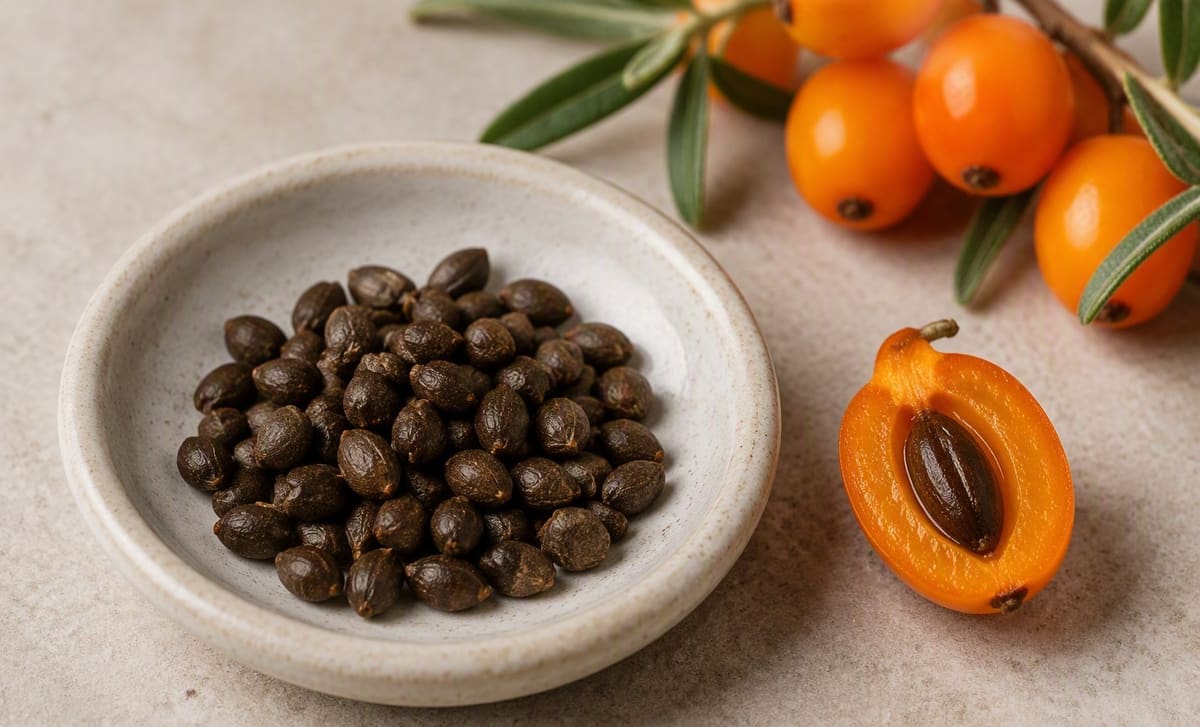
Every sea buckthorn berry hides one small seed, and that seed punches above its size. It yields the pale seed oil in supplements, it rides through birds to start new thickets, and it is the slow, chancy way to grow a new shrub. The pulp gets the glory. The seed does the traveling.
One berry, one seed
Bite a fresh berry and you’ll hit it: one small, dark, hard-coated seed sitting inside the juicy pulp. Just the one. Juice producers press berries by the ton and pile the leftover seeds up as byproduct, and that heap is where most commercial seed oil actually comes from, the press cake of the juice industry. The berry page shows the fruit that wraps it.
The oil inside
Seed oil is a different product from pulp oil, and that’s a distinction labels love to blur. Pulp oil is deep orange, and it carries the omega-7 the marketing is built on. Seed oil is pale. It’s built mainly on linoleic acid, an omega-6, and alpha-linolenic acid, an omega-3, running roughly 30 to 40 percent and 20 to 35 percent of its fats. If you only remember one thing at the shelf, remember that those two oils aren’t interchangeable. The seed versus berry oil page has the full comparison, and the fatty acid profile page has the numbers.
How the plant spreads
Every seed on a branch exists because spring wind did its job, a handoff the flowers and pollination page walks through. Then birds take over. They eat the berries through winter and drop the seeds far from the parent shrub, which is one way sea buckthorn colonizes fresh riverbanks and dunes. Can you grow it from seed yourself? You can, with two catches. Germination is slow and uneven, and the seedlings hide their sex for years, as the male versus female page explains. The growing from seed guide walks the process, and the plant hub has the rest of the botany.
The seed, up close
Spit one out and take a look. It’s a few millimeters long, dark brown to black, glossy, with a hard smooth coat, and it’s the only hard thing in the whole berry, which is why you feel it the second you chew fresh fruit. That coat is doing real work. It’s the reason raw seeds pass through a bird intact, and the reason your kitchen-strained juice leaves a heap of viable-looking seeds that then mostly refuse to sprout. One seed per berry sounds trivial. It isn’t. A kilogram of fruit carries thousands of potential shrubs, which is exactly how birds turn a single hedge into a whole coastline of them.
The germination honesty
Fresh seed germinates unevenly, and the standard fix is cold moist stratification, a few weeks in the refrigerator to fake a winter, which the from seed guide walks step by step. Even then, expect a lottery. Open-pollinated seedlings vary wildly in vigor, thorniness, and berry size, and their sex stays hidden for years, as the male versus female page warns. Stored dry and cool, seed holds its viability for a few seasons, though fresh seed always runs ahead. Why do named cultivars even exist? Precisely because seedlings are a gamble, a point the varieties page makes plainly.
Seeds at the shelf
The seed’s commercial life is oil, and the label question is always the same one. Seed oil, pulp oil, or a blend? Seed oil’s balanced omega-6 to omega-3 profile is its real strength, and the flaxseed oil comparison grades it against the shelf’s plant omega-3 champion. The seed versus berry oil page stays the master reference for telling the bottles apart.
What the press cake becomes
Squeeze the oil out and something’s left behind: the seed press cake, protein-rich, and mostly fed to animals or milled into niche ingredients. It’s the least glamorous fraction of the whole harvest. It’s also a reminder that this berry’s economics run on juice and oil, with everything else riding along as byproduct. The amino acids page tells the protein side of it honestly.
Frequently asked questions
What is the difference between sea buckthorn seed oil and berry oil?
Different raw material, different oil. Seed oil is pale and built mainly on omega-6 and omega-3 fatty acids. Pulp oil from the berry flesh is deep orange and carries the omega-7 the supplements are marketed on. Labels that just say sea buckthorn oil hide which one you are getting. The seed versus berry oil page has the full comparison.
Can I grow sea buckthorn from seeds in store-bought berries?
Sometimes, but expect friction. Juice and puree berries are processed, often with heat, which finishes most seeds. Seeds from raw frozen or dried berries can be viable, and then dormancy, uneven germination, and years of unknown sex await. Cuttings are the reliable route, and seed is the adventure.