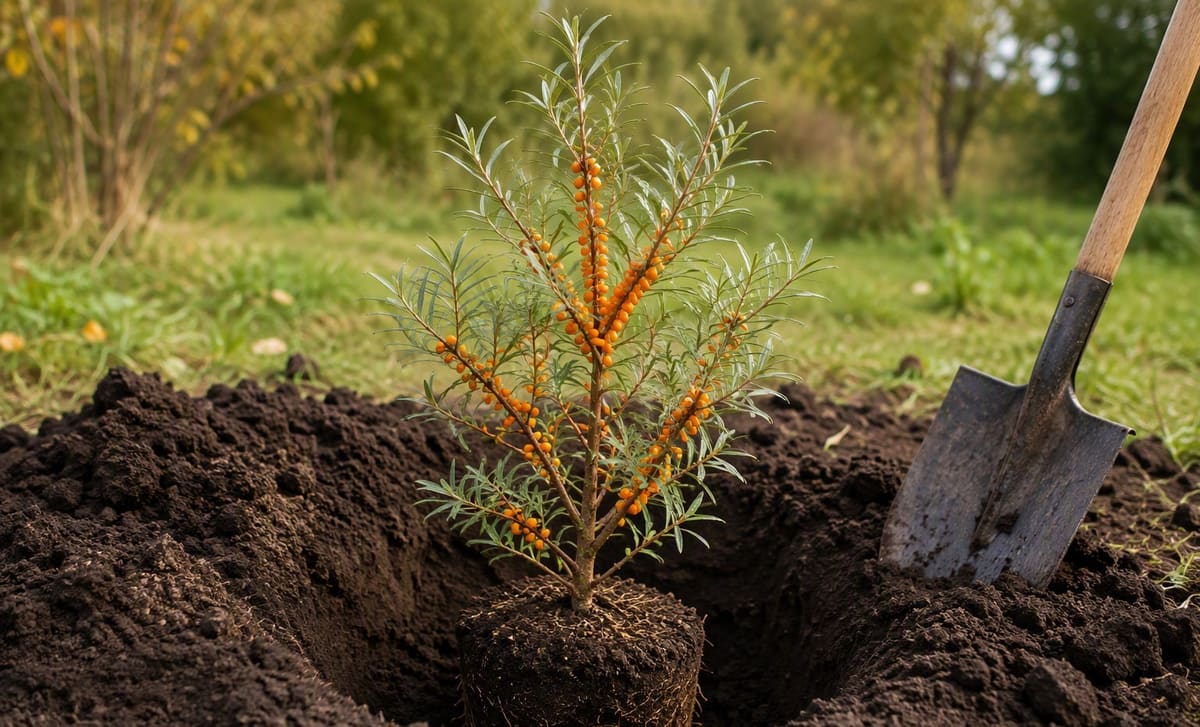
Plant sea buckthorn in full sun on drained ground, 2 to 3 meters from its neighbors, with a male within about 30 meters of the females. Keep it away from paths (the thorns are real) and away from beds you love (the suckers are relentless). Get these day-one decisions right and the shrub largely raises itself.
Site selection, in order
- Sun first. Eight hours or more. Part shade grows a leafy, berry-light disappointment.
- Drainage second. Squeeze a handful of soil after rain. If it stays a wet ball, plant on a ridge or raised bed, or pick another site. The soil page has the full drainage logic.
- Distance third. Two meters from paths and play areas, because thorns. Several meters from tidy beds, because the roots send up suckers that become new shrubs.
The planting itself
- When: spring or autumn, while the plant is dormant. Container plants go in almost any time the ground is workable.
- Hole: twice the width of the root ball, no deeper. Set the plant at the same depth it grew in the pot.
- Backfill: native soil. Skip the rich amendments, because this shrub prefers lean ground and fixes its own nitrogen.
- Water in well, then mulch wide (not against the stem) to hold moisture through year one.
Spacing and the male question
Home planting: 2 to 3 meters between shrubs, and they will still meet in the middle eventually. The male goes within about 30 meters of the females, ideally upwind of them in spring, because wind does the pollinating. One male covers 6 to 8 females. The male-female ratio page has the details, and the climate page confirms your zone suits it. The growing hub maps what comes next.
Choosing what to plant
The nursery decision matters more than the planting technique. Named cultivars give you known sex, berry size, and flavor, and matched male-female pairs solve pollination on the receipt. The varieties page introduces the names, and the plants-for-sale guide weighs bare root against potted and lists what to confirm before you order. Bare-root plants go in during dormancy, spring or autumn, with roots soaked for an hour first. Container plants go in almost any time the ground is workable, with summer plantings needing faithful watering. Whatever you buy, confirm the sex is labeled, because an unlabeled bargain is a from-seed gamble with a pot around it.
Planting day, honestly
It is twenty minutes of digging and five years of waiting, and that ratio is the whole point of this cluster. Dig the hole twice as wide as the roots, set the plant at its nursery depth, backfill with what came out, water slowly until the puddle stops sinking, and mulch a wide ring kept off the stem. Then label it. The label feels silly until year four, when it is the only record of which shrub is which sex. If the ground is frozen or waterlogged, wait: this shrub forgives late planting far faster than bad planting.
The first season, roughly
- At planting: water in deeply, mulch wide, and note the male’s location on a map you will actually find again.
- Weeks 1 to 12: water weekly when rain skips, more in heat. The root ball is still the whole world to this plant.
- Rest of season: weed the mulch ring, resist feeding, and prune nothing except broken wood.
- Autumn: top up mulch before winter, and the winter care page takes over.
Hedges, rows, and singles
A single specimen needs 3 meters of elbow room and a male somewhere within range. A fruiting row runs shrubs 2 to 3 meters apart with a male at one end, upwind if your spring wind has habits. A shelterbelt or thorn hedge can tighten to a meter or so, accepting the coming thicket as the point of the exercise. The companion planting page handles what lives nearby.
Common planting failures
- Too deep. Buried stems sulk and rot. Plant at the pot’s soil line, never below.
- The enriched hole in clay. Rich backfill in heavy ground becomes a sump in the first wet winter. Lean native soil is kinder, as the soil page insists.
- The convenient spot by the path. Thorns at shoulder height, discovered by the first guest.
- Forgetting the male. The most charming shrub in the garden fruits nothing alone, per the male-female ratio page.
Frequently asked questions
Where is the best place to plant sea buckthorn?
The sunniest, best-drained spot you have, at least 2 meters from paths (thorns) and from beds you want to keep sucker-free. It tolerates poor and sandy soil but not waterlogging. Keep one male within about 30 meters of your females, upwind if you can manage it.
Can I plant sea buckthorn as a hedge?
Yes, and it makes a formidable one: dense, thorny, windproof, and fruiting if a male is in the row. Space shrubs a meter or so apart for a thicket effect, accept the suckers that widen it over time, and keep it back from paths. For a fruiting row rather than a barrier, widen to 2 to 3 meters.