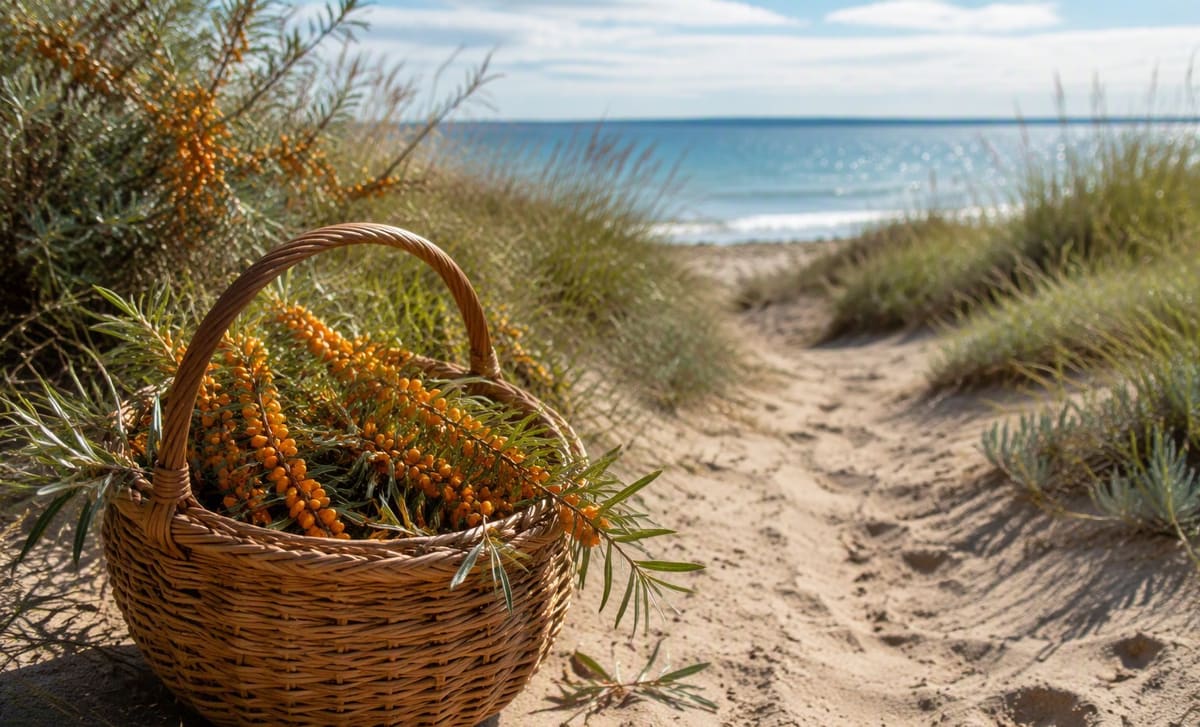
Foraging sea buckthorn is legal in some places and not others, so the first step is permission, not picking. After that it is simple: be sure of the plant, armor up against thorns, take a share rather than strip the stand, and leave the rest for the birds that depend on it all winter.
Permission and rules
On private land you need the owner’s yes, every time. On public land the rules vary by country and even by parcel, and some protected areas ban picking outright. Planted stands along roads and farms are usually someone’s crop, not wild bounty. Five minutes of checking beats an awkward conversation with a landowner or a ranger. And if the answer comes back no, or the nearest stand is three counties away, the same fruit is sold frozen with none of the legal homework.
Be sure of the plant
Confirm the three field marks on the identification guide: silvery narrow leaves, thorns, and orange berries packed on the wood. Then rule out the doubles on the lookalikes page, especially buffaloberry in North America. When in doubt, do not eat it.
Picking without bleeding
Leather gloves and long sleeves are the uniform, because the thorns are serious and the soft berries burst against them. Wide bowls or bags beat buckets for the stained, juicy catch. Expect orange hands: the carotenoids in the pulp stain skin and fabric, which the berry page warns about too. On your own hedge the freeze-and-shake method works, but wild plants are not yours to prune.
Leave the stand healthy
Never strip whole branches off wild plants. That move steals next year’s fruit wood and the birds’ winter food at once. Take a modest share from many bushes instead. Sea buckthorn berries persist through winter precisely when other food is gone, and a well-picked stand still feeds the flock. The cultivated version of the harvest lives in the harvesting guide, and the plant hub has the botany.
When to go
The season runs from late summer into autumn, and fully colored is the rule: bright orange berries that still feel firm. Some pickers wait for the first frost, which softens the fruit and rounds the sourness a little, at the price of competing with the birds. Earlier is tarter and firmer. Either way the season is generous, because the berries hold on the wood for months while most wild fruit rots or drops. On northern coasts the season leans later, and in mountain valleys it can start earlier. The regions hub maps the geography behind the timing.
The kit that works
Leather gloves and long sleeves first, then the container logic: wide, shallow bowls or trays beat deep buckets, because berries at the bottom of a deep bucket crush under their own weight and juice the rest. A small pair of scissors speeds picking from dense clusters on stands where pruning is not allowed. The equipment guide covers the commercial version of the same logic, and scaled down it is exactly the home forager’s list.
The same-day rule
Process the catch the day you pick it, or freeze it the day you pick it. These berries are thin-skinned and full of acid, and a bag left warm overnight starts to ferment and weep. Rinse just before processing, freeze on trays for loose berries later, or go straight to juice with the juice-making guide. First-timers eating them off the branch should read the raw berry guide before the first handful.
What you will actually find
Expect a range of quality even in one stand. Berries on the sunny outer wood color and sweeten first, the shaded interior lags, and old stems carry less fruit than vigorous young ones. Work the sunny side of many bushes rather than stripping one, and the picking goes faster with less damage to the stand.
Frequently asked questions
Is it legal to forage sea buckthorn?
It depends whose land it grows on and the local rules. On private land you need the owner's permission, full stop. On public land the rules vary by country and parcel, and some protected areas ban picking entirely. Check before you pick, and treat a planted windbreak as someone's crop, because it usually is.
When is sea buckthorn ready to pick?
From late summer into autumn, when the berries are fully orange and still firm. They hold on the branches into winter, so the window is long, but birds start working the same stands as the season turns. Taste one: fully colored, fiercely sour, and juicy means go.