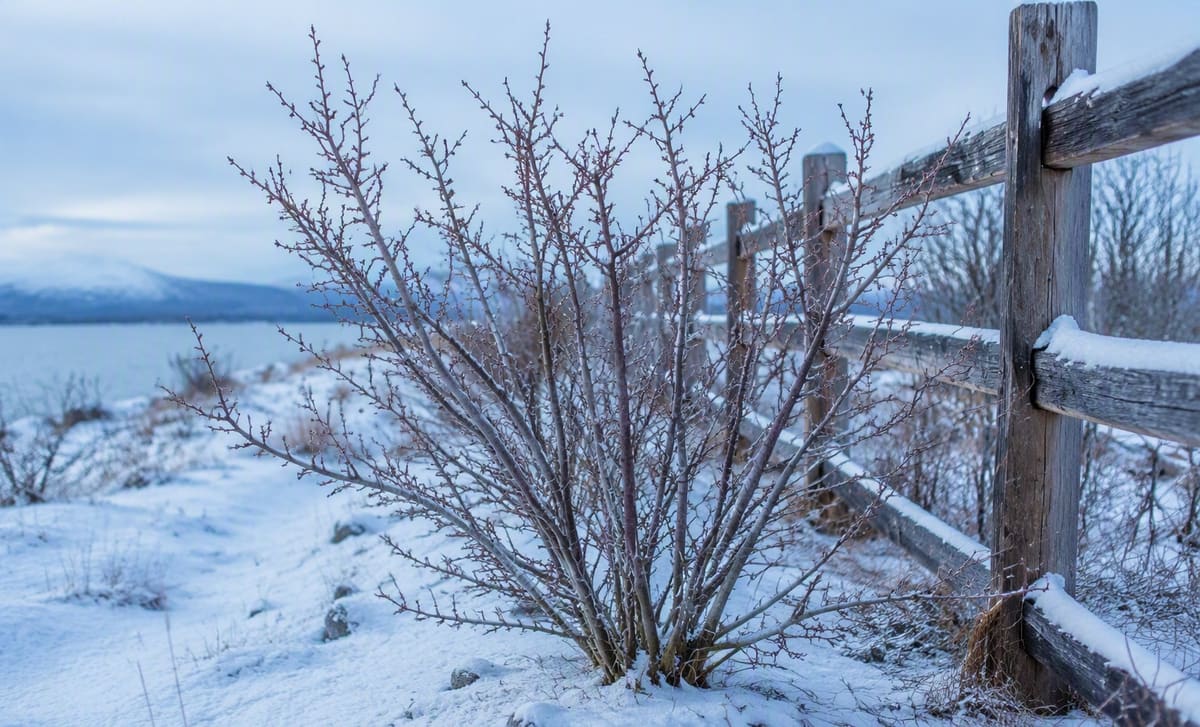
Sea buckthorn is a cold-climate shrub: hardy through roughly USDA zones 3 to 7, unbothered by brutal winters, late frosts, wind, and salt spray. Full sun is its one demand. The climates that beat it are the opposite of its homeland: hot humid summers and mild tropical winters.
The comfort zone
Think of where it evolved: Himalayan slopes, Siberian riverbanks, Baltic coasts. Winter lows that would kill most fruit bushes are Tuesday for this one, and its flowers handle late spring frosts that wipe out apple blossoms. Roughly USDA zones 3 to 7 covers its happy range. The growing hub maps the whole cluster around it, and the plant hub has the botany behind the hardiness.
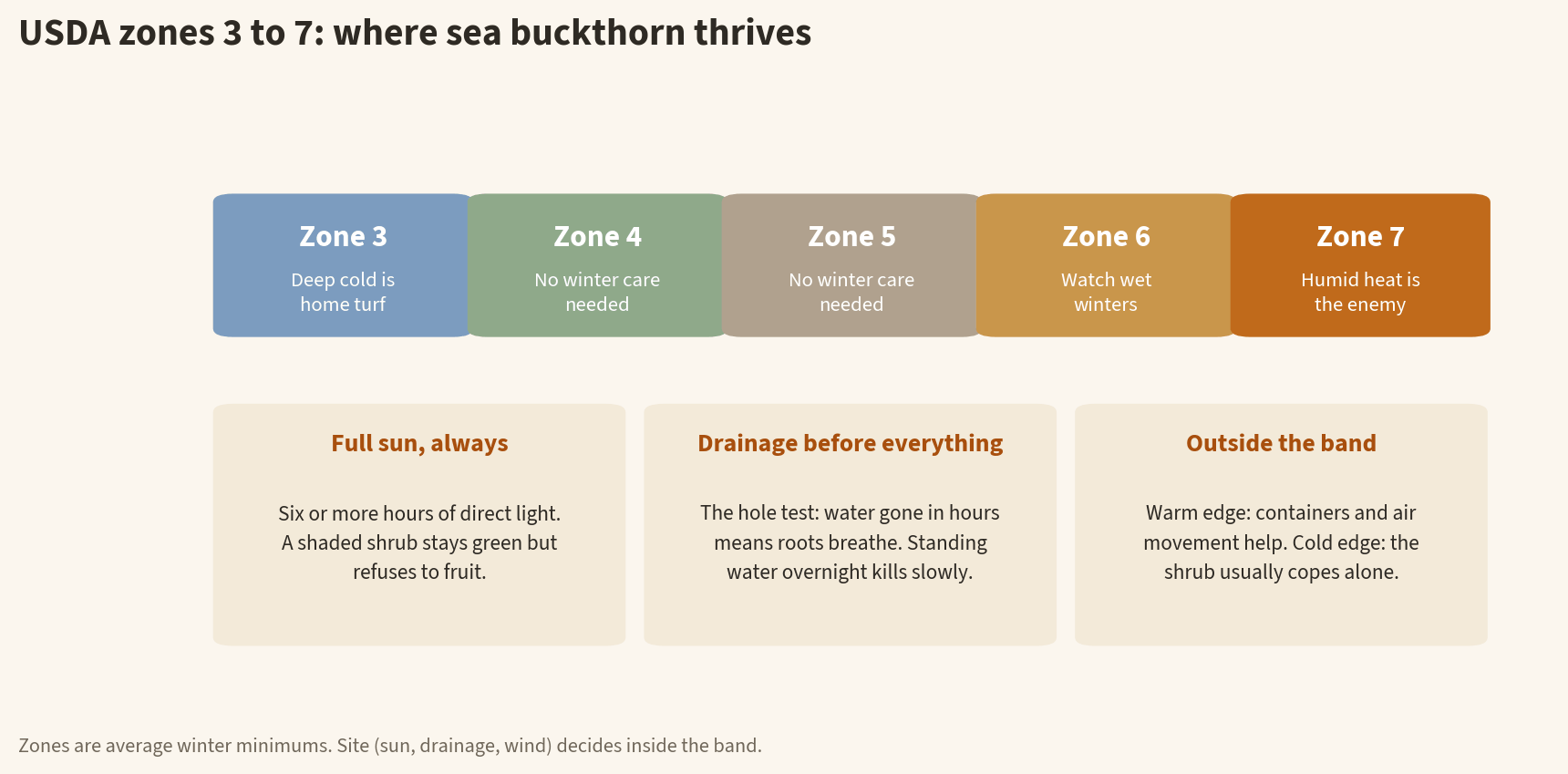
See the data behind this chart
| Zone | What to expect |
|---|---|
| 3 | Deep cold is home turf; established plants need nothing |
| 4-5 | No winter care needed |
| 6 | Watch wet winters more than frost |
| 7 | Humid summer heat is the enemy; air movement helps |
Treat that 3 to 7 band as the entry ticket and nothing more. A hardiness zone is an average winter minimum, so it says nothing about the three things that actually decide this shrub’s fate in your garden: summer humidity, drainage, and sun hours. The rest of this page is those three.
What it handles without blinking
- Severe cold: deep zone-3 winters are survivable for established plants.
- Wind: it grows in shelterbelts by design, which is why coastal and exposed sites suit it.
- Salt spray: a seaside native, happy where few fruit shrubs are.
- Late frosts: flowers late enough to dodge most spring freezes.
Where it struggles
- Hot, humid summers: sustained heat plus humidity stresses it and invites the few diseases it bothers with.
- Mild-winter tropics and subtropics: it wants a real winter, and without chill it grows poorly and fruits worse.
- Shade: not a climate, but the most common way a good climate still fails. Sun is the deal.
A quick local check: if apples, plums, and daffodils do well nearby, your climate almost certainly suits sea buckthorn. The winter care page covers the cold season it loves, the watering page covers summer rhythm.
Microclimates beat zone maps
Zone numbers describe winter lows, and gardens are more specific than that. A south-facing wall buys you half a zone of warmth. A low pocket where cold air pools on still nights costs you one. Wind lanes between houses stress plants that a sheltered corner would never notice. Walk your plot on a frosty morning before you decide where the shrub goes, because the coldest spot on the map and the coldest spot in your garden are rarely the same.
Heat is the ceiling, cold is the floor
Every gardener asks how much cold it takes, and almost none ask how much heat it forgives. Established shrubs handle winter far below what zone 3 delivers. Summer is where the negotiation happens. Weeks of humid heat beyond anything a Baltic coast sees invite stress and the small disease list on the pests and diseases page. If your summers are hot but dry, the shrub copes far better than the humidity map suggests, provided drainage is sharp and you water through establishment.
Reading your region
Continental climates with real winters suit it best, which is why the shrub is at home across Russia, Mongolia, and Canada, as the Russia page and Canada page describe. Maritime climates work too, since it tolerates wind and salt. The difficult band is hot and humid. Mild-winter subtropics fail differently: without enough winter chill the shrub grows but fruits poorly, which is the quietest disappointment in gardening.
Common climate failures
- Mistaking shade for climate. A sunless corner gets blamed on the weather. Move the shrub, not the blame.
- Planting in a frost pocket for the shelter. Cold air drains downhill, so the calm low spot is often the coldest. The shrub survives it, but the site logic still matters for everything else you grow.
- Expecting fruit in a no-chill winter. If your winters never properly bite, expect leaves without many berries, whatever the catalog promised.
- Blaming winter for a wet death. A shrub that dies after a soggy season in heavy ground was killed by drainage, not frost. The soil page separates the two.
The drainage test, done properly
Here’s the test that matters more than the zone map. Dig a hole the depth of a spade, fill it with water, and watch. If it empties within a few hours, the roots will breathe. If water stands overnight, that spot kills sea buckthorn slowly, no matter what the map says.
Wet ground, not cold, is the executioner in this plant’s story. Waterlogged soil suffocates the roots, and it kills more of these plants than frost ever has. The fix is a slope, a raised bed, or a different shrub. The native ground is the picture to copy: dunes and river gravel, fast-draining, open, sunny, as the where it grows page shows.
The sun requirement, in hours
Full sun means what it says. Six hours or more of direct light through the growing season, and more is better. A half-shaded plant survives and stays green, which is exactly the trap, because it looks healthy while refusing to fruit.
So if your sea buckthorn grows well and crops nothing, count the hours of direct sun before blaming the soil, the sex, or the season.
Living on the edges of the band
On the cold edge the plant usually copes, and the winter care guide covers the exceptions, mostly young plants and wet winters. The warm edge is the harder one, because no amount of care fully fixes a climate the shrub dislikes. Containers buy flexibility on both edges, since a pot moves with the seasons, as the container guide shows. Past zone 7 the honest advice is to stop fighting the map and buy the fruit instead, and the where to buy sea buckthorn guide sorts the sources that actually ship it.
The planting guide turns the right climate into the right hole, and the varieties page matches cultivars to conditions, since breeding lines differ in what they tolerate. In some regions there’s one more question before any of that, which is whether planting is welcome at all, and the invasive page takes that up honestly.
The neighbor test
The fastest climate check needs no map. If apples, plums, and lilacs thrive in nearby gardens, sea buckthorn will too. If citrus overwinter outdoors, expect a leafy shrub with disappointing fruit. And if you garden where winters famously kill fruit trees outright, the shrub probably still copes, since it out-colds the apples by a wide margin, as growers in Finland and on the Canadian prairies confirm every year.
Frequently asked questions
What zones can sea buckthorn grow in?
Roughly USDA zones 3 to 7. It shrugs off winters that kill most fruit shrubs, needs real winter chill, and struggles where summers are hot and humid or where soil stays wet. Full sun and drainage matter as much as the zone number. On a map of North America, think northern states and the prairie provinces.
What climate does sea buckthorn grow in?
Cold to temperate climates, roughly USDA zones 3 to 7. It shrugs off severe winters, late frosts, wind, and coastal salt spray, and it wants full sun. The climates it dislikes are hot humid summers and mild tropical winters. If daffodils and apple trees thrive near you, sea buckthorn probably will too.
Can sea buckthorn grow in hot climates?
Hot and dry, yes, with establishment watering and sharp drainage. Hot and humid is the problem combination: sustained steamy summers stress the shrub and favor its few diseases. In mild-winter subtropics it grows but fruits poorly for lack of chill. Roughly USDA zones 3 to 7 is the comfortable band, with dry heat forgiven more easily than humidity.