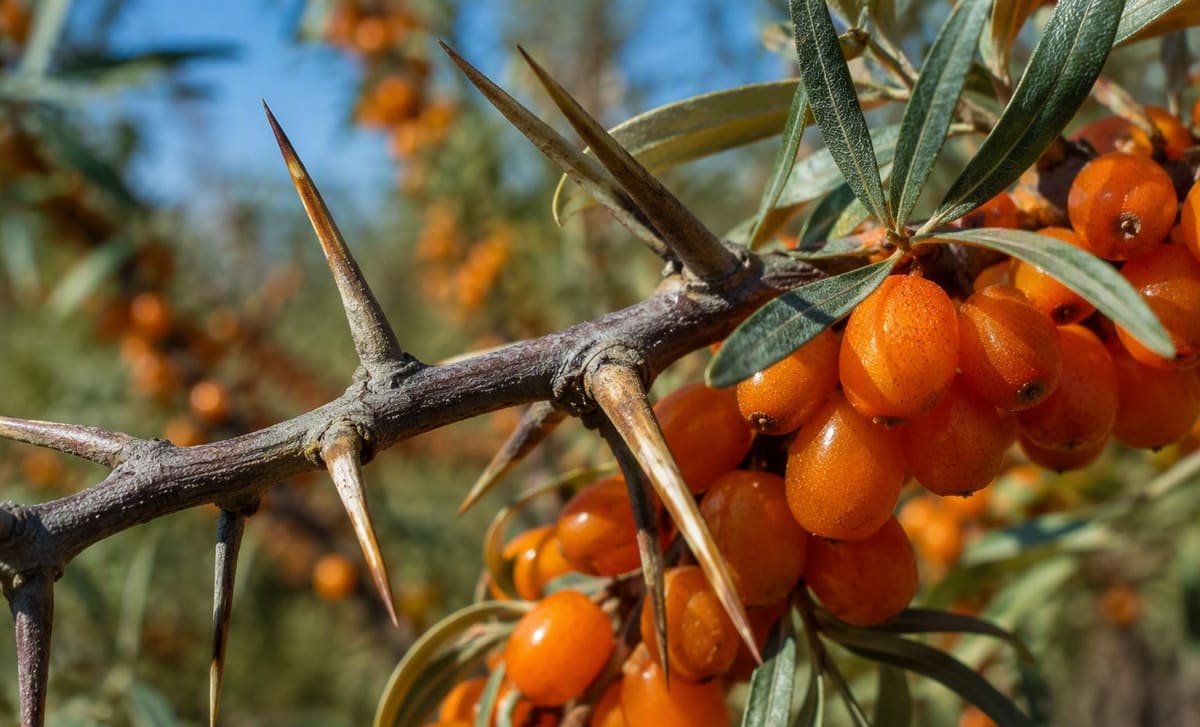
Sea buckthorn thorns are stiff, sharp spines a few centimeters long, tipped on the short shoots that carry the berries. They are the plant’s defense against being eaten, and they are the single biggest reason harvesting this fruit is slow, gloved work. Everything about picking sea buckthorn is a negotiation with thorns.
What the thorns are
The spines are modified short shoots, woody and sharp, running right along the fruiting branches. In the wild they discouraged browsing animals, and they still do. Deer and livestock leave an established plant mostly alone, which is one quiet reason the shrub holds its ground on open range. That’s no accident. These thorns are part of the plant’s identity, enough that they turn up in the identification guide.
Harvest under thorns
Want to hand-pick this fruit? Bring leather gloves, long sleeves, and patience, because the berries burst against the very wood that’s stabbing you. Commercial growers refuse that fight. Some prune off whole fruiting branches and strip them at a table. Others freeze the branches and shake the berries loose. The harvesting guide compares the methods, and the berry page explains why the fruit is worth the trouble at all.
Living with thorns at home
Growing one yourself? Plant it away from paths, play areas, and the route to your compost, and prune it with real respect for the spines, the way the pruning guide lays out. Foragers meet the same hardware on wild plants, and the foraging guide keeps that trip bloodless. Breeders have selected lower-thorn cultivars, which the varieties page covers, and the plant hub holds the rest.
The thorn, up close
Look closely at a single spine and you’ll see a short shoot that quit growing leaves and hardened instead, woody straight to the tip, planted along the fruiting wood. It’s gray like the branch, a few centimeters long, and sometimes branched, which is exactly why it catches your sleeve so eagerly. Old wood keeps its thorns for years. So a mature shrub is armored at every level, not just on this season’s growth. In winter silhouette the spines read as a dense fringe on the bare wood, one of the easiest field marks going, as the identification guide lists.
Why the armor exists
So why grow all that armor? The thorns answer an old problem. This shrub fruits in the open, at browsing height, on ground where every large herbivore wanders past. Spines guard the fruiting wood from mammals, and the strategy plainly works, because wild stands fruit heavily despite the deer, the livestock, and everything else with teeth. Birds, which are the seed-spreaders the plant actually wants, slip between the thorns untouched. The armor sorts friends from thieves. It even left a mark on the name: German Sanddorn means sand thorn, as the name origin page notes.
Working around them
Most of the trick is angles. Cup a cluster from below, roll the berries off with your thumb, and never pull against the wood. Pruning is about timing instead, cutting in the dormant season when the bare structure shows, which the pruning guide teaches. And placement is pure prevention, because a shrub sited away from the path never picks a fight with you in the first place, a point the planting guide makes early.
The low-thorn direction, honestly
Breeding cut thorn counts hard, and modern cultivars are measurably easier to work than wild stock. Read the catalog wording carefully, though. Low-thorn is real. Thornless is mostly aspiration, and even the gentlest cultivar keeps enough spine to demand gloves from you. The varieties page names the lines that breeding came from, and wild plants, the ones the foraging guide sends you toward, stay fully armed everywhere they grow.
Gloves, honestly graded
How much glove do you actually need? Thin gardening gloves are decoration against these spines. Leather work gloves stop most of it. Gauntlet-style rose gloves stop all of it, and that gap matters most at harvest, when your hands are moving fast among the clusters. The equipment guide lists the kit, and the punctures you dodge pay for it on day one. Sleeves are armor too, so the experienced picker dresses for the wood, not the weather.
Frequently asked questions
Are sea buckthorn thorns dangerous?
They are honest thorns: stiff, sharp, a few centimeters long, and happy to draw blood through thin gloves. They are not poisonous, but punctures hurt, and harvest without leather gloves is a one-time mistake. Breeders have selected lower-thorn cultivars, which the varieties page covers.
Do thornless sea buckthorn varieties exist?
Low-thorn is real and thornless is mostly marketing. Breeding cut thorn counts sharply, and modern cultivars are gentler than any wild plant, but even the mildest keeps enough spine to want gloves. Wild plants are fully armed, always.