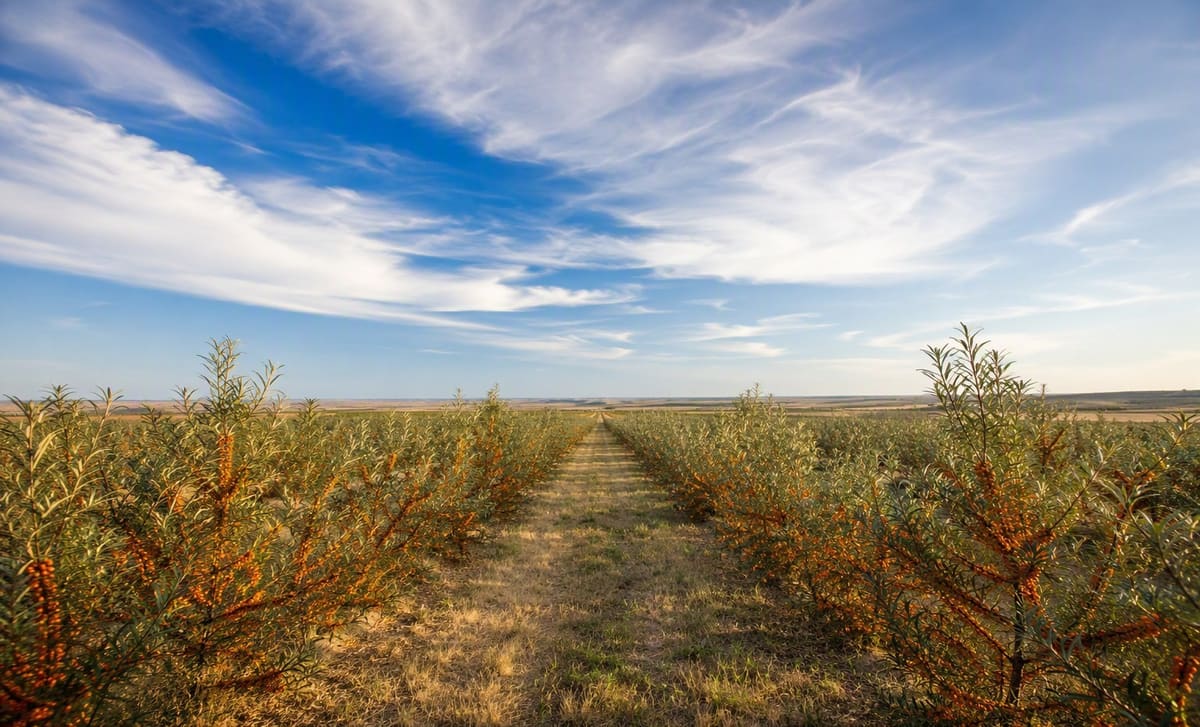
Canada is sea buckthorn’s new world success. Prairie growers, led by Saskatchewan, planted orchards from the 1990s onward, research programs backed them, and Canadian berries now supply much of North America’s whole-berry and juice trade. The cold that limits other fruit is exactly what this shrub wants.
The prairie fit
Prairie winters are severe, summers are sunny, and the air is dry, which reads like the shrub’s own wishlist, as our climate page explains. Many orchards grow Russian-bred varieties selected for larger, sweeter berries, a breeding line the Russia page and the varieties page trace. Next to China’s planted millions, Canadian acreage is a rounding error, but it is organized, research-backed, and growing.
Research from the start
Canadian public research programs trialed varieties, spacing, and harvest methods from the 1990s onward, which gave the young industry an unusually honest footing. The result is a small but serious sector: orchards you can visit, processors you can name, and berries that mostly stay on the continent rather than entering anonymous bulk trade.
Buying and growing notes
Canadian sea buckthorn reaches buyers as frozen whole berries, juice, and oil, and origin labeling tends to be clear, which makes the first buying check easy. Gardeners in cold parts of Canada and the northern US can grow the shrub themselves, and our growing hub walks through what that takes, thorns included.
For the American side of the border, see the USA page, and the regions hub maps every origin.
What prairie terroir does to the berry
The prairie recipe is cold, sun, and dry air. Winters test to minus forty, which the shrub shrugs off, and summers deliver long sunny days with low humidity, which keeps fungal pressure down and ripening clean. The big day-night temperature swings of late summer are the kind of stress that concentrates flavor. Berries here grow on bred varieties in managed rows, so they run larger and sweeter than their wild Himalayan cousins, a trade the buyer should understand: orchard consistency in exchange for wild intensity.
The Saskatchewan story, told plainly
Most Canadian plantings sit in Saskatchewan, where public researchers and early growers spent the 1990s and 2000s working out which varieties, spacings, and harvest methods fit the prairies. That slow, published groundwork is why the industry feels different from a marketing boom: orchard blocks you can drive past, growers who answer the phone, and a harvest that arrives every autumn whether or not anyone is watching.
If you visit or live nearby
Some prairie orchards open for tours or u-pick days in the autumn window, and farmgate sales of frozen berries are the norm where fresh would never survive the drive. The harvest window runs roughly late summer into early autumn depending on the variety, and the harvesting page explains the shake-and-catch methods growers actually use, thorns notwithstanding.
For the cold-climate gardener
The same winters that grow the crop make the shrub an easy garden plant across most of Canada. The requirements are sun, drainage, a male pollinator, and room for the suckering habit, and the planting page walks through site and spacing. Prairie gardeners report the real complaint is not survival but enthusiasm: given space, the shrub takes it.
The border question
Canadian berries supply much of the continent’s whole-berry trade, but American processors buy Canadian harvest too, which is why a product of USA oil can still trace to a prairie orchard. Origin on the label answers the farming question. The processing question is separate, and both are worth asking. A clear answer to both is what separates a serious bottle from a storytelling one, on either side of the border.
Frequently asked questions
Where does sea buckthorn grow in Canada?
Mainly on the prairies, with Saskatchewan as the center of the industry. The shrub is not native to Canada, but prairie winters suit it, and planted orchards there supply much of North America's whole-berry and juice trade.
When is the Canadian sea buckthorn harvest?
Late summer into early autumn, varying by variety and season. Prairie orchards pick through that window, some offering u-pick days or farmgate frozen berries. Frozen is the normal form for buyers, since the fresh berries are soft, staining, and travel badly.