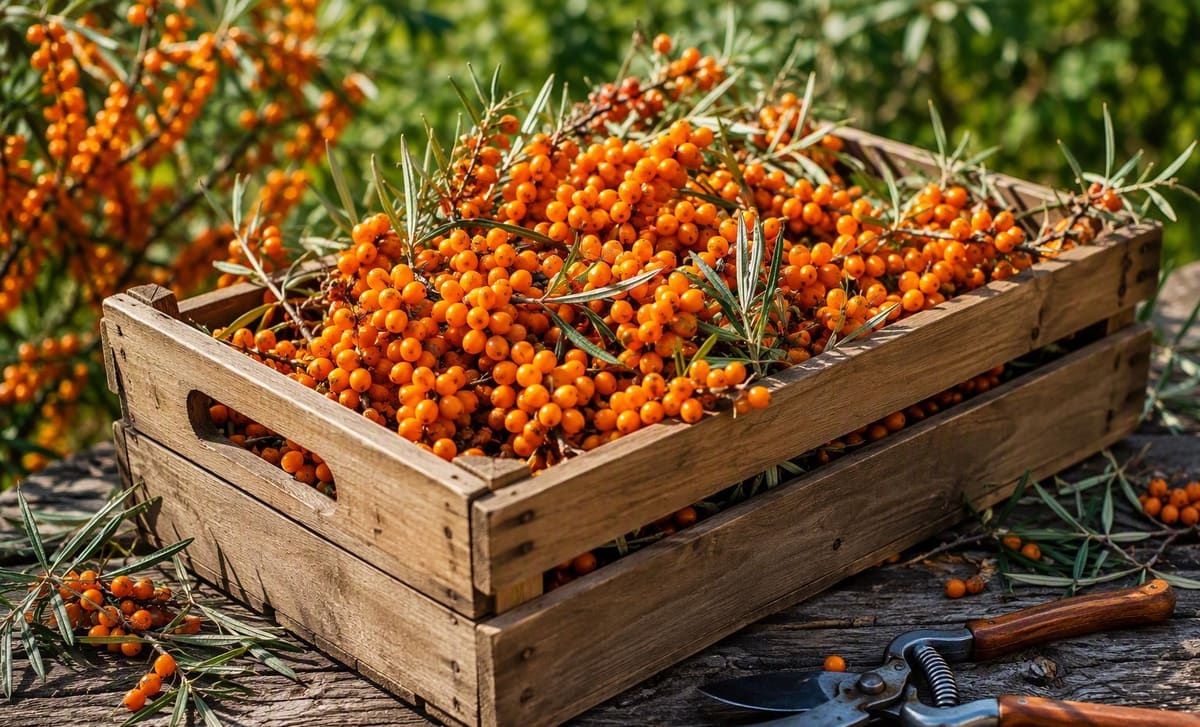
Harvesting is where sea buckthorn stops being easy. The berries are soft, they grow tight against thorny branches, and they crush if you look at them wrong. The two methods that actually work are snipping whole fruiting branches and shaking frozen berries onto sheets. Neither is fast.
Knowing when they are ripe
Berries ripen from late summer into autumn, turning from pale yellow to deep orange. Ripe fruit detaches with a light tug and tastes sharply sour, which is normal and not a sign to wait longer. The crop holds on the bush well past frost, so there is no single frantic weekend. Birds will disagree with that relaxed timeline. The growing hub puts harvest in the yearly rhythm.
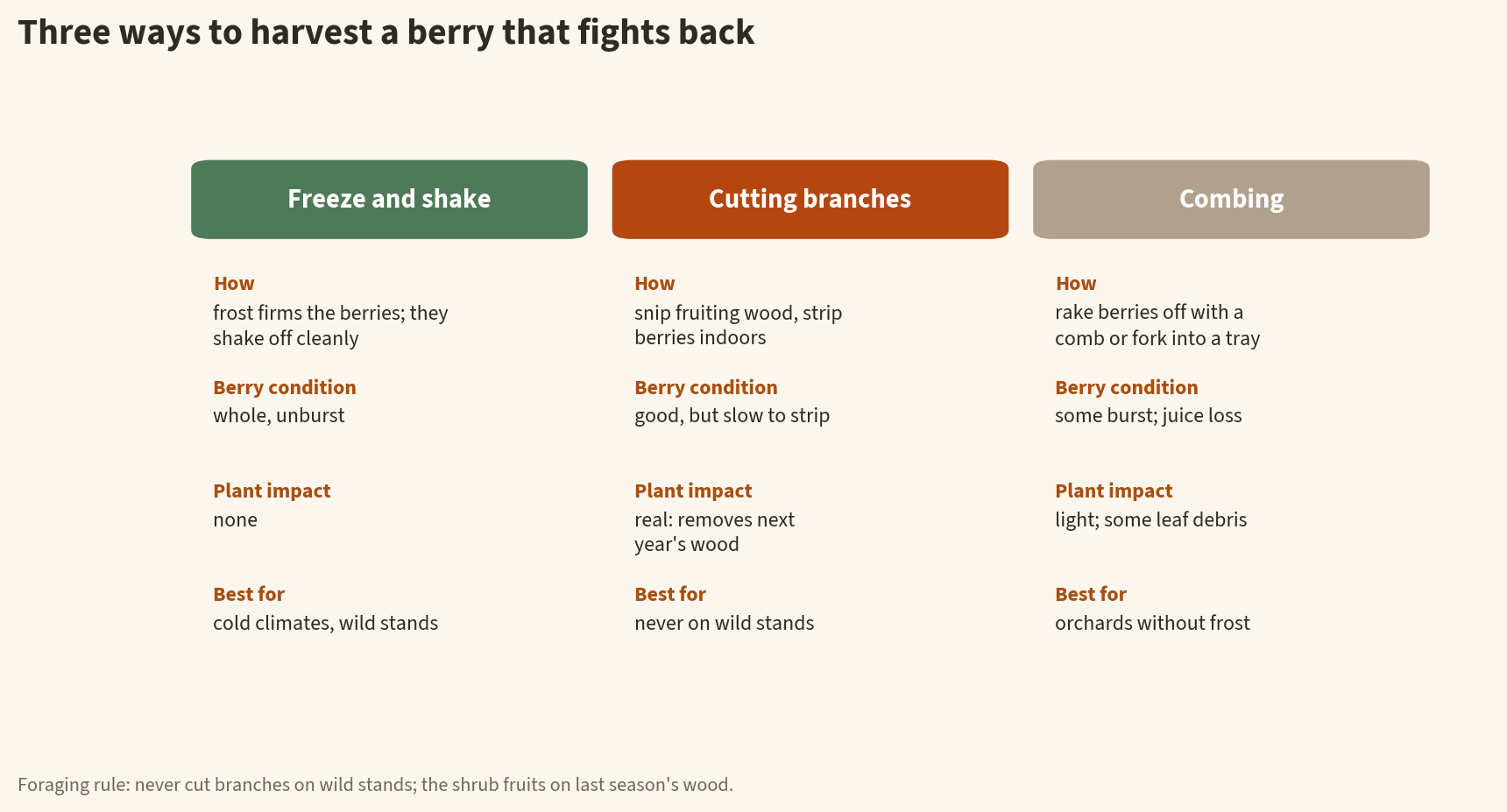
See the data behind this chart
| Method | Berry condition | Plant impact | Best for |
|---|---|---|---|
| Freeze and shake | Whole, unburst | None | Cold climates, wild stands |
| Cutting branches | Good, slow to strip | Removes next year's wood | Never on wild stands |
| Combing | Some burst; juice loss | Light; leaf debris | Orchards without frost |
Method one: snip the branches
Cut whole fruiting branches with loppers and process them indoors at a table, where thorns are less persuasive. This sounds brutal but doubles as pruning: the shrub fruits on older wood and responds to moderate branch removal with fresh growth. The pruning page shows how the two jobs fit together.
Method two: freeze and shake
Frozen berries detach cleanly instead of bursting. Either wait for the first hard frosts and shake branches over sheets in the garden, or freeze snipped branches overnight and strip them indoors over a tray. Fresh hand-picking exists too, technically, and it is how you end up with orange palms and a new respect for what a good bottled juice costs.
The honest math
A soft berry on a thorny stem is a slow harvest no matter the method. Expect stained fingers and modest kilos per hour. Gloves, old clothes, and managed expectations are the real kit, though the equipment page covers the rest. If you want fruit without a garden at all, the foraging page covers finding wild stands.
How much to expect
A mature, well-sited bush carries anything from a few kilograms to over ten in a strong year, with variety doing most of the talking. The yield per acre page keeps the bigger numbers honest. For a home garden, one good bush fills a freezer drawer, which is usually the right amount of sea buckthorn for one household anyway.
After the picking
Fresh berries are perishable in a way apples are not. Process or freeze within a day or two: rinse, dry, and freeze on trays before bagging, or press for juice the same weekend. The storage guide gives the timelines, the make juice guide handles the pressing, and the recipes hub is where the surplus goes. Berries left in a bucket in a warm kitchen start fermenting by day three, which is a different product than the one you picked.
The birds are harvesting too
Every local flock knows when your berries color up. If you want the crop, net before the first raid, because a stripped bush takes a flock about a weekend. Leaving the outer branches for the birds and netting the rest is a peace treaty many growers find acceptable, as the pests page admits.
One realistic schedule
Late summer: taste weekly from the first color. Deep orange across the bush: net what you want to keep and start snipping the heaviest branches over two or three sessions. First hard frost forecast: shake the rest onto sheets in a morning and process that week. The crop holds through frost, so the only real deadline is the one the birds set.
The thorn tax, itemized
Every method pays it somewhere. Snipping pays it at the loppers. Shaking pays it at the sheet, when thorny twigs rain down with the berries. Stripping pays it at the table. Thick gloves, sleeves, and patience are the currency, and the thorns page explains what the plant thinks it is protecting. None of this appears in the seed catalog, which is why this page exists.
Common harvest failures
- Waiting for sweet. Ripe sea buckthorn is sour, full stop. Deep orange and a clean release from the stem is ripe. Waiting longer only feeds the birds.
- The bare-hand pick. Unprotected hands, fresh berries, and thorns produce orange palms, burst fruit, and a solemn vow about gloves.
- Deep buckets. Pile soft berries too deep and the bottom layer becomes juice before you reach the kitchen. Shallow trays only.
- Pruning after instead of during. Snipped fruiting branches are the harvest method and the pruning pass in one. Schedule them together, as the pruning page agrees.
Frequently asked questions
When is sea buckthorn ready to harvest?
Late summer through autumn, once berries turn deep orange and detach with a gentle tug. They are tart even when ripe, so do not wait for sweetness. The berries hold on the branch through frost, which gives you a long window and one useful trick: frozen berries shake off far more cleanly than fresh ones.
How do you harvest sea buckthorn without the thorns getting you?
You reduce contact, you do not eliminate it. Wear leather gauntlet gloves and sleeves, snip whole fruiting branches with loppers, and strip the berries indoors at a table. Or freeze the branches and shake the berries off, since frozen fruit detaches cleanly. Either way, the thorns collect a small tax on every kilo.