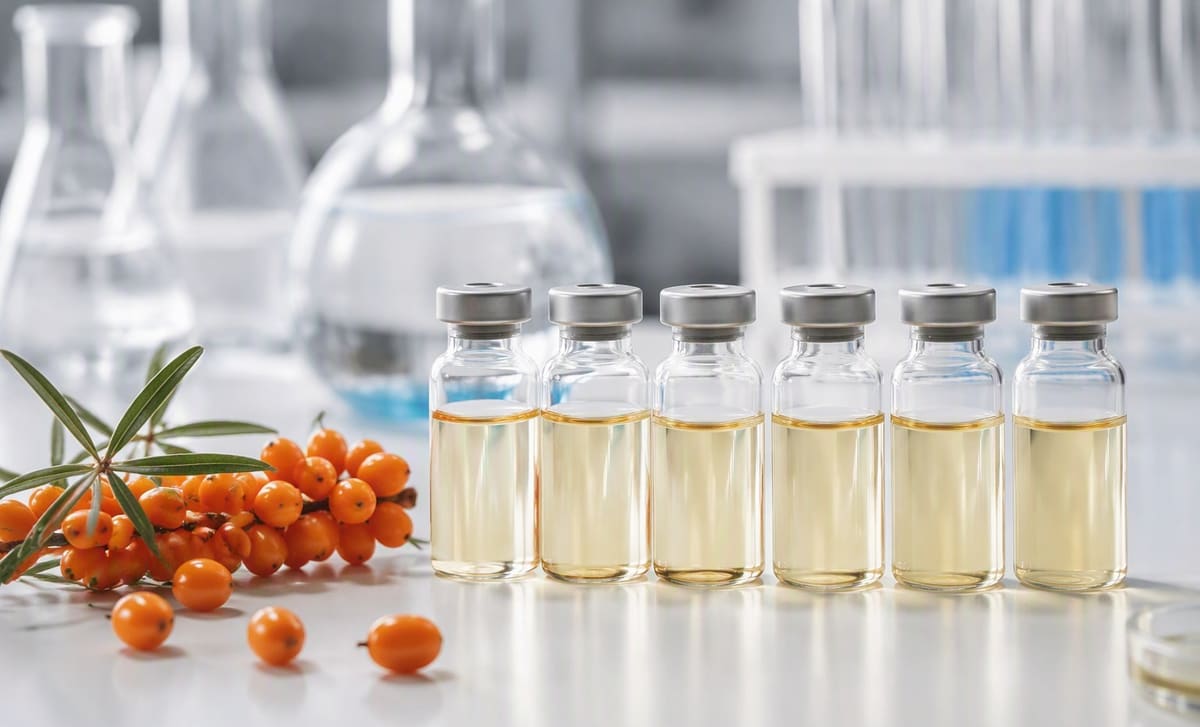
Sea buckthorn contains amino acids across a broad spread, mostly in the seed and pulp protein fraction. The amounts are food-scale: interesting on a composition table, too small to matter as a protein strategy at any realistic serving.
Where the amino acids live
The protein fraction concentrates in the seeds and, to a lesser degree, the berry pulp. That geography decides what each product form carries:
| Form | Amino acid story |
|---|---|
| Fresh or frozen berries | Small amounts in the pulp and seed protein |
| Dried berries and powder | Concentrated with everything else, still modest |
| Juice | Little, pressing leaves the protein behind |
| Oil | Essentially none, protein is not fat-soluble |
| Seed press cake | The richest fraction, sold as feed rather than food |
The essential spread, in proportion
Composition reviews list essential amino acids among the plant’s residents, and a broad spectrum reads well on a label. The discipline is portion size. A serving of berries or a spoon of powder contributes a sliver of your daily amino acid needs, and an oil capsule contributes zero. The protein page runs the same verdict at the macro level: this plant is not where protein comes from.
What the numbers mean at a real serving
Run the honest arithmetic. A 100-gram bowl of fresh berries, which is a generous serving of something this sour, contributes protein on the scale of a fruit, not a meal: a gram or so of plant protein with a broad amino acid spread. A spoon of whole-berry powder is the same story concentrated by water removal. An oil capsule contributes zero, because protein is not fat-soluble. Against an adult’s daily protein needs, measured in tens of grams, every one of these is a rounding error. The berry is a vitamin and fatty acid story. Protein is somebody else’s job.
Completeness hype, deflated
“Contains all essential amino acids” is the claim that sells plant products, and it deserves its own deflation. Many plant foods contain detectable amounts of every essential amino acid. What separates a protein source from a rounding error is dose and digestibility, not presence. A food earns protein status by delivering grams per serving, day after day. Sea buckthorn delivers milligram-scale amino chemistry inside a fruit serving. Calling that a complete protein source is technically defensible and practically empty, which is exactly the kind of claim this site exists to grade.
Who actually needs this information
Three readers. Vegans auditing the berry for protein: your protein plan still runs through legumes, grains, soy, and the usual anchors. Powder buyers comparing labels: amino acid tables on a powder label are composition facts, not serving facts. And the curious: the seed press cake, the genuinely protein-rich fraction, is mostly a feed ingredient, which is where the plant’s protein actually goes.
Common misreadings
- “Amino acids on the label means protein in the serving.” Detection is not delivery. Serving size is the whole question.
- “Complete protein, therefore a protein food.” Completeness without dose is a trivia fact.
- “The press-cake numbers apply to my berries.” The cake is what is left after pressing, a different product on a different shelf. The moringa comparison grades another green powder by the same serving-first standard, and the forms compared page maps what each sea buckthorn form actually delivers per serving.
Where the plant’s protein actually ends up
Follow the harvest and the protein question answers itself. The valuable fraction is the oil, so the industry presses berries and seeds for it. What remains is a seed press cake that is genuinely protein-rich on paper, and that cake mostly leaves the human food chain, sold as animal feed or a niche ingredient. Nobody has run a human study on it as a protein source, and the market offers no reason to expect one. The protein never concentrates into a product you can buy, because the economics point at the oil. That is why the amino acid spread, however broad it reads in a composition review, stays a composition fact rather than a food. The protein page runs the same honesty across the whole plant, and the short version is that this crop feeds your oil bottle, not your protein target.
Why the claim exists at all
Amino acid tables make products look like complete foods, and marketers borrow that shine. The honest read is narrower: the berry’s protein chemistry is part of why the whole plant interests researchers, and part of why the press cake has value as animal feed. Neither fact changes what is in your spoon. For what the forms actually deliver, the fresh vs dried vs powder page is the map, the fiber page covers the component whole berries genuinely deliver, and the powder guide scores the most concentrated food form. The nutrition hub keeps the full cast in one place.
Frequently asked questions
Does sea buckthorn contain all essential amino acids?
Composition reviews catalog a broad amino acid spread in the plant's protein fraction, including essential amino acids, concentrated mostly in the seeds and pulp. Presence is not dose: at realistic servings of berries, juice, or oil, the amino acid contribution is too small to count toward protein targets. Treat it as a composition fact, not a reason to buy.
Is sea buckthorn protein powder a thing?
The seed press cake left after oil extraction is genuinely protein-rich, and it is sold mostly as animal feed and a niche ingredient. As a consumer protein supplement, sea buckthorn does not compete: serving sizes are small, the market is thin, and nobody has studied it as a protein source in people. If protein is the goal, the usual foods and protein powders do the job for a fraction of the price.