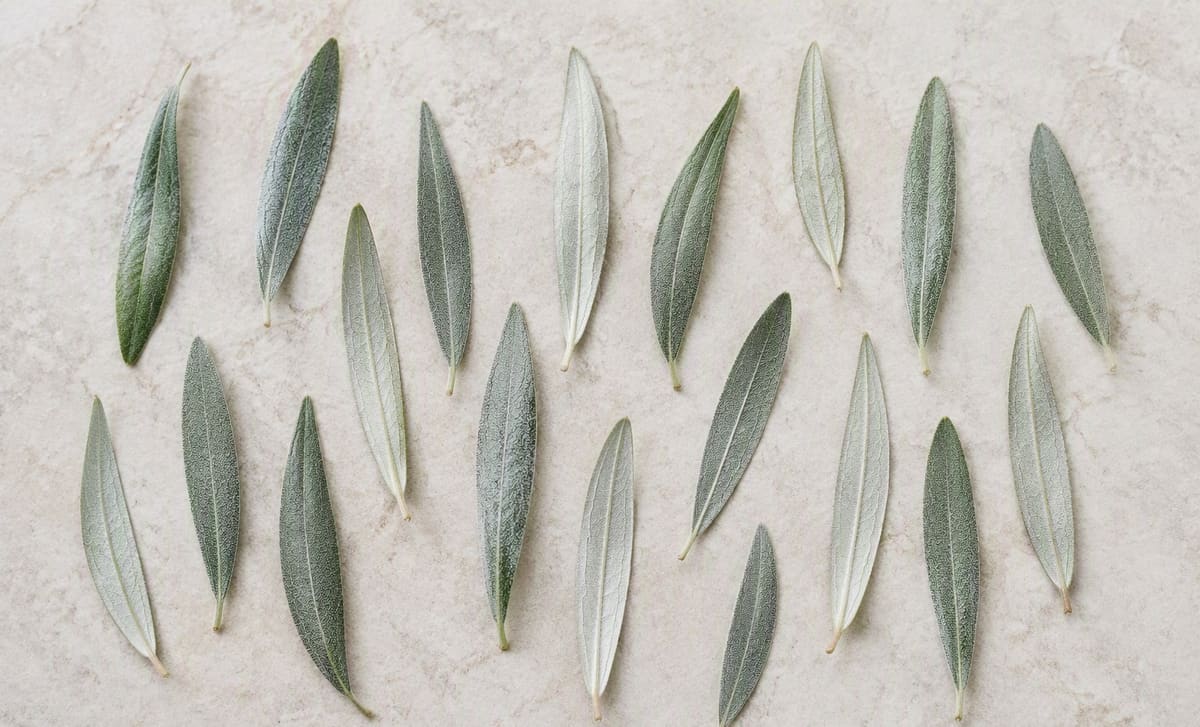
Sea buckthorn leaves are narrow, willow-like, and two-toned: green above, silvery white below. A hedge of them flashes silver in wind. They brew a respectable caffeine-free tea, they feed the soil when they fall, and they’re the plant part most products ignore.
Why they flash silver
Turn one over. The top face is a plain dull green, but the underside wears a dense coat of tiny silver scales and hairs, a sunscreen and water-saver for a plant that grows on bright, dry, windswept ground. Wind turns the foliage and the whole shrub flashes white.
Each leaf is narrow and lance-shaped, a few centimeters long, set alternate on the twig with barely a stalk. Edges smooth, tips pointed. From three paces the effect is pure willow, which is why the leaf arrangement check in the identification guide matters. The same silvery look runs through the whole family, and it’s one of the fastest field marks there.
The tea tradition
Dried sea buckthorn leaf tea is an old habit in parts of Asia, mild and green in the cup. The leaves carry flavonoids such as quercetin relatives, which the flavonoids page profiles, and the tea nutrition page compares leaf tea with the berry drinks.
No hype needed. It’s a pleasant herbal tea from a plant people already grow, and the leaves are the one harvest that never costs you berries. In parts of Asia the leaf harvest is a small cash crop of its own, sold as herbal tea where the berries never travel. Buying a box instead of drying your own is where it gets confusing, because leaf tea and berry tea share the name and almost nothing else.
Picking for tea
The tea harvest is a spring and early summer job, while the leaves are young and tender. Take a modest share from many shoots rather than stripping a branch. Dry the leaves spread thin in shade with moving air, and jar them only when they crumble. The tea-making guide walks the drying and brewing, and pruning day doubles as tea day, since the pruning guide produces leafy trimmings either way.
The browse economy
Livestock have browsed sea buckthorn for as long as records run. The old Greek story about glossy horse coats starts with the leaves, as the name origin page tells it. On open range across the native belt, wild and domestic browsers work the foliage hard, and the thorns exist largely because of that pressure, as the thorns page explains. The shrub answers browsing with regrowth, which is one reason it holds ground where grazers keep other shrubs down.
What does that mean for a gardener? Established plants forgive a hard pruning, and deer mostly leave them alone. Young ones deserve a fence until the thorns grow tall enough to argue.
What the leaves are not
Honesty check: the leaves aren’t the berries. The vitamin C story belongs to the fruit, and a cup of leaf tea is a mild, caffeine-free drink, not a supplement in a mug. Whether those leaf flavonoids add up to a health benefit is its own question, and the leaf benefits page grades the evidence without flattering it: interesting in a lab, untested in people.
Where the leaves do earn their keep is the soil. The nitrogen the plant fixes partly returns through fallen foliage, feeding the stand that produced it, part of the same self-feeding system the nitrogen fixing page explains. That loop, not the teapot, is the leaf’s biggest contribution. The plant hub covers the rest of the shrub, berries included.
Frequently asked questions
Can you drink sea buckthorn leaf tea?
People have for centuries. Dried sea buckthorn leaves brew a mild, green-tasting herbal tea, traditional in parts of Asia, and like many tea plants the leaves carry flavonoids. It is a caffeine-free drink, not a medicine. The tea nutrition page covers what actually ends up in the cup.
Are sea buckthorn leaves poisonous?
No. Livestock and wild browsers have eaten the foliage for as long as records run, and dried leaves brew a traditional caffeine-free tea in parts of Asia. Normal food sense applies: be sure of the identification, and treat tea as a drink, not a treatment.