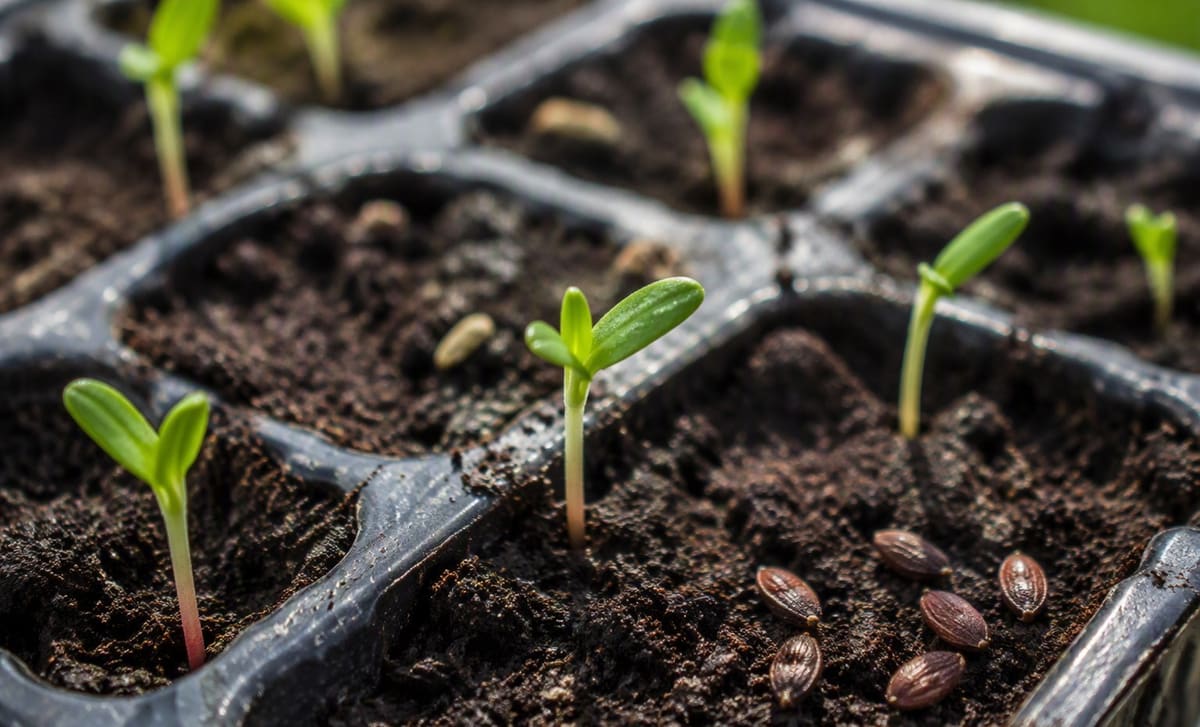
Sea buckthorn from seed is cheap, satisfying, and slow. The seed needs a cold, moist spell (stratification) before it will sprout, and after that germination is fairly easy. The catch arrives years later: half your seedlings will be male and fruitless, and you can’t tell which until they bloom. Seed is for the patient and the curious.
The stratification step
Fresh seed has dormancy built in, and winter is what breaks it. Fake winter like this:
- Clean the seed: crush ripe berries, rinse away the pulp, and dry the seeds on paper for a day.
- Mix with damp (not wet) sand or vermiculite in a bag or box.
- Refrigerate at about 1 to 5 degrees Celsius for 4 to 12 weeks.
- Sow shallow in spring, keep moist, and expect sprouts within a few weeks.
Seed from dried or shop berries varies in viability, so sow generously.
The sex gamble, stated plainly
Sea buckthorn is dioecious: each plant is male or female, and only females fruit. Seedlings are roughly half and half, and they reveal nothing until first bloom, often year 3 or later. By then you’ve invested years in plants you may need to remove. The male-female ratio page has the orchard math, and cuttings are the route that skips the gamble entirely, since a cutting keeps the parent’s sex.
Who should grow from seed
- Breeders and experimenters who want new genetic combinations.
- Patient growers raising rootstock or a windbreak where fruit does not matter.
- Anyone who enjoys the process more than the harvest.
If berries are the goal on a home scale, buy sexed plants or take cuttings from a known female. The planting guide takes over once you have plants in hand, the seeds page covers the botany, and the growing hub maps every route.
Getting seed worth sowing
Seed from fully ripe, deep-orange berries germinates best. Crush, rinse away the pulp, and dry on paper for a day. Shop-bought dried berries sometimes yield viable seed and sometimes yield expensive compost, since heat-drying can kill the embryo. Treat them as a bonus rather than a plan.
The lazy stratification: winter sowing
Nature ran this process for millennia without a refrigerator. Sow cleaned seed in pots or a prepared bed in autumn, leave them outside through winter, and the cold moist months break dormancy on schedule. Protect the pots from mice, keep them from drying out completely, and seedlings appear in spring with zero fridge management. The method costs a season of patience and saves every step of the bag-and-sand routine.
The first season
Sprouts come up small and stay small for weeks, which is normal. Keep them moist but not wet, in bright light, and pot on individually once they have a few true leaves. Grow them somewhere sheltered for their first summer, plant out the following spring, and then wait. The sex reveal at first bloom is still years away, and that’s the spring to reread the ratio math linked above.
What seed is actually for
Breeding programs sow seed by the thousand, because every seedling is a new genetic roll of the dice, and one in a field of thousands might outcrop its parents. Home growers raising a windbreak or rootstock get the same benefit cheaper: unknown plants are fine when fruit quality doesn’t matter. For a fruiting garden, seed is the scenic route, and the scenery is years long. Honest framing done, it’s still a deeply satisfying way to raise a shrub from a berry you ate.
Common seed failures
- Skipping the cold. Unstratified seed mostly sits there, and the few that sprout arrive so erratically that bed care becomes impossible.
- Damping off. Crowded, soggy, still-air seedlings keel over at the soil line. Thin early, water from below, and give them moving air.
- Drying out at the wrong moment. Germinating seed dies fast if the surface dries. Check daily during the sprouting weeks.
- Falling in love with all of them. Half are males. Plan the thinning before the attachment forms, as the from cuttings page reminds anyone who wants certainty instead.
Frequently asked questions
Do sea buckthorn seeds need stratification?
Yes. Expect several weeks of cold, moist conditions before they germinate: mix cleaned seed with damp sand in the fridge for about 4 to 12 weeks, then sow. Skipping the cold spell gets you very patchy germination. Even done right, seed gives you unknown sex and variable plants for years.
How long do sea buckthorn seeds take to germinate?
After stratification, expect sprouts within a few weeks of spring sowing. The slow part is the preparation: 4 to 12 weeks of cold, moist conditions in the fridge, or a full winter outdoors sown in autumn. Seed sown without any cold spell germinates poorly and erratically, which reads as failure but is really just dormancy.