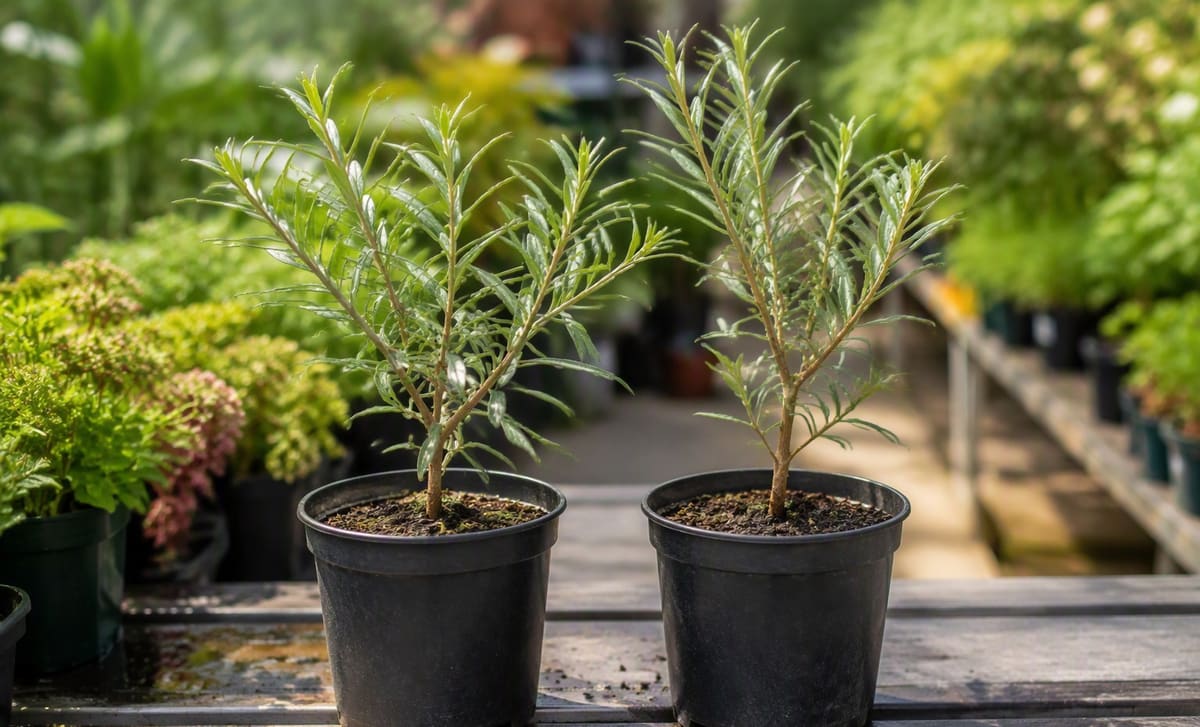
Buy at least two plants, one male and one female, because only females fruit and a lone female never will. Buy them sexed and named from a nursery that labels both. Bare root is cheaper and goes in during dormancy, potted plants go in almost any time. Expect berries in year three to five, and check current availability directly, because sea buckthorn sells out fast and stock changes every season.
This cluster has twenty-odd pages on how to grow this shrub and, until now, nothing on the step that comes first. So here it is. Not where to buy juice or oil, which the products hub handles, but where to buy a living plant and how to avoid the one mistake that wastes four years.
Buy two, and buy them sexed
This is the fact that decides your whole purchase, so it goes first. Sea buckthorn is dioecious, meaning each plant is male or female for life. Females carry every berry. Males carry pollen and look useless eleven months a year. Wind moves the pollen, so a female needs a male within about 30 meters of her, and one male serves 6 to 8 females. The male-female ratio page works through the layout.
Here is the part that costs people years. You cannot tell the sexes apart by looking. Leaf, thorn, vigor, growth habit, all identical until the first bloom, which can be three to five years out. A seedling sold without a sex label is a coin flip you find out about half a decade later, as the male vs female page explains. So the rule is blunt: if a listing does not say the sex, do not buy it for fruit.
Some sellers offer a matched pair in one order, a female and her pollinator together. That is the least error-prone way to buy, and worth a small premium over two separate line items you might mismatch.
The listing headers worth searching
Catalogs cannot agree on a heading. Some say sea buckthorn plants for sale, some file it as seaberry plants for sale, some shorten it to sea buckthorn for sale, and a garden center shelf tag might read sea buckthorn bush for sale or simply sea buckthorn shrub. Search all of them or you will miss half the listings. The name game gets its own glossary entry, and in North American nursery catalogs seaberry is genuinely the more common heading.
Three more splits catch people out. Seaberry gets typed as two words about as often as one, so run sea berry plants for sale alongside the joined spelling. Plural matters the same way, so try sea buckthorn bushes for sale as well as the singular. And some catalogs file the whole thing under the Latin, which makes Hippophae rhamnoides plants worth a search of its own, usually at the more botanical end of the trade.
If you are shopping for sea berry seeds rather than for plants, that is a different purchase with a different risk, and the seed route explains why. Many sellers, Indian nurseries especially, list their young stock as sea buckthorn seedlings, and that word is a flag worth catching. Seedlings arrive unsexed. You learn which you bought three to five years later.
One warning hides inside the phrasing. A single sea buckthorn plant for sale is usually a female, because females are what people want to buy, and a lone female is precisely the purchase that fruits nothing. Read the quantity before you read the price.
Bare root or potted
Bare root. The plant ships dormant with soil washed off the roots. Cheaper, lighter to post, and available in a narrow window in late winter and early spring or in autumn. It has to go straight into the ground while dormant, with the roots soaked for an hour first, which the planting guide covers. Bare root is how most serious plantings are bought.
Potted. More expensive per plant and much heavier to ship, and worth it if you are buying in June, if you want to see the plant before it goes in, or if you have nowhere to heel in a bare-root delivery that arrives during a frozen week. Container plants go in almost any time the ground is workable, and summer plantings need faithful watering through the first season.
Neither is better horticulturally. This is a timing and budget decision, and bare root only loses when your calendar cannot meet it.
What size and age is worth paying for
Nursery stock is young, often a year or two old, and the temptation is to buy up a size. Mostly, do not. Sea buckthorn establishes fast and fruits on its own schedule, so a larger plant buys you perhaps one season of head start and costs considerably more. The how to grow page puts first fruit at roughly three to five years from planting, faster from cuttings than from seed.
Spend the money on provenance instead. A named, cutting-grown cultivar with a known sex and a known bloom time is worth more than a bigger anonymous shrub, every time. The varieties page introduces the names you will see, and males carry their own cultivar names rather than being generic spares.
When to buy, which decides when to plant
Bare-root stock sells in autumn and late winter and ships in dormancy, and the good cultivars go early. Order months ahead if you want a specific variety rather than whatever is left. Potted stock runs across the growing season and is your fallback when you missed the window.
Match the order to your ground, not to your enthusiasm. Frozen or waterlogged soil beats any delivery date, and this shrub forgives late planting far more readily than bad planting. Check your zone on the climate page before you spend anything.
Nurseries that have carried it
A handful of North American nurseries have stocked this plant for years, and these are the names that come up most: One Green World, Burnt Ridge Nursery, and Stark Bro’s. All three catalog it as seaberry more often than as sea buckthorn, and all three sell males and females separately, which is the shape of catalog you want. Where they print a pollination ratio it matches the one on this site, a single male for every eight females.
Two things we are deliberately not telling you. We are not stating what any of them has in stock, what any plant costs, or whether they ship to your state this season, because that information changes constantly and we cannot verify it from here. Check the current listing yourself before you plan around it. And we take no commission from any nursery, hold no affiliate arrangement with one, and there are no buy buttons on this page. Local and regional nurseries are worth a call too, especially in colder zones, where a plant grown near you has already proved it can live there.
The pre-order checklist
- Sex, stated in writing. Female for fruit, male for pollen, one male per 6 to 8 females. No label, no purchase.
- A cultivar name, not just “sea buckthorn”. Names carry known bloom timing, berry size, and thorniness.
- Bloom overlap between your male and your females. Matched pairs solve this on the receipt.
- Shipping window, and whether it lands while your ground is workable.
- Rootstock or propagation method. Cutting-grown means known sex. Seed-grown means the seedling gamble.
- Your own site, checked before checkout: full sun, drained soil, and real distance from paths and tidy beds.
What you are signing up for
Say yes to this plant and you have said yes to some things the catalog photograph does not show. It has serious thorns, described honestly on the thorns page. It suckers, sending up new shrubs several meters from where you planted the original, and the invasiveness question deserves five minutes before you order. You wait years for the first real crop. And the harvest itself is fiddly work among spines.
None of that is a reason to skip it. It is a reason to plant it where those traits are features rather than surprises, which for most gardens means a boundary, a windbreak, or a corner you were never going to walk through anyway. Buy on that basis and the shrub will outlive the decision by decades. The growing hub has everything that happens after the box arrives.
Frequently asked questions
How many sea buckthorn plants do I need to buy?
At least two, and they have to be one male and one female. Only females fruit, and they need pollen from a male within about 30 meters. One male covers 6 to 8 females, which is the ratio the nurseries themselves print in their catalog copy. A single plant, however healthy, fruits nothing on its own.
Should I buy bare-root or potted sea buckthorn plants?
Bare root costs less, ships cheaply, and can only go in the ground while the plant is dormant, so it is a spring or autumn purchase. Potted plants cost more and plant almost any time the ground is workable, which suits anyone buying in June. For a first order timed to dormancy, bare root usually wins on price per plant.
How long before a nursery plant produces berries?
Roughly 3 to 5 years from planting, faster from a cutting-grown named cultivar than from an anonymous seedling. Paying for a larger plant buys a season, not a shortcut. Nothing honest speeds up fruiting maturity by much, so buy the sexed, named plant rather than the big one.