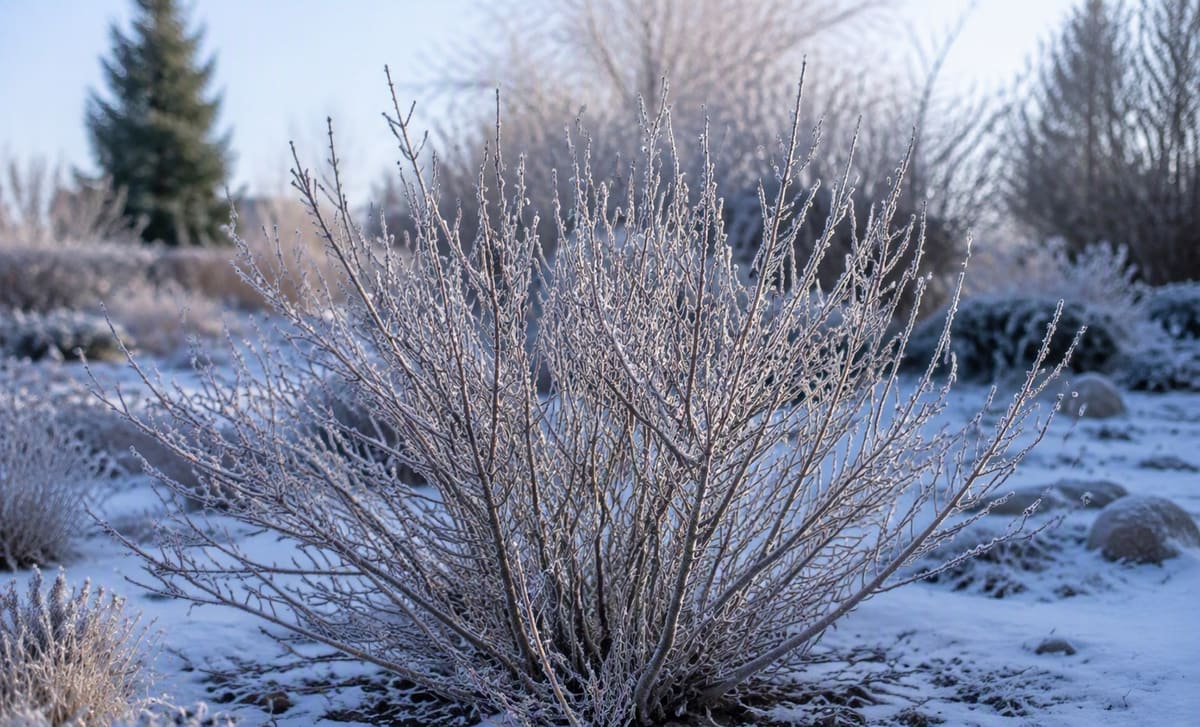
Winter is the season sea buckthorn was built for. Hardy through USDA zones 3 to 7, it takes severe frosts without complaint and needs almost nothing from you. Mulch young plants once, guard tender stems against browsing animals, and save your pruning energy for late winter. That’s the whole list.
The hardiness reality
This shrub evolved through Siberian and Himalayan winters, and it shows. Established plants sail through freezes that damage the apples and pears nearby. It’s deciduous, so winter strips it to wood that barely feels the weather.
Cold is genuinely not the risk. In zones 3 to 5, established plants need nothing at all. In zones 6 and 7, same story, with one note: mild wet winters make drainage the thing to watch instead of frost. On the exposed edges of hardiness, wind matters more than temperature, and a sheltered site is the entire protection plan. The climate and zones page maps the band and explains that heat and humidity, not cold, are what actually stress this shrub. If winter is your worry, you picked the right plant.
The short care list
- Mulch first-year plants. A few centimeters of compost or shredded bark over the root zone, kept off the stems. One season of insurance while roots are still shallow, and a buffer against the midwinter thaw-freeze swings that heave shallow roots. Keep the mulch pulled back from the trunk so rodents get no cover.
- Skip the water. Dormant shrubs in frozen ground need nothing.
- Leave the berries. Unpicked fruit holds through frost and feeds birds, or you, on the coldest days.
- After leaf fall, clear mummified berries and fallen fruit if disease showed up during the season. Otherwise, enjoy the silhouette.
The real winter threat has teeth
Cold doesn’t hurt sea buckthorn. Hungry animals can. The browsing menu runs deer, rabbits, and voles, and all three prefer young bark: deer take the buds and tips, rodents gnaw at the snow line. One gnawed ring at the snow line kills a young plant that shrugged off the coldest night of the year.
The defenses are simple. A mesh stem guard handles rabbits and voles. Deer need height: a fence, netting, or individual cages until the shrub outgrows nose reach. Mature shrubs outgrow most browsing damage within a season or two. And check the guards each autumn, because a guard that girdles a thickening stem trades one damage for another.
Frost makes harvest easier
Unpicked berries persist after frost, and freezing turns them firm, so they shake off the branch cleanly instead of bursting. Some growers deliberately leave part of the crop for a post-frost harvest. The harvesting page covers the frozen shake method in detail.
Late winter is prune time
The one winter job worth scheduling comes at the end of it: the annual prune, while the shrub is still dormant and the framework is visible. Do a guard check at the same time, before spring growth. The pruning page walks the cuts, and the growing hub maps the whole year.
Common winter failures
- Wrapping the shrub. It needs no wrap, and trapped moisture against stems does more harm than cold.
- Late-summer feeding. Soft growth pushed in late summer hardens poorly and burns in the first real frost. The fertilizer page sets the feeding calendar.
- Pruning in autumn. Cuts heal slowly going into winter and dieback follows. Wait for late winter.
- Forgetting the guards. See the teeth section above.
Frequently asked questions
Does sea buckthorn survive winter without protection?
Yes, easily in the right climate. It is hardy through USDA zones 3 to 7 and shrugs off severe frosts that kill most fruit shrubs. First-year plants appreciate a mulch layer, and young stems may need guards against browsing deer and rodents. Beyond that, winter is the season sea buckthorn handles entirely on its own.
Should I wrap sea buckthorn for winter?
No. It is hardy through USDA zones 3 to 7 and needs no wrapping, fleece, or special protection once established. Wraps trap moisture against the stems and cause more problems than the cold would. Save the effort for a mesh guard against browsing animals, which are the only genuine winter threat to young plants.