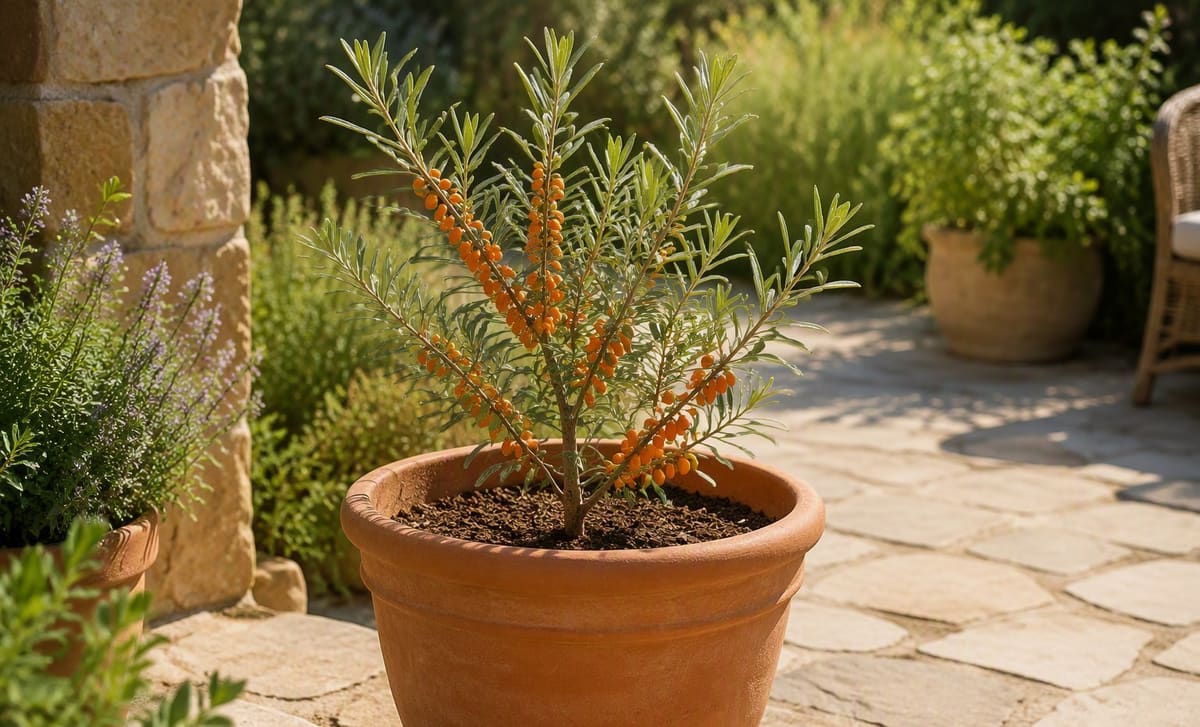
Sea buckthorn can live in a container, but treat it as the second-best option. The shrub wants to be big, deep-rooted, and free to sucker, and a pot denies all three. With a large container, sharp drainage, and regular pruning it will grow and even fruit. It just will not thrive the way it does in open ground.
When a pot makes sense
Renting. Paving. A patio with no beds. Or deliberate containment, since a pot is the only guaranteed way to stop suckers spreading through a garden. If none of those apply, plant in the ground and read the planting guide instead.
Pot and mix
Go big from the start: 40 liters minimum, larger is better, with generous drainage holes. The mix must drain sharply. Standard potting compost cut with grit or coarse sand suits it, and sitting water is the fast way to kill it, as the soil page explains. Raise the pot on feet so the holes never sit in a puddle.
Water and feeding
Pots invert this shrub’s usual drought tolerance. A container root ball dries out far faster than ground soil, so check moisture every few days in summer and water deeply when the top dries. Feed lightly: a spring compost top-up is enough, since the shrub fixes its own nitrogen. The watering page has the deep-and-rare method.
Roots, suckers, and lifespan
Every two to three years, slide the root ball out, prune circling roots, and replant with fresh mix. Watch the drainage holes: suckers find them and root straight into the ground below, which is the shrub’s quiet escape plan. Even with good care, potted plants run shorter-lived and smaller than grounded ones. Regular pruning keeps the top in proportion to the roots.
The fruiting catch
A container female still needs a male within about 30 meters to set berries. On a balcony with no second shrub, expect flowers without fruit unless a neighbor grows one.
The growing hub compares every planting option.
The summer watering rhythm
A 40 liter pot in full sun can dry out in a day or two of hot wind, and the shrub that laughs at drought in the ground has no reserves in a pot. Check with a finger to the second knuckle: dry at that depth means water deeply, until it runs from the holes. Little sips encourage surface roots that cook in summer. Pot feet matter here too, because a pot sitting in its own drained water is the one way to drown a drought plant on a patio.
Winter in a pot
Roots in a container sit above the frost protection that ground soil provides, so potted shrubs effectively run a zone colder than the map says. In zones 3 to 5, move the pot against a sheltered wall or wrap the pot itself, not the top, for the coldest weeks. The top needs nothing. The shrub is hardier than its container. The winter care page covers the ground version, most of which a pot skips.
Keeping it small without killing it
Annual pruning in late winter holds a potted shrub to a manageable 1.5 to 2 meters. Take the tallest leaders first, thin the center, and never remove more than about a third of the top in one go, since top and roots need to stay in proportion. Berries on a container plant are a bonus crop rather than a harvest, and one potted female with a male somewhere nearby can still carry a respectable few handfuls.
Common container failures
- Starting small. A 10 liter pot buys one season, then the plant stalls and dries out constantly. Start at 40 liters.
- Letting the escape plan work. Suckers root through drainage holes into the ground below, and suddenly the contained plant is not contained. Check underneath yearly.
- Expecting fruit alone. No male within about 30 meters means flowers and nothing else, as the male-female ratio page explains.
- Feeding like a bedding plant. It fixes its own nitrogen even in a pot. Heavy feeding grows leaves, not berries.
The honest verdict
Containers turn a rugged shrub into a needy one. If a pot is your only option it will still grow, flower, and even fruit, and the sucker problem disappears entirely, which some gardeners consider a fair trade. Just budget the watering time before you budget for the pot.
Frequently asked questions
Can I grow sea buckthorn on a balcony or patio?
Yes, in a large container of 40 liters or more with excellent drainage, in full sun. Expect to water often, prune to keep size in check, and repot or root prune every few years. Fruiting needs a male plant within about 30 meters, so a lone female on a balcony may flower but never fruit.
How big does sea buckthorn get in a pot?
Smaller than in the ground, and you control the rest. With a 40 liter or larger container and an annual late-winter prune, expect a shrub of about 1.5 to 2 meters. Unpruned it will try for more and become top-heavy and thirsty. Root pruning every two to three years keeps the below-ground half in proportion.