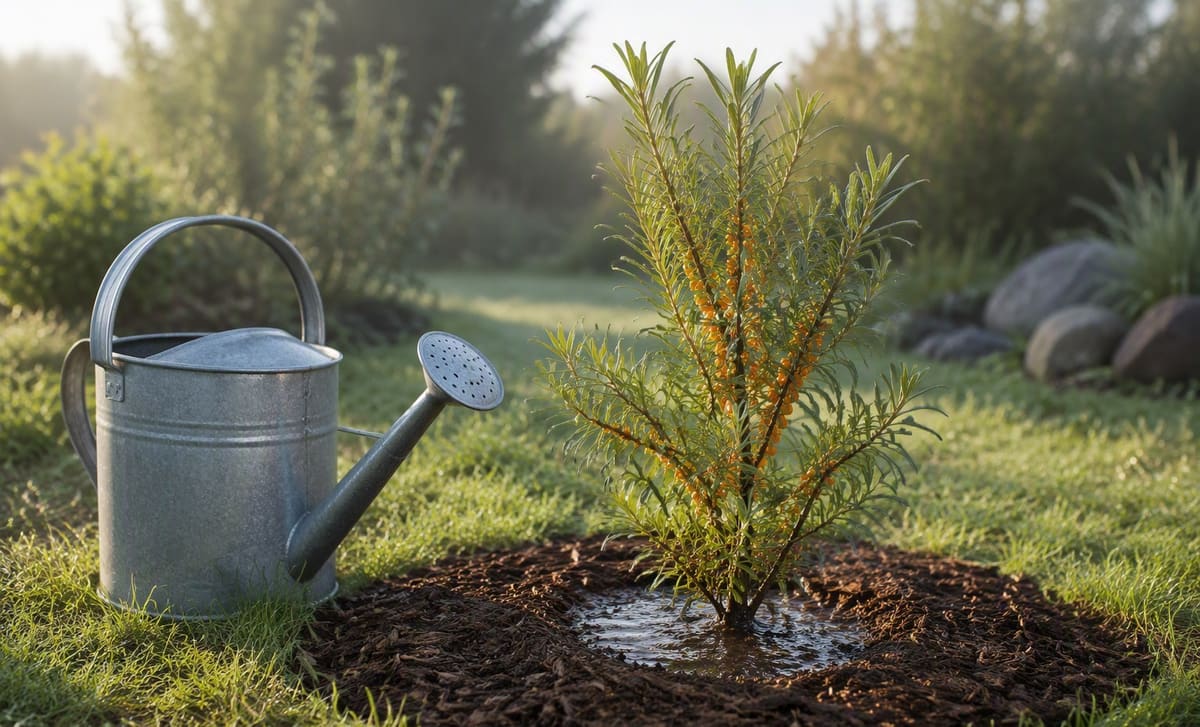
Water sea buckthorn deeply once a week through its first year, then mostly stop. Once its roots are down, this is a genuinely drought tolerant shrub that runs on rainfall in most climates. The danger is the opposite of what new growers expect: wet roots kill it far faster than dry ones.
Year one: the only thirsty year
A new shrub has a small root ball in a big world. Give it a deep soak at planting, then water weekly through the first growing season whenever the top few centimeters of soil dry out. What does deep mean here? A slow bucket or a long trickle, not a daily splash. You are training roots to chase moisture downward, which is what makes the shrub so tough later. The growing hub places watering inside the full care calendar.
Established shrubs run on rain
From year two or three, rainfall handles the job in most regions. Step in only during long dry stretches, and care most while berries are sizing up in summer. A dry spell at fruit swell costs you berries. A dry spell in spring barely registers. Mulch around the base keeps moisture steady and weeds down.
The real killer is wet, not dry
Sea buckthorn evolved on riverbanks and slopes where water drains fast. Roots sitting in saturated soil suffocate and rot, and a shrub that shrugged off minus forty winters can die in one soggy season. If your ground holds water, fix that first or plant on a ridge. The soil page has the drainage test, and the climate page explains why humid summers compound the problem.
How to water when you do
- Deep and rare, not shallow and often. Frequent sips keep roots near the surface, exactly where heat and drought hit hardest.
- Water the soil, not the leaves. Wet foliage in humid weather invites trouble.
- Pots are the exception. Container shrubs dry out fast and need regular checks. The containers page covers that balancing act.
Reading the shrub
Thirst shows as dull, slightly wilted leaves on hot afternoons that recover by morning. That’s normal and needs nothing. Wilt that persists into the cool of evening earns a deep soak. Drowning wears the opposite costume: yellowing leaves and soft growth in wet weather, which more water makes worse. Learn the difference before year one ends, because the two call for opposite responses and the shrub can’t tell you which it is.
Matching your climate
In rainy temperate regions, established shrubs may never need the hose. In dry-summer climates, a deep soak every week or two through fruit swell keeps berries sizing. In hot humid regions, water the soil only and keep foliage dry, since wet leaves in steamy air invite the small disease list on the pests page.
Fruit swell is the exception window
Once established, the shrub forgives almost any dry spell except one: the summer weeks while berries size up. A deep soak every week or two through that window is the difference between full berries and small ones. After harvest, the tap closes again for the year.
Winter needs nothing
Dormant shrubs in cold ground use almost no water, and frozen soil provides none, which works out evenly. The one winter caution belongs to container plants in mild climates: check monthly and water lightly if the pot dries completely. Everything else about the cold season sits on the winter care page.
Common watering failures
- The daily sprinkle. Shallow sips train surface roots that bake in the first hot week. Deep and rare wins.
- Watering clay that is already wet. Squeeze the soil first. If it holds a ball, put the hose away.
- Abandoning year one. Drought tolerance is earned by roots, and roots take a full season to build.
- The saucer under the pot. Standing water in a saucer drowns a drought plant on a patio. Empty it every time.
Rain gauges beat schedules
Schedules fail because weather doesn’t read them. A finger in the soil or a simple rain gauge beats any calendar: if the week delivered real rain, skip the watering, and if the top few centimeters are dry at fruit swell, soak deeply. The shrub prefers this arrangement too, since its roots follow moisture down instead of waiting at the surface for a sprinkler that may never come.
Frequently asked questions
How often should I water sea buckthorn?
Weekly deep soaks through its first growing season if rain is scarce, then almost never. Established shrubs are drought tolerant and usually run on rainfall alone. Water only during long dry spells, especially while berries are sizing up, and never let the roots sit in soggy ground.
Can you overwater sea buckthorn?
Yes, and it is the most common way to kill it. Roots in saturated soil suffocate and rot, and a shrub that survives severe winters can die in one soggy season. Water deeply while establishing, then only in real dry spells, and never let the roots sit in wet ground or a saucer of runoff.