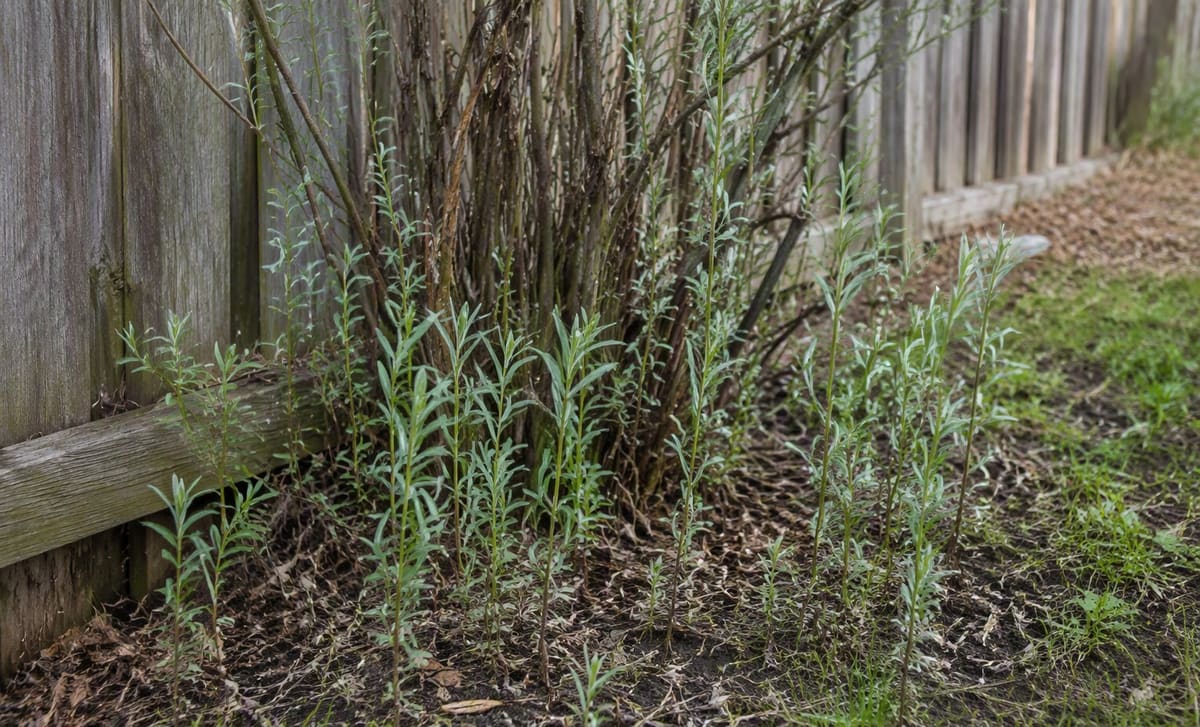
Honest answer: sometimes, and it depends where you stand. Within its native Eurasian range sea buckthorn is just another pioneer shrub. Outside that range its root suckers let it spread into dense thickets, and it is listed as invasive or naturalized in parts of Europe and North America. Check your local list before planting one.
Native range versus introduced range
Sea buckthorn is native across a broad Eurasian belt, from European coasts to the Himalayas, as the where it grows page maps. People planted it far beyond that belt for windbreaks, dunes, and erosion control, and some of those plantings walked away. Naturalized stands now grow in parts of Europe outside its native coasts and in parts of North America, and several regions formally list it as invasive.
How it spreads
Birds move the seeds, but the real engine is the root system. One shrub sends up suckers meters from the parent, those suckers become stems, and the stems become a thicket that shades out everything shorter. Cutting the top does not stop it, because the roots simply send more. The same hunger for barren ground that makes it a hero on eroded slopes, which the nitrogen fixing page explains, makes it a problem on ground it was never invited to.
Before you plant
Look up your regional invasive-species list first, since several areas restrict or discourage planting. If it is welcome where you live, keep it honest: mow or dig suckers beyond its patch, or grow it in a container, as the container guide describes. The climate and zones page sets the climate frame, and the plant hub covers the rest of the plant’s story.
Naturalized, invasive, or just planted
The words have different weights, and the difference matters. Planted means someone put it there and it stays. Naturalized means it reproduces on its own but holds a modest place. Invasive means it spreads fast enough to displace other vegetation, and that is the listing that carries restrictions. Sea buckthorn sits in different boxes in different regions, which is why a single global yes or no is the wrong frame, and your regional list is the only verdict that governs your garden.
What a suckering plant asks of you
Containment is a plan, not a hope. Mowing or digging the suckers beyond its patch once or twice a season keeps a hedge honest. A root barrier sunk around the planting does the same job with less labor. Harvesting the berries removes most of the bird-carried seed, and planting males only removes the fruit vector entirely, at the cost of the harvest itself. A neglected planting is the common failure mode: years of unchecked suckers turn a hedge into a thicket, and removal then means repeated cutting or digging, since the roots resprout. The container guide is the zero-spread answer, and the pruning guide covers the top growth.
Checking your local list
Invasive lists live with state, provincial, and national agriculture or environment agencies, and the good ones are searchable by species name. Search Hippophae rhamnoides, not just the common name, and read the category carefully before planting. The regional pages for the US, UK, and Canada give the local context, and when the list says no, the honest answer is a different shrub. If it was the berries you wanted rather than the shrub, frozen berries from someone else’s thicket skip the containment question entirely.
The other side of the ledger
The same spreading habit built the plant’s reputation as free land repair, so the invasive question is really a location question. On an eroding slope in its native range, a self-expanding thicket is the goal. In a sensitive dune system outside that range, it is the problem. The plant did not change. The address did, and the where it grows page maps which address is which.
Frequently asked questions
Should I worry about sea buckthorn spreading?
Check your local list before planting, because the answer changes by region. Sea buckthorn spreads by root suckers into dense thickets, and it is listed as invasive or naturalized in parts of Europe and North America outside its native range. In a garden, mowing or digging suckers and root barriers keep it honest, and containers are the zero-spread option.
Can I grow sea buckthorn without it spreading?
Yes, with a plan. Containers stop it entirely. In the ground, mow or dig the suckers beyond its patch once or twice a season, or sink a root barrier at planting. Harvesting the berries removes the bird-carried seed. The plant is honest about its intentions, and the work is scheduled containment, not battle.