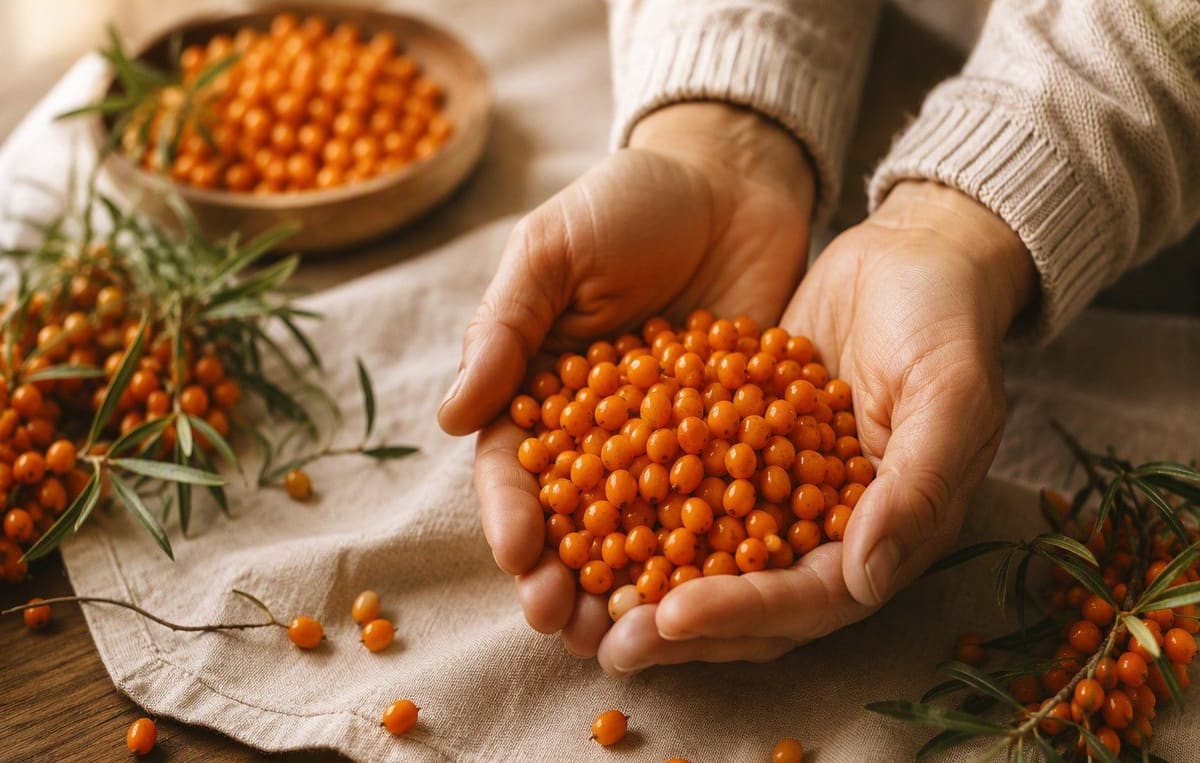
Seaberry is another name for the same plant this whole site is about: Hippophae rhamnoides, the thorny orange-berried shrub usually sold as sea buckthorn. It is not a variety, a cultivar, or a different species. It is a marketing-friendlier label, common in North American nursery catalogs and on a few supplement bottles, wrapped around identical fruit.
Where the name comes from
Both halves are borrowed. “Sea” records the coastal dunes where northern Europeans met the plant, and “berry” simply describes what you can see. The full story, including why the older name picked up “buckthorn” from an unrelated family and what the Greek genus name means, belongs to the name origin page, which is where we keep the etymology proper. This entry is about the label, not the linguistics.
One plant, several spellings
Nurseries and brands have never agreed on how to write it. You will meet seaberry as one word, sea berry as two, sea berries in the plural on a catalog page, and seaberries where a copywriter went the other way. A few imported labels shorten it further to sea fruit, which sounds appealing and pins down nothing botanical, so treat that one as decoration rather than information. Catalogs that want both audiences at once print seaberry sea buckthorn in the same heading, which looks redundant and is actually good service: it tells a shopper who searched either term that they have arrived. All of it resolves to one species, which the Hippophae entry pins down in Latin.
What does seaberry taste like
Sour, first and loudest. Bite a raw one and the acid lands before anything else, then a tropical note shows up somewhere between passionfruit and underripe pineapple, and it finishes oily and a little astringent. Most people cannot eat many straight off the bush, which is why the fruit reaches you as juice, puree, or a sweetened syrup far more often than as a snack. That sharpness is fruit acid, mostly malic and quinic, the same family that makes green apples pucker, and it softens fast once the berries cook down with sugar. If a label promises a sweet berry, read it twice. Fresh seaberry is not sweet.
Where you actually meet the word
Nursery catalogs are the stronghold. In the United States, the larger fruit-plant sellers that carry this shrub file it under seaberry far more often than under sea buckthorn, and if you search only for the longer name you will miss listings that are sitting right there. Our guide to buying plants covers what to look for once you find them, starting with the fact that you need a male and a female.
The word turns up on shelves too, on juice, oil, and softgel labels from brands that liked the sound of it. Same rule applies. The name on the front is a style choice, and the ingredient panel is the document.
What the name tells a buyer
Almost nothing, and that is the useful part to know. Seaberry does not promise a berry oil rather than a seed oil, does not certify an origin, does not indicate a subspecies, and does not imply any grade of quality. Those live in the same three places they always do: the plant part, the printed percentages, and the freshness. The oil explainer walks through a label line by line, and the seed versus berry comparison covers the one distinction that changes what is actually in the bottle.
One small caution rides along with the friendlier name. Because seaberry sounds generic, it gets attached loosely, so confirm Hippophae rhamnoides appears somewhere on the packaging before you assume. A plant hunter has the same problem in the field, where the lookalikes page does the sorting.
Where you meet it on this site
The plant hub profiles the shrub the name belongs to, the berry page describes the fruit itself, and the botanical profile handles the species in detail. We default to “sea buckthorn” across the site for one boring reason: it is what most readers type. Seaberry is the same plant with a better haircut.
Related terms: Hippophae, omega-7, carotenoids.
Frequently asked questions
Is seaberry the same as sea buckthorn?
Yes. Same shrub, same species, Hippophae rhamnoides. Seaberry is a common and trade name that North American nurseries use heavily and some supplement brands prefer. Nothing about the name tells you the plant part, the origin, or the quality, so read the rest of the label as usual.
Why do nurseries call it seaberry instead of sea buckthorn?
Nobody publishes a reason, and the likely one is simple. Buckthorn is a loaded word in North America, where common buckthorn is an invasive shrub that many states actively fight. Seaberry drops that association and sounds like something you would want to eat, which for a catalog selling fruit plants is the whole job.
What are sea berries?
Sea berries are the fruit of Hippophae rhamnoides, the thorny shrub this site calls sea buckthorn. The two-word spelling is a nursery and label habit, not a different plant or a different berry. If you are asking what sea berries are because a bottle used the term, the ingredient panel will name the same species you would find under sea buckthorn.