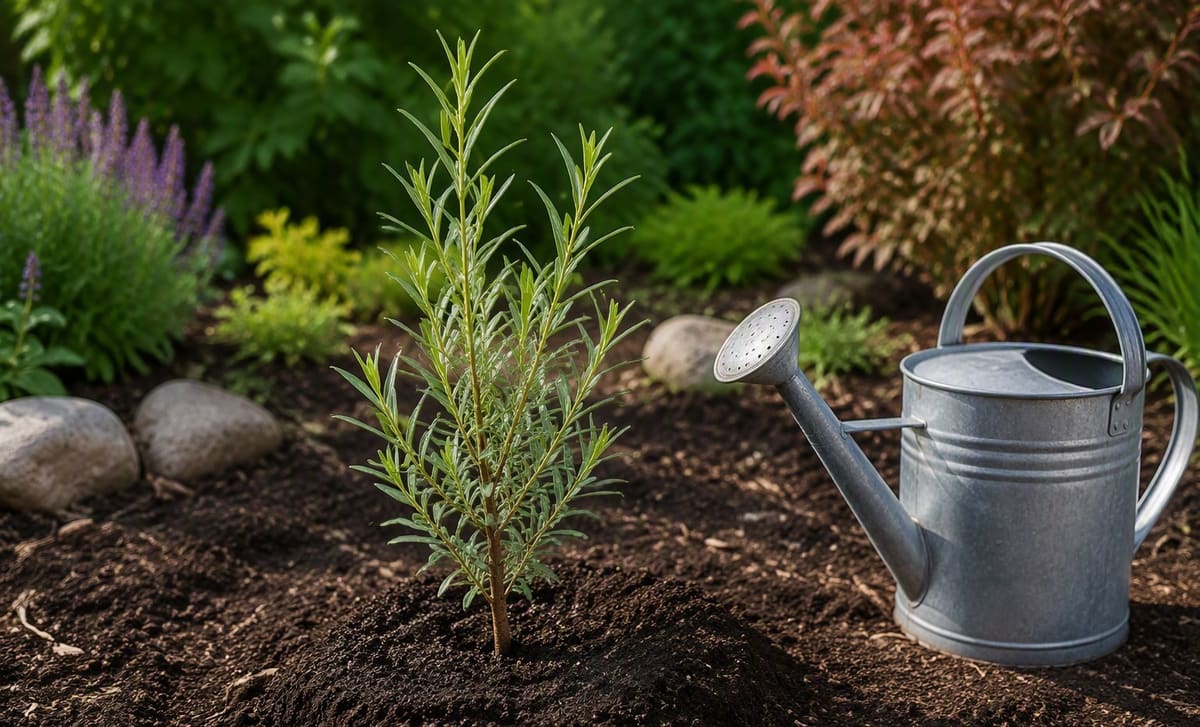
Sea buckthorn is easy to keep alive and slower to make useful. Give it full sun, drained soil, and a male plant nearby, and it will handle cold, wind, and neglect on its own. Expect first berries around year 3 to 5. The two things to plan for on day one: thorns, and roots that send up suckers meters away.
The short version
- Pick the sunniest spot you have. Shade means few berries and a sulky shrub. Full sun is the one non-negotiable.
- Check drainage before anything else. It tolerates sand, gravel, salt, and poor soil. It dies in waterlogged clay. Details on the soil page.
- Buy sexed plants or named cultivars. You need at least one male for every 6 to 8 females, and seedlings hide their sex for years. The male-female ratio page explains the math.
- Plant with room. Two to three meters between shrubs, away from paths (thorns) and tidy beds (suckers). The planting guide walks the sequence.
The timeline, honestly
Year one is roots. Years two and three are framework. First real berries typically arrive year 3 to 5, with full cropping a few years after that. Cuttings from a mature plant shave a year or two off. Seed-grown plants add a year or two on. Either way, this is an orchard shrub, not an annual, and the payoff is decades long once it starts.
What it asks of you each year
Almost nothing: a late-winter prune, a watchful eye on suckers, and water only while it establishes. It fixes its own nitrogen, so feeding is light. The fertilizer page has the skip-the-nitrogen logic, and the climate page confirms whether your winters suit it.
The growing hub links every stage, and the plant hub covers the botany behind the behavior.
The year-by-year picture
Year one: roots. Water weekly, weed the base, and do not judge the shrub by its top growth. Years two and three: framework. The shrub finds its shape, and your job shrinks to an annual late-winter prune. Years three to five: first berries, assuming a male lives within range. Year six onward: the long payoff, because a well-sited shrub crops for decades, as the lifespan page documents. Nothing about this is fast, and everything about it is durable.
The season-by-season calendar
- Spring: bloom and pollination, invisible but decisive. Wind does the work, so the only check is that your male flowered.
- Summer: water only while establishing, mow the sucker strip, and net before berries color.
- Autumn: harvest, then leave the shrub alone.
- Late winter: the annual prune and the year’s only real work, per the pruning page.
Buying the right plant
Named, sexed cultivars cost more than anonymous seedlings and are worth it every time: known sex, known berry size, known flavor, matched bloom pairs. The varieties page introduces the names worth knowing, and the plants-for-sale guide covers where to order them and how to check the sex is labeled before you pay. Seedlings have their place, and that place is windbreaks and experiments, not your one fruiting spot.
What success actually looks like
By year five you have a 2 to 3 meter shrub that asks for one prune a year, gives you kilos of berries the birds also want, and has quietly improved the soil around itself. The garden jobs it creates are harvesting and sucker patrol, both of which the dedicated pages make manageable. The jobs it never creates are spraying, feeding schedules, and winter worry.
Common beginner failures
- One lonely female. No male, no berries, several confused years. The male-female ratio page is required reading before purchase.
- The shady corner. It lives, it sulks, it never fruits. Sun is the deal.
- Kindness with the hose. Wet roots kill faster than drought. The watering page calibrates the instinct.
- The patio spot. Thorns where people walk and suckers where they do not. Edges and boundaries are where this shrub belongs, and the is it invasive page explains the spread honestly.
If you only read three pages
This one, the planting guide for the day the shrubs arrive, and the harvesting page for the autumn reality check. Everything else in the cluster is a deeper cut on one of those three moments.
The five-minute weekly habit
From spring to autumn, walk past the shrub once a week. You are looking for four things: suckers beyond the mow line, wilt that persists into evening, berries coloring before the net is on, and any branch that died back. Most of sea buckthorn care is noticing early, and the walk takes less time than the coffee you carry on it.
Frequently asked questions
How long until a sea buckthorn bush gives berries?
Typically 3 to 5 years from planting, faster from cuttings than from seed. The shrub itself establishes quickly and shrugs off cold and poor soil. The wait is for fruiting maturity, and nothing honest speeds it up much.
Will sea buckthorn take over my garden?
It spreads by underground suckers, sending up new stems meters from the parent, so unmanaged it becomes a thicket over years. Managed is easy: a mown strip around the shrub cuts every sucker that appears. In a container it cannot spread at all. It is vigorous, not magical, and the mower wins every time.